Can Veneers Fix Crooked Teeth and Gaps?
I'm Dr. Nina Izhaky. If you're Googling this, you probably hate your smile in photos but don't want braces - and you're wondering if veneers can just fix it. Here's the honest answer: yes, but only for the right teeth. Porcelain veneers - thin hand-layered ceramic shells, 0.2 to 0.5mm - can visually straighten mild crowding, close gaps, and even out a crooked-looking smile in two to three visits. But veneers can't move teeth, and they shouldn't cover a bite problem. Sometimes the right answer is Invisalign. I'll tell you which one you are - I'd rather talk you out of veneers than sell you the wrong treatment.
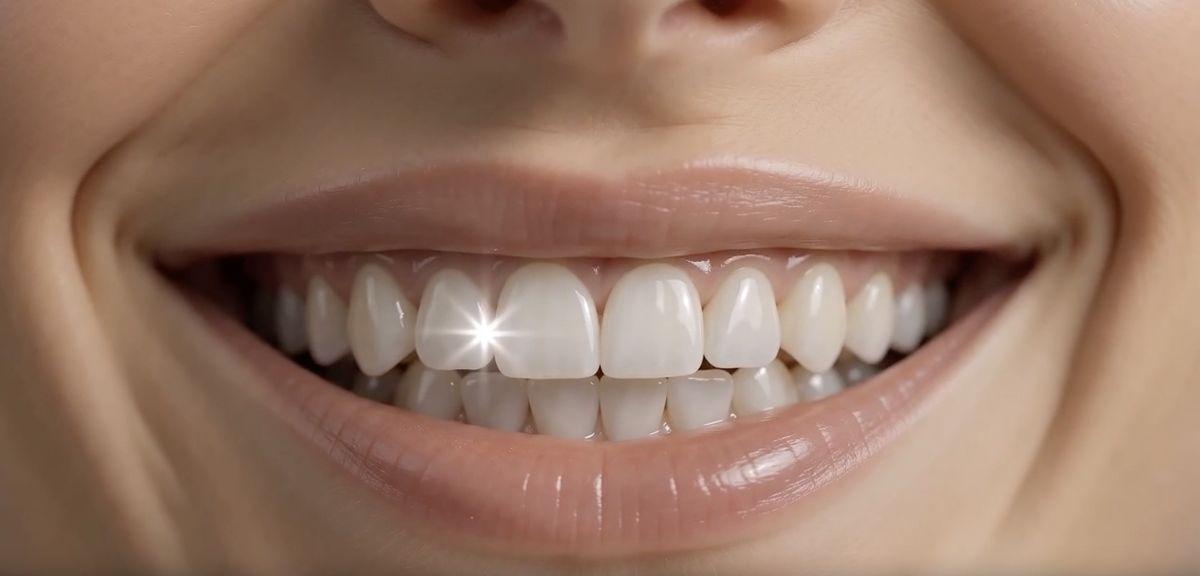
What veneers can actually straighten
Veneers reshape what you see. They don't move teeth - they re-dress them. Here's where that works.
Gaps between front teeth.
This is veneers' home turf. A gap (diastema) between otherwise healthy teeth closes cleanly - we widen the neighboring veneers slightly to erase the space, with a natural result that holds 10-20+ years.
Mild crowding and overlap.
One tooth sitting slightly behind the other, a rotated corner - veneers re-proportion the visible surfaces so the row looks straight. No one sees the underlying overlap.
Uneven teeth and worn edges.
Teeth that look crooked because they're different lengths or have worn, chipped edges. Veneers rebuild the lost length and even the smile line.
Discolored teeth that look off.
Teeth that read as crooked partly because one is darker. Hand-layered porcelain blends shade across every tooth while it reshapes them.
Veneers vs Invisalign: how we decide together
The consultation is a real triage - veneers or orthodontics - not a sales pitch.
We scan your teeth in 3D.
High-resolution digital scans show us exactly what's going on: crowding, spacing, bite, and how your teeth actually come together - not just how they look.
We design the veneer result first.
If veneers are a candidate, we design your smile digitally and place a try-on smile in your mouth. You see the straight-looking result before anything is permanent.
The honest fork in the road.
Mild crowding and gaps? Veneers fix it in two to three visits. Moderate to severe crowding, or a bite that doesn't function? We tell you orthodontics will serve you better - Invisalign or braces - and why.
Enamel thick and beautiful? We say no.
If your enamel is healthy and gorgeous and all you truly need is alignment, I talk patients out of veneers. Alignment lets your amazing natural smile shine - and nothing gets touched.
Why veneers can't fix everything - and shouldn't
Here's the part most veneers pages skip: veneers are a visual treatment. They cannot correct a deep bite, a crossbite, or teeth that are seriously crowded - and placing veneers over a bad bite puts porcelain under forces it wasn't designed for, which shortens its life. A dentist who recommends veneers without evaluating your bite isn't doing you a favor. At your consultation we check all of it - bite, bone support, gum health - before we design anything. Sometimes that check ends with 'you don't need veneers, you need six months of aligners.' I consider that a win.
Hablamos español
We warmly welcome Spanish-speaking patients. Nuestro equipo le explica con honestidad si su caso se resuelve con carillas o con ortodoncia, en su idioma - llámenos al (212) 561-5303. No facturamos directamente al seguro; le ayudamos con el financiamiento para que el plan se ajuste a su vida.
The Patients I Talk OUT of Veneers
There's a patient I see a few times a month, and she always comes in with the same request: 'I want veneers, my teeth are crooked.' And then I look at her scans, and her enamel is thick and beautiful - the kind of enamel I wish I could bottle. Her crowding is moderate, her bite is fine, and all she needs is orthodontic alignment to have a stunning smile. So I talk her out of veneers. She looks confused. Then I explain the math: alignment gives her the smile she wants without removing a fraction of a millimeter of her enamel, and it lasts a lifetime.
I do this more often than you'd think, because it turns out a lot of 'crooked teeth' are really just misalignment - which is a different problem than a chipped, worn, or gapped tooth. Veneers are for the visible surface: shape, shade, proportion. Orthodontics is for position: where the teeth actually sit. When a dentist confuses the two, the patient pays for it - either veneers placed over a bite they can't handle, or aligners prescribed for a tooth that will always be dark and worn no matter how straight it gets.
So here's my promise at your consultation: we'll scan your teeth, design both possibilities, and tell you straight. If veneers will give you the smile you want - gaps closed, edges evened, shade blended - we'll show you the try-on and give you the exact price before anything begins. If alignment is the honest answer, we'll send you down that road instead. Either way, you leave knowing the truth about your own teeth. That's worth more than any veneer.
“I talk patients out of veneers when their enamel is thick and beautiful - all they need is orthodontic alignment to let their amazing smile shine.”
— Dr. Nina Izhaky, Tribeca Dental Studio
Veneers for crooked teeth and gaps, answered
01Can veneers fix crooked teeth?
Veneers can visually straighten mild crowding - a slightly rotated tooth, minor overlap, uneven edges. They cannot move teeth, and they can't fix moderate to severe crowding or bite problems. At your consultation we scan your teeth and tell you honestly whether veneers or orthodontics (Invisalign or braces) is the right answer. Call (212) 561-5303.
02Can veneers close a gap between my front teeth?
Yes - gaps are one of the best uses for veneers. We widen the neighboring veneers slightly to close the space naturally, and the result lasts 10-20+ years. Ultra-thin no-prep veneers are also an option for gap closure with virtually no enamel removal.
03How fast is it compared to braces or Invisalign?
A veneer transformation takes two to three visits over a few weeks: 3D scan and try-on smile, micro-prep with temporaries, then final bonding. Orthodontics takes months. But speed is never the deciding factor - the condition of your bite is.
04Will veneers look fake on crooked teeth?
Not when they're designed properly. We design your smile digitally first, matching tooth lengths, widths, and angles to your lips and facial proportions - then you try on the result before anything is permanent. Hand-layered porcelain mimics how real enamel handles light.
05What if my bite is off - can I still get veneers?
That depends on the evaluation. A deep bite, crossbite, or heavy grinding puts porcelain under forces it wasn't designed for. Sometimes we treat the bite first with orthodontics; sometimes we proceed with veneers plus a nighttime guard. We never design veneers without evaluating your bite.
06How much do veneers cost for crooked teeth?
We offer handcrafted porcelain veneers, no-prep veneers, and composite veneers. A gap closure might need two to four veneers; a full smile-evening is usually eight to ten. You'll know your exact price to the dollar at your consultation, before anything begins.
07Can I get veneers if I grind my teeth?
Often yes, but we evaluate you first - heavy grinding puts extra force on porcelain, so we may recommend a nighttime guard to protect your investment. If grinding has worn your teeth uneven, veneers can also restore the lost length.
08Do veneers require shaving down my teeth?
Very little - we micro-contour 0.2 to 0.5mm of outer enamel for traditional porcelain veneers. No-prep veneers remove virtually nothing. If your enamel is thick and beautiful and you only need alignment, we'll recommend orthodontics instead of touching your enamel at all.
09What happens if my teeth keep shifting after veneers?
Teeth can drift over time, which is why we evaluate your bite and may recommend a retainer or nighttime guard after treatment. Porcelain veneers themselves don't shift - they move with the tooth they're bonded to, like your natural enamel.
010How do I know whether I need veneers or Invisalign?
You come in and we scan. That's the honest answer - mild crowding and gaps often suit veneers; moderate to severe crowding or bite issues need orthodontics. We'll design the result, show you, and tell you which treatment fits your teeth. Call (212) 561-5303 or book online.
Veneers in the heart of Tribeca
Find us at 54 Warren Street, New York, NY 10007 - in the heart of Tribeca, serving patients across Tribeca, SoHo, Battery Park City, the Financial District, and Downtown Manhattan.
Straight-looking smile - or actually straight teeth?
One 3D scan, one try-on smile, one honest answer. Call (212) 561-5303 or book online - we'll tell you whether veneers or alignment is right for your teeth.
Your Visit from Tribeca
Getting here from Tribeca is a short walk, not a trip, and that is how most of our neighbors arrive. If you are coming by subway, the 1, 2, 3, A, C, and E trains stop at Chambers Street, about a five-minute walk up Warren to our door. The 4, 5, and 6 at Brooklyn Bridge–City Hall are ten minutes on foot through the civic center, and the J and Z also stop at Chambers Street for the east-side connection.
Citi Bike stations sit on Warren Street and Greenwich Street, and New Jersey commuters can take PATH to the World Trade Center Oculus.
When you arrive at 54 Warren Street, we keep the day simple and unhurried from the moment you check in. Our team works together under one roof, so your visit stays in one place instead of sending you across town for another appointment or another opinion. We talk through what brought you in, take any imaging we need here in the office, and explain what we are seeing in plain language before we discuss next steps together.
You will always know what we recommend, why we recommend it, and what can wait, so you leave with a clear plan rather than unanswered questions.
Life in Tribeca moves between the cast-iron lofts on Franklin Street, the towers along West Street, and afternoons with families at Washington Market Park, and we schedule with that rhythm in mind. We are open Monday through Friday from 8 AM to 6 PM, Saturday from 9 AM to 4 PM, and Sunday from 9 AM to 2 PM, and you can book online any time or call us at (212) 561-5303.
Street parking here is tight, with cobblestone blocks and film shoots, but attended garages on Warren Street and Greenwich Street sit within a block of our door. Follow-ups stay with our same team, so your care feels continuous.
Ongoing care is where being neighbors really pays off for our Tribeca patients. A six-month recall is just a short walk over, a quick check-in with the team who already knows your history, and a cleaning that fits between school drop-off and the rest of your day. When treatment takes more than one visit, we sequence it sensibly, review healing in person, and adjust the plan together rather than by phone tag.
Because we have cared for families here since 2007, we notice small changes early, keep your records continuous, and remind you when you are due — so staying on track never feels like starting over.
Porcelain Veneers in Tribeca: The Complete Picture
Porcelain veneers are ultra-thin ceramic shells, as thin as 0.2mm to 0.5mm, bonded to the front of the teeth. They suit patients who want to correct gaps, staining, chips, worn edges, and uneven shapes while preserving most of the natural tooth underneath. For patients in Tribeca, the decision starts with whether veneers are genuinely the right answer for their enamel and goals.
Our philosophy is invisible luxury, not obvious dentistry: veneers should look like the smile was always yours. That means assessing each tooth individually, considering how the redesigned shapes will sit within your face, and agreeing on a design you have previewed before any preparation begins in earnest. That careful assessment is the foundation for everything that follows in the design process.
Each veneer is hand-layered ceramic, built layer by layer to replicate the subtle gradients of natural enamel. Real enamel lets light through, so our veneers are made for natural translucency rather than a flat, chalky, or opaque finish. Every tooth's length, width, and angle is engineered to match your lip posture, cheekbones, and facial proportions, and the porcelain is custom-blended to your lip structure and skin tone.
Master ceramists hand-layer feldspathic or E-Max porcelain, infusing each veneer with natural internal character. The teeth are then bonded with permanent dual-cure resin and the bite is fine-tuned, so the finished veneers function as strong as natural enamel. Appearance and function are therefore checked together, never treated as separate, competing goals here.
The process typically takes just two to three visits, planned digitally from the start. We capture high-resolution 3D scans and place a temporary composite try-on smile in your mouth, so you preview the result and approve the design before we begin. Preparation is minimal: we remove only a fraction of a millimeter of outer enamel, usually 0.3mm to 0.5mm of micro-contouring, and with no-prep options we sometimes remove none at all.
Custom temporary veneers mimic your final look while the master ceramist handcrafts the porcelain. At the final visit, we bond the veneers precisely and balance the bite carefully, checking function as closely as appearance. Each stage builds on the approved design, so nothing about the final result is improvised.
Veneers should not damage your real teeth when they are planned this way, and the ceramic sheath actually adds structural strength to the tooth. High-grade ceramic veneers last ten to twenty or more years with proper care, which means routine brushing, daily flossing, and regular six-month dental cleanings. No-prep veneers typically last ten to fifteen years, while composite veneers last three to seven years by comparison.
Longevity depends on looking after the veneers as carefully as natural teeth and keeping up with those routine cleanings, so we can check the bonding, the bite, and the surrounding teeth over time and address small issues before they grow. That ongoing care protects both the porcelain and the natural teeth supporting it underneath.
At our studio, veneer care for patients from Tribeca is diagnosis-first, with a written plan before treatment begins. Tribeca Dental Studio has served downtown since 2007 from 54 Warren Street, and with every dental specialty under one roof, your smile design can be coordinated in one place rather than passed between offices. We are open Monday to Friday 8 AM to 6 PM, Saturday 9 AM to 4 PM, and Sunday 9 AM to 2 PM, and our number is (212) 561-5303.
From the 3D mockup and try-on preview to precision bonding, our aim is a radiant, lifelike result designed for your face, never a template. Your design, your preparation, and your bonding are all planned around you from the very start.
Choosing well starts with asking whether veneers are truly the right answer for your enamel and your goals. We assess each tooth individually, and we will talk you out of veneers when your enamel is thick and beautiful and alignment alone would let your smile shine. For patients from Tribeca, ask how much enamel would be removed, whether a no-prep option is possible, and how your design is engineered around your lip posture, cheekbones, and facial proportions.
Ask to preview the result first: our 3D scans and temporary try-on smile let you approve the design before preparation begins. Also ask who makes the porcelain, how it achieves natural translucency, and what care keeps it lasting well. Ask how long your chosen option typically lasts, what routine cleanings involve, and how the bite will be fine-tuned so appearance and function are checked together before you commit.
Do veneers in Tribeca require removing a lot of enamel?
No. We remove only a fraction of a millimeter, usually 0.3mm to 0.5mm of outer enamel, and with no-prep veneers we remove none at all. The veneers themselves are crafted as thin as 0.2mm to 0.5mm. Because preparation is so conservative, most of your natural tooth is preserved, and the bonded ceramic sheath actually adds structural strength to the tooth.
How long will my porcelain veneers last?
High-grade ceramic veneers last ten to twenty or more years with proper care, including routine brushing, daily flossing, and regular six-month dental cleanings. No-prep veneers typically last ten to fifteen years, and composite veneers three to seven years by comparison. At your visits, we check the veneers alongside your natural teeth, so small issues can be addressed early rather than left to shorten their life.
Can I see what my veneers will look like first?
Yes. We capture high-resolution 3D scans and place a temporary composite try-on smile in your mouth, so you preview your result before we begin. Every tooth's length, width, and angle is engineered around your lip posture, cheekbones, and facial proportions. You approve the design first, which means the final hand-layered porcelain is working toward a smile you have already seen and agreed.
How do porcelain and composite veneers compare in Tribeca?
Porcelain and composite differ mainly in longevity and craftsmanship. High-grade ceramic veneers last ten to twenty or more years with routine brushing, daily flossing, and six-month cleanings, while composite veneers typically last three to seven years. Our porcelain is hand-layered by master ceramists to replicate natural enamel translucency, and no-prep porcelain typically lasts ten to fifteen years.
We explain which material suits your goals, enamel, and bite at your design visit, before any preparation begins.
Veneers in Depth: The Decision Layer
A porcelain veneer is a thin ceramic shell — a fraction of a millimeter thick — bonded to the front of a tooth to change its shape, shade, or proportions. On this site you will find the full picture in our veneer guide above; this section adds the decision layer: how veneers are chosen, sequenced, and judged at this studio, so you can weigh them against bonding, whitening, and alignment with the complete context in one place.
The first decision is whether veneers are indicated at all. They correct what is wrong with the front surface and the outline of a tooth: gaps, chips, worn edges, stubborn discoloration, mild misalignment of appearance. They do not correct bite problems, heavily broken-down teeth, or disease, and placing them over unresolved problems builds beauty on a failing foundation.
Our design visit therefore includes the health of the teeth and gums, the bite the veneers will live in, and the alternatives — because for some patients orthodontics alone, or whitening alone, reaches the goal with the tooth entirely untouched, and that recommendation outranks any veneer plan.
Sequencing follows from the design. If alignment or whitening is part of your plan, it comes first, so the veneers are designed for the final tooth positions and the final underlying shade. The design itself is previewed — scans and a trial smile let you approve length, shape, and character on your own face before preparation. Preparation, where it is needed at all, is measured in fractions of a millimeter and decided tooth by tooth.
Temporaries carry the approved design while the ceramists work, so the final bonding appointment is a delivery of something you have already worn, not a reveal you have to hope you like.
Judge veneers by their maintenance horizon, not their first photograph. High-grade porcelain, cared for with daily hygiene and six-month reviews, serves ten to twenty years and beyond; the bite is balanced at delivery so the porcelain is not loaded at its edges; and a night guard is recommended for grinders, because porcelain and enamel share the same enemy.
If you are comparing quotes, compare the design process as much as the price — preview, ceramist, preparation philosophy, and bite finishing are where veneer work actually differs, and they are the difference between a result that ages gracefully and one that needs rescuing.
What is the difference between veneers and no-prep Lumineers?
A small one — smaller than most patients expect. Choosing between them starts with your enamel and your goals: if the change you want is modest and your enamel is thick and healthy, a no-prep design may achieve it with the tooth fully preserved. If teeth need significant reshaping, repositioning of the visible surface, or color correction of dark underlying tooth, a minimal preparation creates the space the porcelain needs to look natural rather than bulky.
At your design visit we examine your enamel tooth by tooth and recommend the least preparation that genuinely reaches your goal — and we will talk you out of the more invasive option when the conservative one suffices.
How Care Is Planned at Our Tribeca Studio
Every treatment plan at Tribeca Dental Studio begins with a diagnosis, not a recommendation made in the abstract. We examine the tooth or area in question, review imaging taken here in the office — including 3D CBCT scans when the case calls for them — and talk through what we see in plain language before any treatment is proposed. You will always know what we recommend, why we recommend it, and what could safely wait.
When several options would serve you well, we lay them side by side: what each involves, how many visits it takes, how long it is expected to last, and what it asks of the neighboring teeth and bone.
That conversation becomes a written plan. The sequence, the timing, and the reasoning are set down before treatment begins, so there are no surprises mid-course and no step is improvised. Staged treatment is grouped into planned steps when we can, and each stage is checked before the next one starts.
If a simpler option would serve you just as well, that is the option we will put in front of you — and if the honest answer is that a tooth or a treatment can be watched rather than treated today, we will say that instead.
Because every specialty sits under one roof at 54 Warren St, a plan that touches several disciplines is designed as a whole. Implant surgery, periodontics, endodontics, orthodontics, cosmetic work, airway care, and pediatric dentistry are handled by one team in one place, which means the implant plan accounts for the gum plan, the orthodontic plan accounts for the airway, and nothing is lost between offices across town.
Your records, your imaging, and your history stay with the same team from the first visit through every follow-up.
Technology We Use — and Why It Matters
Good planning depends on seeing clearly. Our studio works with 3D CBCT imaging, which shows bone volume, nerve positions, sinus anatomy, and root form in three dimensions rather than the flat shadow of a standard X-ray. Implant positions, grafting decisions, root canal anatomy, and expansion planning are all worked out on that imaging before treatment begins, so the day of the procedure holds as few unknowns as possible.
Digital planning carries the same approach into orthodontics and cosmetic work: tooth movement and smile design are mapped in advance, and you can see the intended direction before committing to it.
Laser technology is part of everyday care here, from gum therapy to the NightLase protocol we use for snoring. Lasers let us treat soft tissue with precision and, in many cases, with a quieter recovery than traditional surgery. For sleep concerns, we use at-home sleep testing rather than assumptions: your breathing is measured in your own bed, and the results — not a guess — decide whether an oral appliance, NightLase, or a referral is the right path.
Technology earns its place in the plan only when it changes a decision or improves an outcome; that is the standard each tool here is held to.
Costs, Insurance, and Written Estimates
Before treatment begins, you receive the plan in writing — including what each stage involves and what it costs — so you can decide with the full picture in front of you. There is no obligation attached to a consultation, and a second opinion is a reasonable thing to want; we would rather you choose with clear information than feel rushed into a chair.
If you have dental insurance, our team verifies your coverage and explains what it does and does not apply to before we start, and if you do not, the written plan still lets you stage treatment sensibly over time.
Dental treatment is often easier to approach in planned stages than all at once. A written plan lets you sequence what is urgent, what protects the teeth around it, and what is elective, so each visit moves the whole plan forward. If something changes along the way — a tooth responds better or worse than expected — the plan is revisited with you, in writing, before the next step. That discipline is what keeps a long course of treatment from becoming a series of surprises.
Comfort, Recovery, and Follow-Up
Most dental anxiety comes from the unknown, so we work to remove it: what will happen, how long it takes, what it will feel like, and what recovery looks like are all covered before we begin. During treatment we check in rather than push through, and after it we tell you plainly what is normal, what is not, and when to call.
Written aftercare instructions go home with you, and the precautions in them — protecting a healing site, eating soft foods for a few days, keeping the area clean — are the difference between an uneventful recovery and a complicated one.
Follow-up is part of the treatment, not an extra. We schedule reviews around your life, use return visits to check healing and the details we flagged together, and keep recall reminders running so maintenance does not drift. If something feels off between visits, we would rather see you quickly than have you wait and wonder.
Call us at (212) 561-5303 or book online at any time — the studio is open Monday to Friday from 8:00 AM to 6:00 PM, Saturday from 9:00 AM to 4:00 PM, and Sunday from 9:00 AM to 2:00 PM.
Before You Book
A final word on how to use pages like this one. Treatment pages describe what is possible; a consultation decides what is appropriate — for your anatomy, your history, your goals, and your budget, in that order of conversation. If anything here has raised a question we have not answered, bring it with you: patients who arrive with marked-up pages and specific questions get the most from their first visit, and the plan we write together is better for it.
Tribeca Dental Studio is at 54 Warren St in Tribeca, and new patients are welcome at any of the services described on this site. Book online at any time or call (212) 561-5303. The first step is an examination and an honest conversation; everything else in dentistry follows from those two things done properly.
The Next Step Is a Conversation
Wherever this page found you — a search at midnight, a partner's forwarded link, a dentist's suggestion — the next step is smaller than the worry usually makes it feel. A consultation at the studio is an examination and a conversation, not a commitment: findings first, options with their honest trade-offs, a written plan with costs, and time to decide at home.
Patients tell us the plan is what they actually came for, whether they proceed here, proceed elsewhere, or proceed nowhere for now. That is the offer, and it stands on every page of this site: 54 Warren St, bookable online at any hour, or at (212) 561-5303 — Monday to Friday 8:00 AM to 6:00 PM, Saturday 9:00 AM to 4:00 PM, Sunday 9:00 AM to 2:00 PM.
The Consultation Is Not a Funnel
A last word that applies to every page in this series, whichever treatment brought you here: the consultation is not a funnel. Patients arrive at these pages mid-worry — about a tooth, a jaw, a night's sleep, a smile in photographs — and the studio's answer has been the same since 2007. An examination. Imaging where imaging decides. A written plan with the options and their costs, including the option of doing less, or nothing yet.
Then time to think, at home, without a follow-up call designed to hurry you. If that is the experience you were hoping dentistry could be, the door is at 54 Warren St, and it opens online at any hour or at (212) 561-5303.
How We Plan Your Care at Tribeca Dental Studio
Every treatment at Tribeca Dental Studio starts with a diagnosis, not a sales pitch. Before we recommend anything, we examine the tooth or area in question, review imaging taken here in the office, and talk through what we see in plain language. You will always know what we recommend, why we recommend it, and what could safely wait.
That recommendation becomes a written plan, so the sequence, the timing, and the reasoning are clear before any treatment begins — and if a simpler option would serve you just as well, that is the option we will put in front of you.
Our studio brings every dental specialty under one roof at 54 Warren St in Tribeca, and it has since 2007. General dentistry, cosmetic care, implant surgery, periodontics, endodontics, orthodontics, airway care, and pediatric dentistry are handled by one team in one place, which means a treatment that touches several specialties is planned as a whole rather than handed off between offices across town.
Your records, your imaging, and your history stay with the same team from the first visit through every follow-up, so nothing is lost between providers and no step is planned in isolation.
We are open Monday to Friday from 8:00 AM to 6:00 PM, Saturday from 9:00 AM to 4:00 PM, and Sunday from 9:00 AM to 2:00 PM. You can book online at any time or call us at (212) 561-5303.
The studio sits between Greenwich Street and West Broadway, steps from the Chambers Street subway hub (1, 2, 3, A, C, E), with attended garages on Warren Street and Greenwich Street within a block of our door for patients who drive in.
Care does not end when the procedure does. We schedule reviews and follow-ups around your life, group staged treatment into planned steps when we can, and use each return visit to check healing and watch the details we flagged together. Between appointments we stay in touch with recall reminders and clear next steps, and if something feels off, we would rather see you quickly than have you wait and wonder.
The goal is a plan you understand, a team you recognize, and results that are checked over time rather than assumed.