Tongue-Tie Release in Tribeca, NYC
I'm Dr. Nina Izhaky. A tongue-tie is a tight band of tissue under the tongue — or under the upper lip, which we call a lip-tie — that restricts movement. It's a tiny piece of anatomy that can cause an outsized list of problems, and most people have never heard of it until someone finally names it. In babies it can mean difficult latching and painful nursing; in children, speech trouble and restless sleep; in teens and adults, jaw tension, headaches, and even snoring. If any of that sounds familiar, a proper evaluation is worth your time.
The signs, by age
A tongue-tie shows up differently at every age — here is what I look for.
Babies: feeding tells the story.
Difficulty latching, painful nursing, clicking sounds while feeding, poor weight gain, reflux-like symptoms, restless sleep. Most babies feed immediately after the release — and parents usually notice the difference in that first feeding.
Children: speech, eating, sleep.
Speech difficulties, picky eating or gagging on textures, mouth breathing, restless sleep. A restricted tongue often sits low in the mouth instead of resting against the palate — and tongue posture shapes how the jaws and airway develop.
Teens & adults: jaw tension and snoring.
Jaw tension, headaches, neck pain, mouth breathing, snoring — a restricted tongue can contribute to sleep apnea. It's never too late: we release tongue-ties in teens and adults too.
We evaluate the tie and the airway together.
Here is what makes our approach different: we evaluate a tongue-tie alongside the airway, especially in children and teens. Our airway-focused orthodontist looks at the whole picture — the tie, the palate, the breathing. One evaluation, one plan.
Your visit, step by step
From “is this a tongue-tie?” to a tongue that moves freely — here is how it goes.
An evaluation that names it.
Ties are often missed. We look for them routinely — the tongue, the lip, the range of motion — and we assess it alongside your airway, bite, and TMJ. You leave knowing exactly what we are seeing.
The release: quick and gentle.
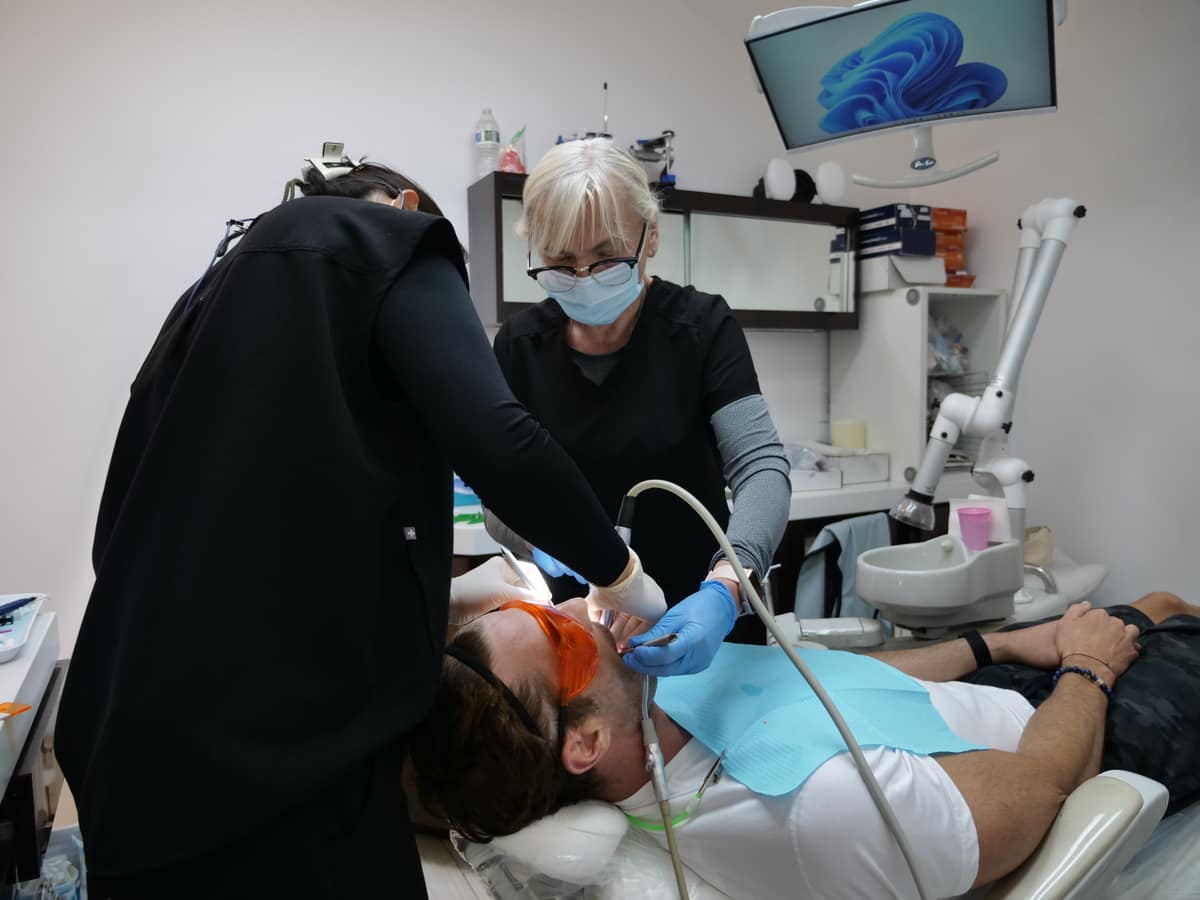
A frenectomy releases the tight tissue so the tongue or lip can move freely. We use a precise, gentle technique — often with a laser, which means minimal bleeding and fast healing. For babies the procedure takes minutes; children and adults are fully numb, and the appointment is short.
Aftercare that makes it stick.
This is the part most offices skip, and the part that makes the result stick. We will give you simple exercises for the days after the release — they keep the tissue from reattaching and train the tongue to use its new range of motion.
Recovery: mild and brief.
Babies typically fuss more at being held still than at the procedure itself. For children and adults, post-procedure soreness is usually mild and lasts only a few days.
The aftercare most offices skip
A release without aftercare is a job half done. Tissue that was tight for years does not automatically learn new posture overnight — that is why we send every patient home with simple exercises and check that the tongue is actually using its new range of motion. It is the least glamorous part of the visit and the most important one.
Hablamos español
We warmly welcome Spanish-speaking families. Nuestro equipo le explica su plan y su precio exacto en su idioma — llámenos al (212) 561-5303. No facturamos directamente al seguro; le ayudamos con el financiamiento.
Tongue-tie questions, answered
01How do I know if my baby has a tongue-tie?
Painful nursing, clicking sounds while feeding, poor weight gain, and a baby who seems frustrated at the breast or bottle are classic signs. But ties are often missed — if feeding is hard, get an evaluation from someone who looks for them routinely. We do.
02My child is older — is it too late?
No. We release tongue-ties in children, teens, and adults. Older patients usually combine the release with simple exercises to retrain tongue posture — and the improvements in speech, eating comfort, and sleep can be significant.
03I'm an adult with jaw pain and snoring. Could this be a tongue-tie?
It's possible. A restricted tongue contributes to mouth breathing, jaw tension, and airway narrowing. Come in for an evaluation — we'll assess the tie along with your airway, bite, and TMJ.
04Does the procedure hurt?
Babies typically fuss more at being held still than at the procedure itself. Children and adults are fully numb. Post-procedure soreness is usually mild and brief.
05How much does it cost?
It depends on the patient's age and complexity. We'll give you an exact number at your evaluation and walk you through financing. We don't bill insurance directly — call (212) 561-5303.
06Where are you located?
54 Warren Street, New York, NY 10007, in the heart of Tribeca — with a full pediatric floor for our youngest patients.
Tongue-tie release in the heart of Tribeca
Find us at 54 Warren Street, New York, NY 10007 — in the heart of Tribeca, serving families across Tribeca, SoHo, Battery Park City, the Financial District, and Downtown Manhattan.
Get an answer, not another guess
One visit, a proper evaluation — for your baby, your child, or yourself. Call (212) 561-5303 or book online — and bring your questions. We like those.