iTero® 3D Digital Scanning
Captures a high-resolution 3D digital map of your teeth, tracking tooth wear, bite pressure, and subtle gum recession over time.
At Tribeca Dental Studio, prevention is our highest priority. We combine iTero® 3D digital scanning, laser-assisted hygiene, and gentle ultrasonic scaling to catch issues early and safeguard your teeth for life.
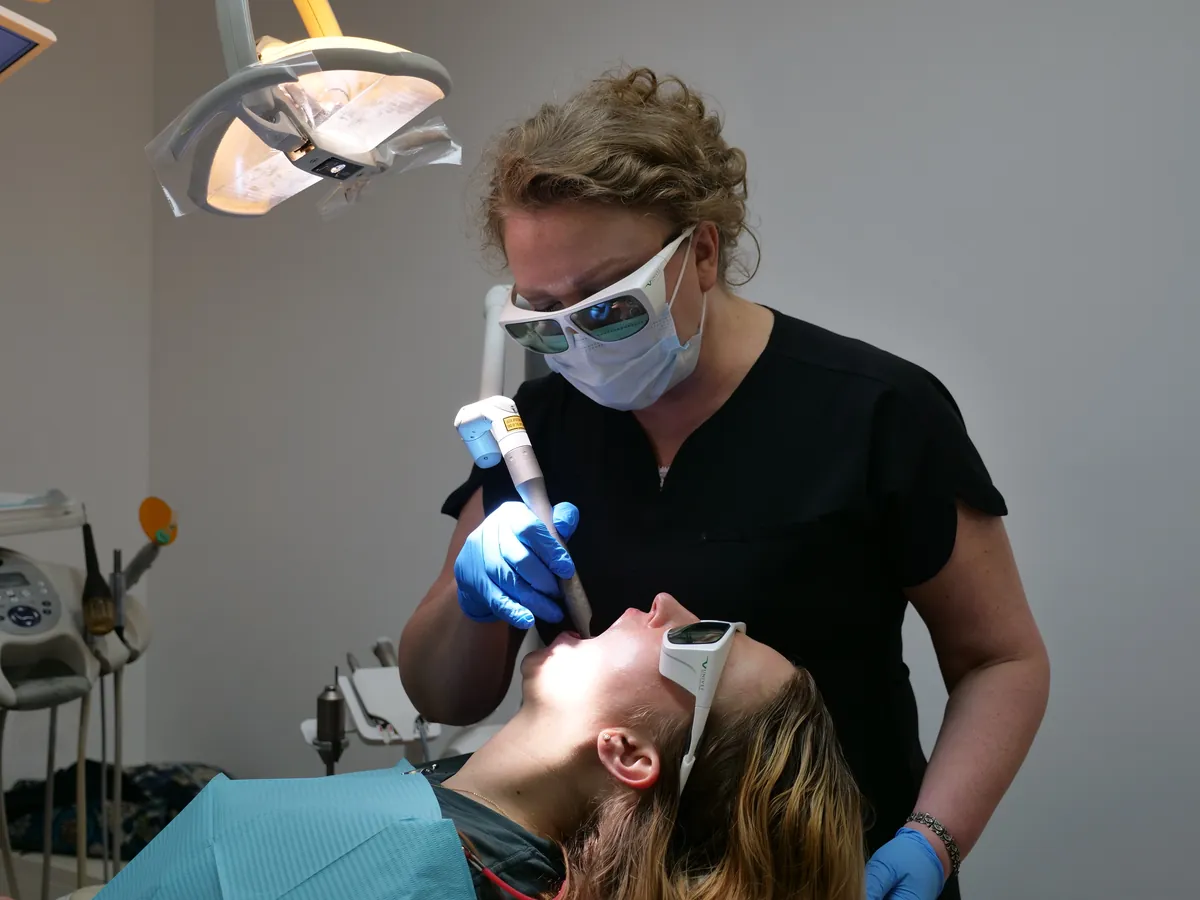
3D iTero® Digital Mapping & Ultrasonic Scaling
Gentle ultrasonic cavitation and laser diode disinfection designed for optimal periodontal longevity.
The short answer
Here's the truth: most dental problems are cheapest and easiest to fix when they're tiny. Our exams pair iTero® 3D digital scanning, laser-assisted hygiene, and low-radiation digital X-rays (up to 90% less radiation) with a full oral cancer screening — catching micro-issues before they cause pain. For most patients, ADA guidelines suggest a cleaning and exam every 6 months.
We go beyond basic visual exams with a precision technology stack that uncovers micro-issues before they cause pain:
Captures a high-resolution 3D digital map of your teeth, tracking tooth wear, bite pressure, and subtle gum recession over time.
Targets harmful bacterial colonies deep beneath the gumline to eliminate inflammation without disturbing healthy tissue.
Provides crystal-clear sub-surface imaging of tooth roots and bone density with up to 90% less radiation than legacy systems.
Comprehensive palpation and visual check of the tongue, palate, and neck tissues to ensure absolute long-term safety.
Professional prophylaxis goes far beyond cosmetics—it is systemic protection for your whole body:
Removes calcified plaque (tartar) that home brushing cannot budge, stopping acid erosion at its earliest phase.
Halts gingivitis before it turns into periodontitis—the leading cause of adult tooth loss and bone erosion.
Eradication of odor-causing anaerobic bacteria combined with gentle micro-polishing to buff away coffee, tea, and wine stains.
Clinical research connects active gum bacteria to cardiac conditions and diabetes. Keeping gums tight protects your heart.
Based on American Dental Association (ADA) guidelines and individual risk factors:
Ideal for healthy adults and children with low risk of periodontal disease or rapid decay.
Crucial for patients with history of periodontitis, dental implants, or active Invisalign® clear aligner therapy.
Comprehensive digital imaging check to survey hidden interproximal regions and root structures.
| How often | Who it's for |
|---|---|
| Every 6 Months | Standard preventive health — healthy adults and children with low risk of periodontal disease or rapid decay. |
| Every 3–4 Months | Periodontal, implant & ortho patients — including active Invisalign® clear aligner therapy. |
| Every 12–18 Months | Full diagnostic X-ray assessment of hidden regions and root structures. |
Careful, gentle, and designed around your comfort:
Initial visual mapping, periodontal pocket measurement, and high-precision iTero® 3D digital imaging.
High-frequency water-cooled sound waves gently dislodge calculus deposits without damaging natural enamel.
Precision hand curettes reach microscopic tight spaces between teeth to leave root surfaces completely smooth.
Specialized organic polishing compound removes coffee and tea stains, leaving enamel ultra-smooth so plaque can't stick.
Reinforcing application of protective minerals to soothe sensitivity and strengthen tooth enamel against acid attacks.
How to judge a dental practice on skill, honesty, and access — and what Tribeca Dental Studio offers — so your choice rests on more than a star rating.
Saturday appointments at Tribeca Dental Studio: what Saturday visits cover and how to book one when the work week leaves no room.
Root canal cost changes with the tooth, the number of canals inside it, and what the tooth needs afterward — and why the fair comparison is against extraction plus replacement, not against zero.
What a complete dental exam actually includes — teeth, gums, bite, soft tissues, and imaging — and why it is the starting point for any honest plan.
How professional cleaning and a realistic home-care routine calm inflamed, bleeding gums — while the damage is still reversible — and where gingivitis turns into periodontitis.
Root-end surgery through a small opening in the gum when a root canal has been done and the tooth still will not settle — and how the choice is made against retreatment and extraction.
The redo of a root canal that has not healed or has become reinfected — why treated teeth fail, and how retreatment compares with apicoectomy and extraction.
Protecting the deep grooves on chewing surfaces that a toothbrush cannot truly clean — which teeth qualify, how long sealants last, and when an adult genuinely benefits.
Who a professional fluoride application genuinely helps, how it differs from the fluoride in toothpaste, and how the right frequency is set by your risk — not by habit.
A dental X-ray is a family of images, from a quick bitewing to a 3D scan — what pushes a visit's imaging cost up or down, and the honest facts about radiation dose.
A fresh exam of your teeth, your imaging, and the plan another dentist proposed — what to bring, how the appointment works, and the honest outcomes it can produce.
A professional cleaning is far more than polishing teeth. While we work, we're reading your mouth like a health report: measuring the periodontal pockets around each tooth to catch gum disease at its earliest stage, checking enamel wear that reveals nighttime grinding, and comparing your current iTero® 3D scan against the previous one to spot microscopic changes the eye can't see. Most serious dental problems — deep decay, advanced gum disease, fractures — start silently, without pain. Our job is to find them while they're still small and inexpensive to fix.
We also check tissues that aren't teeth. Every exam includes an oral cancer screening: we palpate and visually inspect the tongue, palate, floor of the mouth, and neck for any unusual changes. It takes just minutes, it's completely painless, and it can save lives when it catches something early. It's one of the most important parts of your visit, even though it's the one you notice least.
And then there's the honest conversation about your home routine. No lectures — just practical guidance tailored to what we see: the brushing technique that actually reaches your molars, whether the floss you use suits your spacing, or whether a specific rinse would help the inflammation we noticed. Prevention works when it's personal. That's why every hygiene plan we create at Tribeca Dental Studio is designed around your mouth, your habits, and your life — not a generic checklist.
No. Scaling only dislodges bacteria and calcified tartar build-up. When inflamed gums heal and swelling goes down, you are simply feeling your natural spaces without calculus blockage.
Standard cleanings are painless. If you experience tooth sensitivity or inflamed gums, our hygienists can apply a fast-acting topical numbing gel to make your visit completely comfortable.
Yes. The vast majority of PPO dental insurance policies cover two preventive exams and cleanings per year at 100%. Our administrative team will happily verify your specific plan benefits.
The iTero® scan creates a digital baseline of your mouth. It allows us to track microscopic tooth wear, enamel erosion, and subtle gum recession over time with 3D comparative overlays.
Yes. Our dental plan for patients without insurance is $70 per month (regularly $100) and is designed to make preventive care accessible: exams, cleanings, and essential care without surprises. Ask at our Warren Street office for current details.
Same as adults: every six months, unless we advise otherwise. Regular visits from a young age build lifelong habits and let us catch developmental issues, early decay, or signs of mouth breathing that affect the airway in time.
Surface stains from coffee, tea, and wine, yes — our professional polishing removes them and leaves enamel smooth so plaque can't stick as easily. Internal tooth discoloration is a different matter, and for that we evaluate whitening options.
Learn how professional cleanings support preventive dental care and help monitor changes in oral health.
Explore preventive approaches used to help protect tooth enamel and reduce cavity risk.
Learn about oral soft-tissue screening as part of a comprehensive dental evaluation.
Experience meticulous, gentle preventive hygiene care powered by modern 3D technology in Lower Manhattan.
Book Your Appointment NowA checkup and cleaning is the visit everything else depends on, and it is more than a polish. The appointment has two halves that work together: a professional cleaning that removes what home care physically cannot, and a systematic examination that finds problems while they are still small, cheap, and simple.
Plaque hardens into tartar within days, tartar shelters the bacteria that drive gum disease and decay, and no brush or floss removes it once it sets — that removal is a professional job, performed carefully around every tooth and below the gumline where buildup hides.
The examination is methodical rather than a quick look.
We check each tooth for decay, cracks, and wear; assess existing fillings, crowns, and restorations for margins that may be failing; measure the gum pockets around the teeth and note where they bleed, because bleeding gums are information, not a verdict on your flossing; screen the soft tissues of the mouth; and review imaging when it is due, comparing against your previous records so change is measured rather than guessed.
A finding caught at this stage — a softening spot of early decay, a pocket quietly deepening — is a small conversation. The same finding a year later is a procedure.
Your cleaning is also diagnostic. How quickly your tartar forms, where it concentrates, and how your gums respond between visits tell us your personal risk pattern, and they set the interval we recommend for you. The generic six-month rhythm is a population average; patients with gum disease history, implants, braces, or heavy tartar formation often need a shorter cycle, and we would rather say so plainly than book you into a template that under-serves your mouth.
The same visit calibrates your home routine — the specific spots your brush misses, shown to you in the mirror, are worth more than generic advice.
Children's checkups have their own rhythm and purpose. Beyond cleaning and cavity checks, we watch development: how the baby teeth are giving way, whether the jaws are growing into alignment, whether habits like thumb sucking are starting to shape the bite.
Because our pediatric team practices in the same studio, a child's visit sits inside the same records and the same philosophy — find it early, treat it gently, and keep the experience calm enough that the child keeps coming back willingly for the visits that protect them.
If you have avoided the dentist for years, this is the visit to restart with, and it will not begin with a lecture. Long gaps are common and usually have understandable reasons — anxiety, cost worries, a bad experience. The first appointment after a gap is an assessment: we establish where things stand, stabilize anything urgent, and build a written plan in an order that makes sense, distinguishing what needs attention soon from what can be sequenced later.
Patients are often surprised by how much of the picture is better than they feared; and where it is not, they at least leave with the full map instead of the worry.
Between visits, your home care is the treatment — the checkup is the audit. Brushing twice daily with fluoride toothpaste, cleaning between the teeth once a day, and paying attention to the specific areas your hygienist flagged is what keeps the interval visits short and uneventful. When something changes between appointments — bleeding that was not there, a sensitivity that lingers, a chip you can feel — call rather than waiting for the scheduled date.
Small changes reported early are the cheapest dentistry there is, and this visit is where their baseline gets set.
A cleaning removes the plaque and hardened tartar that daily brushing cannot, especially below the gumline and between the teeth where problems start quietly. Daily home care slows that buildup; it does not eliminate it, and tartar cannot be brushed away once it hardens — it has to be scaled off professionally.
The exam half of the visit matters as much as the cleaning: cavities, gum inflammation, cracks, and worn restorations are cheapest and simplest to treat when they are found small, and most of them announce themselves to an examiner long before they hurt. Skipping visits trades an easy appointment now for a complicated one later.
Six months is the standard rhythm for most healthy mouths, but it is a starting point, not a law. Patients with gum disease history, heavy tartar formation, braces, implants, or conditions like diabetes often do better on a shorter cycle, while a small number of very low-risk patients can stretch slightly longer.
We set your interval from your own findings — how fast your tartar builds, how your gums respond, what we are watching — and we will tell you plainly which cycle we recommend for you and why, rather than booking everyone into the same template.
Tell us at the start of the visit, and we will take the time to plan the response with you rather than handing you a list on the way out. What happens next depends on what the problem is: a small cavity is a filling appointment, early gum inflammation may mean a deeper cleaning and a re-check, and anything larger becomes a written plan with the sequence and the reasoning in it. Nothing found at a checkup obligates you to treatment that day.
You leave knowing what we found, what it means, and what your options are — including the honest option of monitoring something small with a defined review date.
That sequence is deliberate. Removing tartar and polishing first gives the dentist a clean field to examine, so findings are made on the teeth themselves rather than through a layer of buildup. Imaging, when it is due, is reviewed alongside the clinical exam, and your hygienist's findings — bleeding points, pocket depths, areas that collect plaque — are part of the record the exam builds on.
If something needs a longer conversation, we have it after the full picture is assembled, so the plan you hear accounts for everything the visit found rather than arriving in fragments.
Every treatment at Tribeca Dental Studio starts with a diagnosis, not a sales pitch. Before we recommend anything, we examine the tooth or area in question, review imaging taken here in the office, and talk through what we see in plain language. You will always know what we recommend, why we recommend it, and what could safely wait.
That recommendation becomes a written plan, so the sequence, the timing, and the reasoning are clear before any treatment begins — and if a simpler option would serve you just as well, that is the option we will put in front of you.
Our studio brings every dental specialty under one roof at 54 Warren St in Tribeca, and it has since 2007. General dentistry, cosmetic care, implant surgery, periodontics, endodontics, orthodontics, airway care, and pediatric dentistry are handled by one team in one place, which means a treatment that touches several specialties is planned as a whole rather than handed off between offices across town.
Your records, your imaging, and your history stay with the same team from the first visit through every follow-up, so nothing is lost between providers and no step is planned in isolation.
We are open Monday to Friday from 8:00 AM to 6:00 PM, Saturday from 9:00 AM to 4:00 PM, and Sunday from 9:00 AM to 2:00 PM. You can book online at any time or call us at (212) 561-5303.
The studio sits between Greenwich Street and West Broadway, steps from the Chambers Street subway hub (1, 2, 3, A, C, E), with attended garages on Warren Street and Greenwich Street within a block of our door for patients who drive in.
Care does not end when the procedure does. We schedule reviews and follow-ups around your life, group staged treatment into planned steps when we can, and use each return visit to check healing and watch the details we flagged together. Between appointments we stay in touch with recall reminders and clear next steps, and if something feels off, we would rather see you quickly than have you wait and wonder.
The goal is a plan you understand, a team you recognize, and results that are checked over time rather than assumed.
A thorough recall visit has a checklist behind it, and you are entitled to know it.
The examination works through every tooth individually — looking for decay, cracks, wear patterns and failing margins on existing fillings and crowns — and then through everything that is not teeth: gum pockets measured and charted against your last visit, soft tissues of the tongue, cheeks, lips and floor of the mouth screened, the bite checked for changes, and the jaw joints and muscles felt for tenderness or clicking.
Where imaging is due under your personal risk-based schedule, it is taken and read alongside the clinical findings, not filed away.
Patients are sometimes surprised to learn that 'a cleaning' names several different appointments. A routine professional cleaning suits a healthy mouth: deposits above and just below the gumline removed, teeth polished, tissues healthy and non-bleeding.
Where gum disease has created deeper pockets, the appropriate appointment is the deeper, therapeutic cleaning of the root surfaces below the gumline — a different procedure, with a different purpose and often numbing for comfort — and where disease has been treated before, maintenance visits at shorter intervals keep it controlled.
Between visits, your own routine carries the result: twice-daily brushing with fluoride toothpaste, daily cleaning between the teeth, and a call to (212) 561-5303 if you notice new bleeding, sensitivity or a rough spot, rather than waiting for the next recall.