Why Regular Dental Cleanings Are Essential for NYC Residents in 2026

August 27, 2026
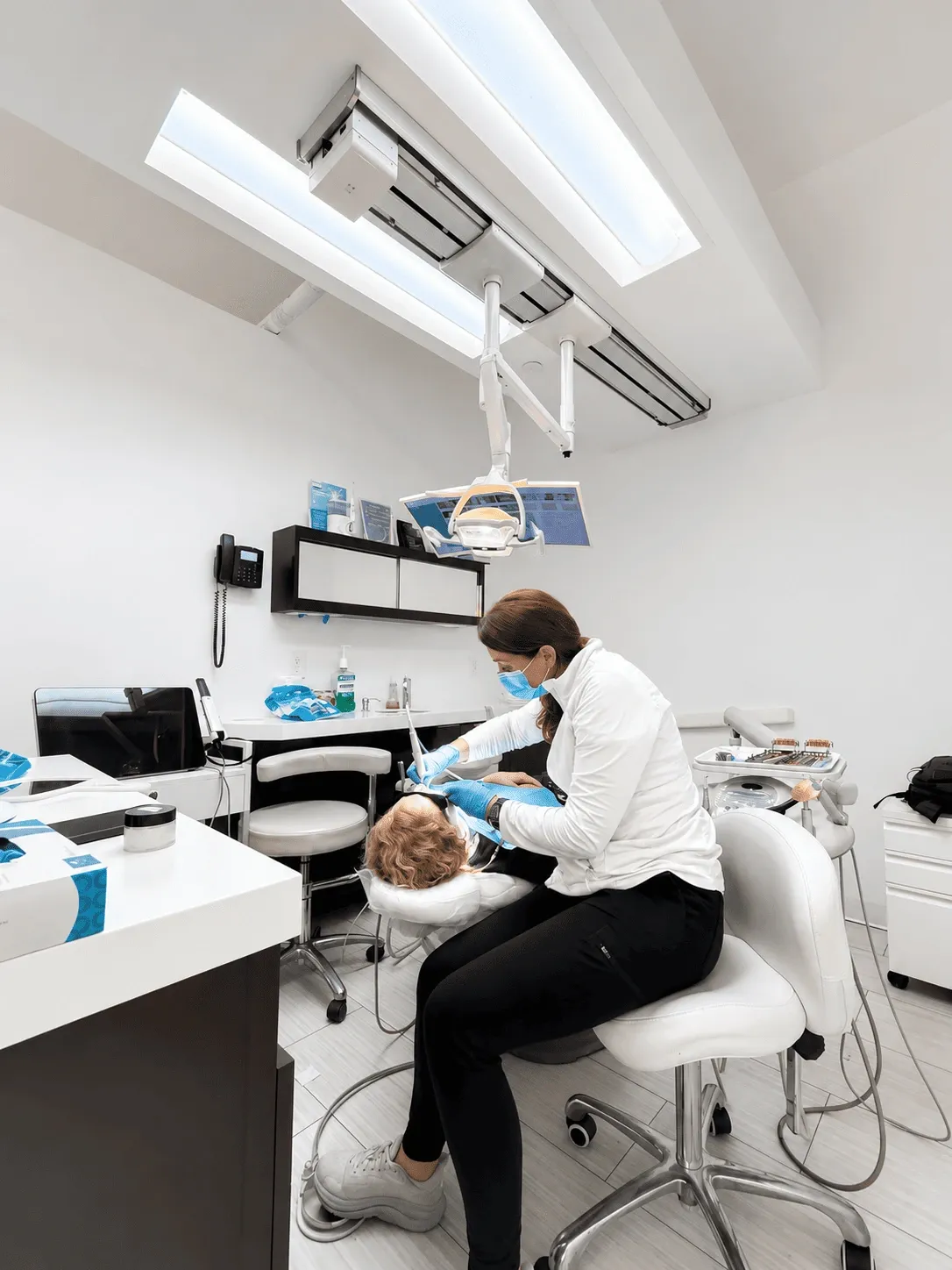
Why Regular Dental Cleanings Are Essential for NYC Residents in 2026

Between fast-paced careers in Lower Manhattan, busy social calendars, and world-class dining, taking care of your health can sometimes feel like a balancing act. However, maintaining optimal oral health is one of the easiest ways to safeguard your overall wellness.

If it’s been longer than six months since your last professional dental examination, here is why regular dental cleanings in Tribeca remain a cornerstone of long-term health in 2026—and how high-end, individualized care can make all the difference.

1. Professional Plaque and Tartar Removal

Even with a diligent home oral hygiene routine—brushing twice daily and flossing—bacterial plaque continually forms along the gumline. Over time, plaque hardens into calculus (tartar), which cannot be removed by a standard toothbrush.

Professional dental prophylaxis (cleaning) uses specialized clinical instruments to gently scale away hardened tartar, stopping decay before it starts.

According to guidelines from the American Dental Association (ADA), routine hygiene visits every six months are vital to removing hard-to-reach bacterial deposits and keeping your teeth and gums healthy.

2. Preventing Periodontal (Gum) Disease

Gum disease starts subtly with gingivitis—manifesting as minor redness, swelling, or bleeding when flossing. Left untreated, it progresses to periodontitis, an advanced infection that damages the surrounding jawbone and soft tissues, ultimately leading to tooth mobility or loss.

Recent healthcare data underlines the strong link between oral inflammation and systemic health. Advanced gum disease is connected to:

  • Cardiovascular Disease: Bacteria entering the bloodstream can exacerbate arterial inflammation.
  • Diabetes Management: Chronic oral infections make blood sugar control more challenging.
  • Respiratory Issues: Airborne oral bacteria can enter the lungs, compounding pulmonary risks.

By scheduling consistent hygiene visits, you effectively disrupt bacterial colonies and prevent long-term periodontal damage.

3. Early Detection of Complex Issues

A professional hygiene appointment is far more than just a deep cleaning; it includes a comprehensive visual and digital examination of your oral cavity.

During a routine visit, your practitioner can identify early-stage issues such as:

  • Micro-cavities between tight contact points
  • Failing or micro-fractured existing restorations
  • Structural wear caused by nocturnal teeth grinding (bruxism)
  • Early screening for oral cellular changes or abnormalities

Spotting these conditions early allows for minimal, conservative treatments like biomimetic fillings or dental inlays and onlays, preventing the need for complex restorative care later.

4. Fresh Breath and Natural Aesthetics

Daily coffee runs, espresso, tea, and red wine contribute to stubborn surface stains that standard toothpaste cannot lift. Professional polishing removes external discoloration, restoring the natural brightness and shine of your tooth enamel.

Beyond aesthetics, persistent bad breath (halitosis) is often caused by volatile sulfur compounds produced by bacteria hidden in deep periodontal pockets. A thorough hygiene clean removes these hidden reservoirs, keeping your breath clean and fresh.

Preventive Dental Care in Lower Manhattan

Finding a dental team that fits a busy New York schedule shouldn't be stressful. Located in Lower Manhattan, Tribeca Dental Studio offers a full suite of general, cosmetic, and advanced periodontal services under one roof. Utilizing modern digital imaging and gentle clinical techniques, the practice focuses on delivering precise, comfortable preventive care tailored to your unique smile.

To stay on track with your oral health, visit the official resource on Centers for Disease Control and Prevention (CDC) Oral Health to learn more about how preventive habits protect your body long-term.

Priority Checklist for Your Next Visit

  • Schedule Every 6 Months: Set your next appointment before leaving the studio.
  • Disclose Changes: Inform your hygienist of any new medications, systemic conditions, or changes in your health.
  • Ask About Tailored Oral Care: Request personalized recommendations for interdental brushes, nightguards, or targeted rinses.

Ready to prioritize your oral wellness? Book your next professional checkup and cleaning at Tribeca Dental Studio today.

About Tribeca Dental Studio

Tribeca Dental Studio, located at 54 Warren St, New York, NY 10007, has provided comprehensive dental care to Lower Manhattan since 2007. Led by Dr. Nina Izhaky, our practice combines general, pediatric, orthodontic, oral surgery, and periodontal care under one roof.

Our focus on airway health, dental implants, veneers, and pediatric dentistry sets us apart. We use 3D CBCT imaging, digital planning, and laser technology — including NightLase for snoring — to deliver precise, comfortable care.

To schedule a consultation, call (212) 561-5303 or book online. We welcome patients from Tribeca, SoHo, Battery Park City, the Financial District, and throughout downtown Manhattan.

How We Write — and How We Practice

The articles on this blog are written from the same standard we apply in the treatment rooms: diagnosis before recommendation. When we explain a treatment here — an implant, an aligner plan, a sleep appliance — we explain how the decision is actually made in practice: the examination, the imaging, the alternatives considered, and the reasons one path is chosen over another.

If a topic has a genuine controversy or a matter of professional judgment, we say so rather than smoothing it over, because a reader who understands the trade-offs makes better decisions than one who has only seen the brochure version.

Nothing here replaces an examination of your own mouth, and we are careful about the difference. General information can tell you what questions to ask and what a thorough answer sounds like; it cannot tell you whether your bone will hold an implant, whether your snoring is apnea, or whether a tooth can be saved. When an article touches your situation, treat it as preparation for a conversation — then have the conversation.

We hold same-day slots for emergencies, and consultations carry no obligation: book online or call (212) 561-5303.

About the Practice

Tribeca Dental Studio has served Lower Manhattan from 54 Warren St since 2007, with general, cosmetic, implant, periodontal, endodontic, orthodontic, airway, and pediatric care under one roof and one team's direction. The questions our patients ask in the chair are the ones this blog answers: what a treatment involves, how long it takes, what recovery feels like, what it costs to do it properly, and how to tell a careful plan from a rushed one.

If your question is not covered, ask us at your visit — the honest answer is the house style.

To schedule, book online at any time or call (212) 561-5303. The studio is open Monday to Friday from 8:00 AM to 6:00 PM, Saturday from 9:00 AM to 4:00 PM, and open on select Sundays, steps from the Chambers Street subway hub, and welcomes patients from Tribeca, the Financial District, Battery Park City, SoHo, and across downtown Manhattan.

A Note on Symptoms and Self-Diagnosis

Readers often arrive here after a search that began with a symptom — a tooth that throbs at night, gums that bleed, a snore a partner can no longer sleep through. A word of honest framing: an article can help you understand what a symptom commonly means and how urgently it usually needs attention, but it cannot rank your case.

Bleeding gums are sometimes a hygiene problem and sometimes the first sign of periodontal disease; a twinge is sometimes a high filling and sometimes a dying nerve. The difference is found in an examination and imaging, not in a paragraph — which is why these articles end where they do: with an invitation to be seen, not a verdict.

If what you are feeling cannot wait, do not let reading substitute for calling. The studio holds same-day emergency slots daily, and a call to (212) 561-5303 with a plain description of the problem is the fastest route to a real answer. For everything else, bring the article to your appointment. Mark the passage that matched your situation.

It gives the conversation a head start, and it gives you a way to check that the plan you are offered actually addresses the thing that brought you in.

What Things Cost, and Why We Answer That Way

Cost questions deserve a straight answer, and the straightest one available before an examination is structural: dental fees follow diagnosis, materials, laboratory work, and time, in that order. That is why this blog explains what drives the cost of the treatments it covers — the imaging, the grafting, the stages, the restoration — instead of printing numbers that would be fiction for most readers.

After an examination, the answer becomes exact: a written plan with each stage and its fee, which you can consider without obligation and compare against any other opinion you choose to get.

We would rather earn a patient with a clear plan than close one with a fast number. If you are comparing practices, compare plans: what was examined, what was imaged, what is included, what happens if healing changes the sequence. The articles here are written to give you those questions. The studio's answers, for your mouth specifically, are one appointment away.

No Miracles, No Scares

One more commitment, because it decides whether health writing helps or harms: we do not publish scares or miracles. A treatment described here does what it does within limits we will name — an appliance manages apnea for the patients whose anatomy suits it, a laser protocol helps the snoring cases it is indicated for, an implant succeeds at the rate careful planning produces, not at a hundred percent.

If a claim anywhere in dentistry sounds too clean, it is missing its conditions, and our articles try to restore them. You will make better decisions with the conditions attached, and so will we.

Questions Worth Bringing to Your Appointment

The most useful thing you can bring to a dental appointment is a good question, so here is the short list our doctors wish every new patient asked — of us, and of any practice being considered. What did the examination and imaging actually show? Which parts of the plan are urgent, which protect the teeth around them, and which are elective? What happens if each part waits six months? What are the alternatives, and why is this one recommended over them?

And what will the follow-up look like — how will we know the treatment worked? A practice that answers those questions completely, in writing, has shown you its standard before it has touched a tooth.

Notice what is not on the list: the brand names of equipment, the décor of the office, the speed of the sales process. Dentistry is a long relationship disguised as a series of procedures. The practices worth keeping are the ones whose plans you understand, whose reasoning you can repeat to a spouse at the kitchen table, and whose follow-ups happen whether or not you remember to ask.

That is the relationship this studio has tried to build since 2007, one written plan at a time.

If an article here has started a question we have not answered, the consultation is where it gets answered for your mouth specifically. Book online at any time or call (212) 561-5303. Bring the page, bring the question, and expect the answer to involve an examination, imaging where it matters, and a plan you can take home and think over. That is not a sales technique. It is the whole technique.

How This Journal Treats Uncertainty

A closing note on how this journal treats uncertainty, because dental information online rarely does. Where a question has a settled answer, the articles here give it plainly. Where the honest answer is that it depends — on imaging, on anatomy, on the findings of an examination nobody can perform through a screen — the articles say that too, and explain what it depends on and how the dependence gets resolved in a real appointment. That restraint is deliberate.

A journal that pretends every question has a universal answer trains its readers to expect certainty from their treatment as well, and dentistry, practiced honestly, offers something better than certainty: a diagnosis, a plan with its reasoning shown, and follow-up that checks whether the reasoning was right.

If you have read this far down any page of this site, you are the reader these pieces are written for — the one who checks. Bring the checking with you. The consultation at 54 Warren St rewards it: findings first, options with trade-offs, costs in writing, and time to decide. Book online at any hour or call (212) 561-5303.