Restorative Dentistry in Tribeca, NYC
At Tribeca Dental Studio, we offer specialized restorative dentistry in Lower Manhattan to repair damaged teeth, replace missing structure, and restore optimal biting function and aesthetic harmony.
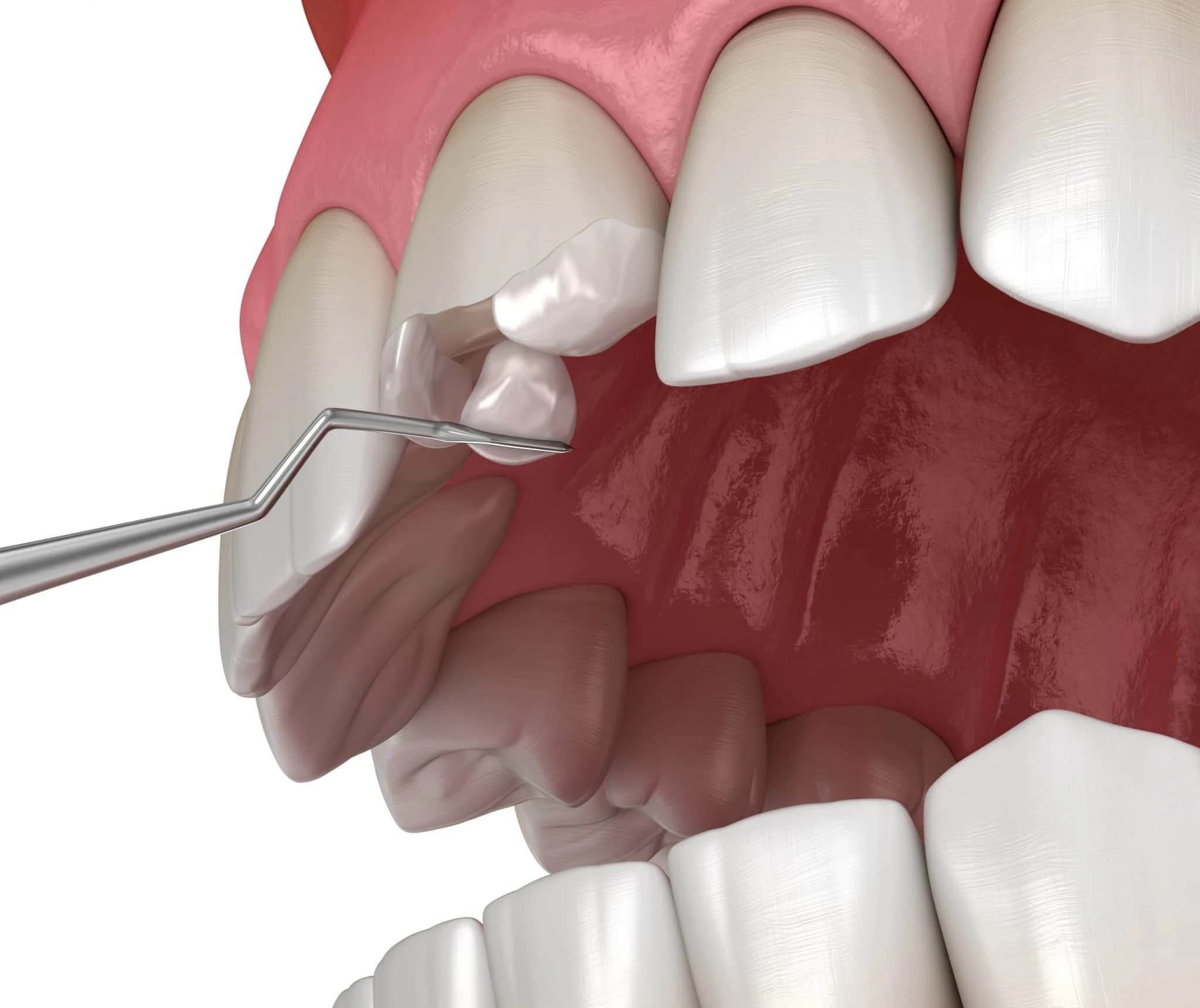
The short answer
Restorative dentistry repairs what's broken and replaces what's missing — fillings, crowns, bridges, implants, and full-mouth rehabilitation. At our Tribeca studio, every restoration is planned around your bite, not just the single tooth. The goal is simple: teeth that work like they should and look like they always did.
What Is Restorative Dentistry?
Restorative dentistry focuses on diagnosing, preventing, and repairing diseases or trauma affecting the teeth and supporting periodontium. Its primary objective is to restore chewing functionality, preserve natural bone, and rebuild aesthetic balance using biocompatible materials.
Restorative Services at Tribeca Dental Studio
Utilizing state-of-the-art 3D digital scanners, microscopes, and laser technology for durable, lifelike results.
LANAP® Laser Therapy
A cutting-edge, minimally invasive laser procedure that targets deep gum infection with surgical precision, promoting bone re-growth and tissue regeneration without scalpels or sutures.
Dental Fillings
Composite, metal-free tooth-colored resin restorations engineered to repair minor decay and fractures while blending invisibly with your natural enamel.
Inlays & Onlays
Custom porcelain laboratory restorations designed for substantial decay or structural damage when a full crown is unnecessary, preserving maximum natural tooth structure.
Root Canal Therapy
Microscope-enhanced therapy designed to eliminate deep pulp infections, relieve severe toothaches, and permanently save compromised teeth from extraction.
Dental Implants
The gold-standard titanium root replacement for missing teeth, restoring full bite strength, preventing jawbone resorption, and supporting crowns or bridges.
Crowns & Bridges
Custom-milled ceramic crowns and anchored prosthetic bridges engineered to rebuild strength, form, and aesthetics for severely damaged or missing teeth.
Custom Dentures
Modern, secure partial or full dentures crafted for optimal comfort, facial support, and natural appearance, available as traditional or implant-retained options.
Why Choose Us For Restorative Care?
Restorative dentistry requires seamless collaboration across multiple disciplines. Instead of referring you to external providers for implants, root canals, or gum therapy, our board-certified periodontists, endodontists, and prosthodontists treat you right here under one roof.
We utilize Fotona/Biolase lasers and Zumax® endodontic microscopes for ultimate structural accuracy.
All restorations are engineered from hypoallergenic porcelain and composite resins free of toxins or mercury.
Insurance & Payment Plans
Restorative procedures are medically necessary, and most PPO plans provide partial or full coverage. We process all out-of-network claims on your behalf and partner with Cherry and CareCredit for flexible 0% interest monthly payments.
Explore Financial OptionsRestoration Is a Philosophy, Not Just a Procedure
Every tooth tells a story. A molar with a twenty-year-old filling that's starting to leak. A front tooth chipped in a long-ago accident, patched and re-patched. A crown from another decade that never quite matched. Restorative dentistry at Tribeca Dental Studio starts with reading those stories carefully — understanding not just what's broken, but why it broke, and choosing the restoration that addresses the cause rather than just the symptom.
Our guiding principle is simple: preserve as much natural tooth as possible. That means recommending a precision inlay when a crown would be overkill. It means replacing a failing filling with composite that bonds to the tooth rather than wedging into it. It means using 3D imaging to see cracks invisible to the naked eye before deciding between repair and replacement. Conservative doesn't mean doing less — it means doing exactly what's needed, no more.
For our downtown Manhattan patients, there's a practical dimension too. A well-executed restoration done right the first time saves you the repeat visits, the emergency calls, the vacation interrupted by a cracked tooth. We'd rather spend an extra twenty minutes getting your bite perfect today than see you back in six months with a fractured cusp. That's the standard we hold at 54 Warren Street — restorations built to disappear into your smile and stay there for years.
One Roof, One Plan
Most restorative cases are never about a single tooth. A cracked molar sits next to a failing filling; a missing tooth has been quietly shifting your bite for years; gum disease is undermining the foundation underneath it all. So we don't plan tooth by tooth — we plan the whole mouth. Your first visit starts with 3D imaging and a bite analysis: we map how your teeth meet, where the forces concentrate, and which teeth are doing work they were never designed for. Then we sequence the treatment honestly: stabilize the foundation first — gums and bone — then rebuild structure, and finish with the aesthetics.
Here's where our downtown patients notice the difference: the specialists who do that work are all here. The periodontist treating your gums with LANAP, the endodontist saving a tooth under the microscope, the surgeon placing your implant — they plan together, in the same building, often on the same day. No referrals that get lost in the mail. No conflicting plans from offices that never speak to each other. One team, one chart, one plan that everyone on it actually follows.
And yes — it saves time, which matters when you live and work in Lower Manhattan. A case that would take six months of specialist-hopping elsewhere moves faster when the team is steps apart. We've been doing this at 54 Warren Street since 2007, and the philosophy hasn't changed: treat the cause, protect what's healthy, and build restorations that disappear into your smile for years. That's what restorative dentistry means to us.
“If the tooth is no longer there and the bone is good, the replacement process is actually very uneventful — very little recovery at all. What we hear from our patients is how unremarkable the procedure was. They're surprised, and we're thankful for their appreciation.”
— Dr. Nina Izhaky, Tribeca Dental Studio
Common Restorative Questions
Is restorative dentistry painful?
Modern dental techniques, local anesthesia, and sedation options ensure that restorative procedures are performed with minimal to no discomfort. Patient comfort is our highest priority at Tribeca Dental Studio.
How long will my dental restoration last?
The longevity of a restoration depends on the procedure type and your oral hygiene habits. With proper care, fillings can last for many years, while crowns, bridges, and dental implants can last for decades or even a lifetime.
Will my restoration look natural?
Yes. We utilize high-quality, tooth-colored materials such as porcelain and composite resin that are meticulously custom-matched to your surrounding teeth for a seamless, natural appearance.
Does dental insurance cover restorative dentistry?
Most dental insurance plans provide coverage for restorative procedures because they are medically necessary for your health and function. Our administrative team will help you verify and maximize your benefits.
What's the difference between a filling, inlay, and crown?
It's a spectrum of coverage. A filling repairs a small area of decay directly in the tooth. An inlay or onlay is a precision-crafted restoration for moderate damage — stronger than a filling but more conservative than a crown. A crown covers the entire visible tooth and is used when damage is extensive or the tooth has had a root canal.
Can old silver fillings be replaced with tooth-colored ones?
Absolutely — it's one of our most common requests. We safely remove aging amalgam fillings and replace them with composite or porcelain that matches your natural tooth color. Many patients are amazed at how different their smile looks with the dark metal gone.
How do I know if I need a crown versus a filling?
The deciding factors are how much healthy tooth structure remains and where the tooth sits in your bite. If more than half the tooth is damaged, cracked, or a large old filling is failing, a crown is usually the stronger long-term choice. We evaluate this with detailed imaging and show you exactly what we see.
Will restorative work affect how my teeth feel when I bite?
It shouldn't — and that's a point of pride for us. Every restoration is meticulously adjusted so your bite feels natural and even. If anything ever feels 'high' or uneven after treatment, come back and we'll refine it at no charge until it's perfect.
Do I need to see an outside specialist for implants or root canals?
No. Our board-certified periodontists, endodontists, and prosthodontists all work right here under one roof. Your case is planned as a team — no outside referrals, no delays, and no conflicting treatment plans.
In what order do you perform multiple restorative treatments?
We stabilize the foundation first — gum and bone health — then rebuild structure (implants, root canals, crowns), and finish with aesthetics. Every step is planned around your full bite, not just the single tooth.
I have dental anxiety — can restorative treatment still be comfortable?
Yes. We use effective local anesthesia and offer sedation options so procedures are performed with minimal to no discomfort. Patient comfort is our highest priority — tell us what worries you and we'll adapt our approach.
Reclaim Your Function & Smile
Don’t let missing, cracked, or painful teeth dictate your life. Schedule your personalized restorative consultation today.
Book Restorative EvaluationRestorative Dentistry in Depth: Rebuilding as One System
Restorative dentistry is the rebuilding of teeth that disease, fracture, or wear has compromised — fillings, inlays and onlays, crowns, bridges, and implant restorations — planned as one system rather than as isolated repairs. Its governing question is structural: how much sound tooth remains, what forces will the restoration carry, and which tier of repair gives this tooth the longest honest future. That question has a conservative bias built in.
A smaller restoration that genuinely suffices outranks a larger one, because every tier of repair removes or covers more of the tooth, and tooth structure, once gone, does not return.
Diagnosis drives the plan, and it is more than finding holes. We assess the extent of decay or fracture, the condition of old restorations and their margins, the health of the pulp inside the tooth, the bite forces landing on it, and the gum and bone that support it — using imaging and, where indicated, 3D scans.
Several damaged teeth are planned together, because restorations meet each other in the bite: rebuilding one side changes the forces on the other, and a sequence that ignores that produces teeth that are individually repaired and collectively wrong. Your written plan therefore covers the whole mouth's restorative picture, sequenced — stabilization first, foundations next, refinement last.
Materials are matched to the job rather than chosen by habit. Tooth-colored composite for direct repairs, laboratory ceramics where a fabricated piece fits and lasts better, full crowns where coverage is the protection the tooth needs — each has a mechanical profile, an aesthetic range, and a maintenance horizon, and the right match depends on the tooth's position and load.
We explain the material reasoning for your case in plain terms, including lifespan expectations, because a restoration decision you understand is one you can maintain properly.
Restorations also have a relationship with time that honest planning acknowledges. Nothing placed in a mouth is permanent: margins age, bites change, and the tooth around a restoration continues its own life. Regular reviews exist to catch a failing margin or a new crack while the fix is still small, and our records track what was placed, where, and when, so your history is continuous even across years.
If you are facing restorative work — one tooth or many — the consultation ends with a complete map: what is sound, what is failing, what is urgent, and what can be watched, in writing, before anything is scheduled.
If I need several restorations, where do we start?
The order follows the disease, not the calendar: active decay and infection are stabilized first, because building restorations on untreated disease guarantees their failure. Foundations come next — the restorations that protect weakened teeth and re-establish a working bite — then replacements for missing teeth, and aesthetic refinement last, on top of a structure that is healthy and functioning.
Within that logic, your priorities matter: pain and function outrank appearance, but a visible front tooth can be provisionally restored early so you are not living with the most distressing problem while the sequence runs. Your written plan shows the order and the reasoning, and it can be staged around your schedule and budget without breaking the clinical logic.
How do I know if an old filling or crown really needs replacing?
Honestly and on evidence. A restoration is failing when its margins leak and let decay start underneath, when the tooth around it cracks or breaks down, when it no longer seals or fits the bite, or when imaging shows disease at a root it was meant to protect. A restoration that is merely old, or whose shade no longer matches a whitened smile, may be a candidate for monitoring or elective replacement — a different conversation, and we will not dress it up as necessity.
At your exam we show you the specific finding on your tooth or scan, explain what it means, and separate 'this needs attention' from 'this can be watched' in writing.
How We Plan Your Care at Tribeca Dental Studio
Every treatment at Tribeca Dental Studio starts with a diagnosis, not a sales pitch. Before we recommend anything, we examine the tooth or area in question, review imaging taken here in the office, and talk through what we see in plain language. You will always know what we recommend, why we recommend it, and what could safely wait.
That recommendation becomes a written plan, so the sequence, the timing, and the reasoning are clear before any treatment begins — and if a simpler option would serve you just as well, that is the option we will put in front of you.
Our studio brings every dental specialty under one roof at 54 Warren St in Tribeca, and it has since 2007. General dentistry, cosmetic care, implant surgery, periodontics, endodontics, orthodontics, airway care, and pediatric dentistry are handled by one team in one place, which means a treatment that touches several specialties is planned as a whole rather than handed off between offices across town.
Your records, your imaging, and your history stay with the same team from the first visit through every follow-up, so nothing is lost between providers and no step is planned in isolation.
We are open Monday to Friday from 8:00 AM to 6:00 PM, Saturday from 9:00 AM to 4:00 PM, and Sunday from 9:00 AM to 2:00 PM. You can book online at any time or call us at (212) 561-5303.
The studio sits between Greenwich Street and West Broadway, steps from the Chambers Street subway hub (1, 2, 3, A, C, E), with attended garages on Warren Street and Greenwich Street within a block of our door for patients who drive in.
Care does not end when the procedure does. We schedule reviews and follow-ups around your life, group staged treatment into planned steps when we can, and use each return visit to check healing and watch the details we flagged together. Between appointments we stay in touch with recall reminders and clear next steps, and if something feels off, we would rather see you quickly than have you wait and wonder.
The goal is a plan you understand, a team you recognize, and results that are checked over time rather than assumed.