Minimally Invasive Laser Protocol
LANAP® uses the PerioLase® MVP-7™ Nd:YAG laser. It is part of a set gum treatment plan. The plan targets sick pocket tissue and bacteria. It does not use the cuts of standard gum flap surgery.
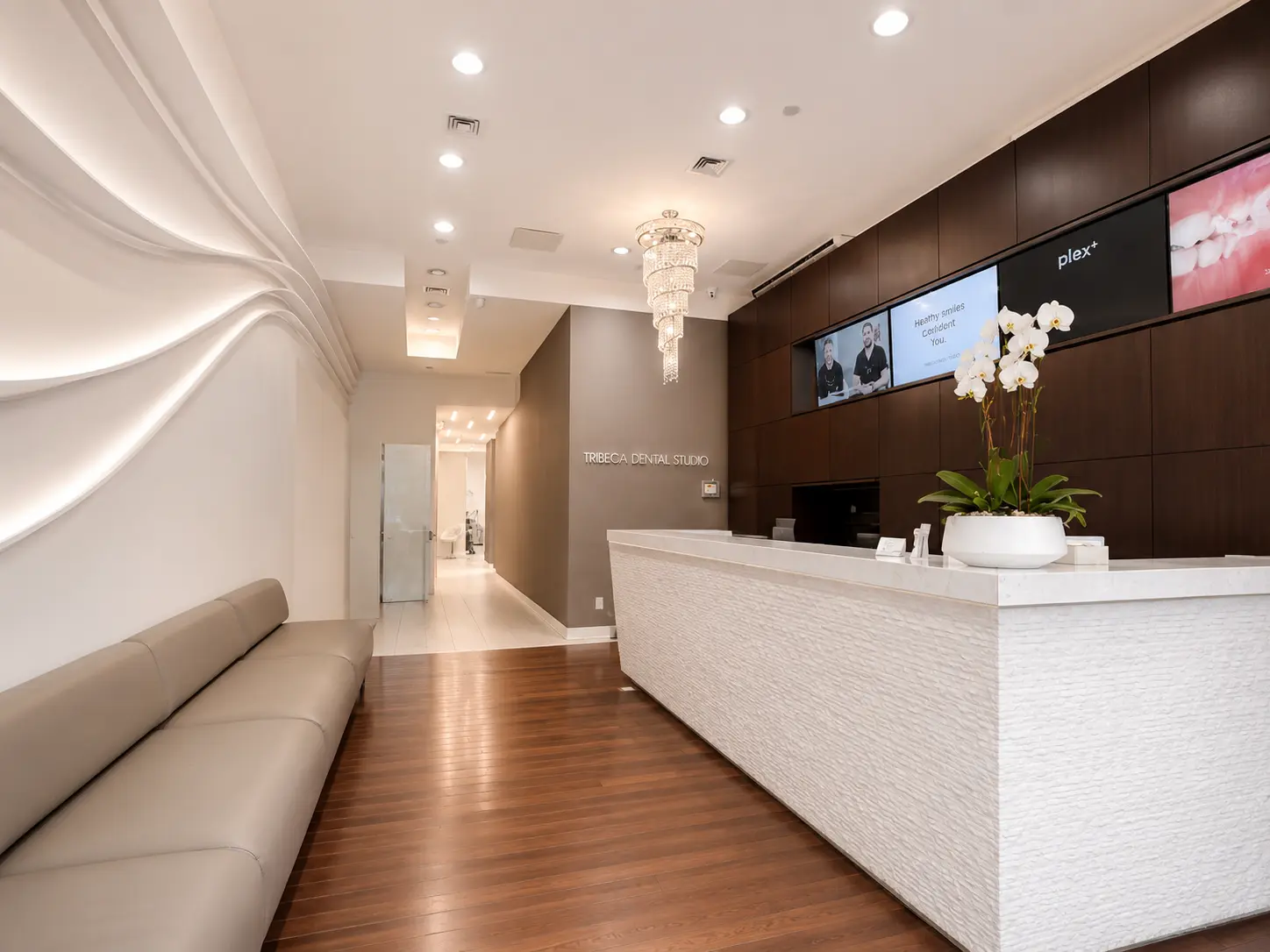
This is a laser gum plan with minimal cutting. It treats selected cases of moderate to advanced periodontitis. The PerioLase® MVP-7™ treats sick gum pockets. The plan supports healing and new growth of gum support.
LANAP is a laser option instead of gum surgery. We use the PerioLase MVP-7 laser, not a scalpel. The laser clears infection from deep gum pockets and supports healing. It is for moderate to advanced gum disease. It is far less invasive than standard surgery. The goal is always the same: save your teeth and keep your gums stable.
LANAP® stands for Laser-Assisted New Attachment Procedure. It is a specific gum treatment plan. It is done with the PerioLase® MVP-7™ Nd:YAG laser. It is for selected patients with gum disease.
LANAP® does not rely on a scalpel-cut gum flap. It combines laser treatment of the gum pocket with calculus removal from root surfaces. It forms a stable fibrin clot. It includes a check of bite forces. It also includes planned follow-up care.
Control gum infection. Preserve healthy tissue when possible. Create conditions that help healing. Support long-term gum health.

LANAP® may suit selected patients with moderate to advanced periodontitis. It is not the right choice for every person with bleeding gums or gum disease.
A gum exam is needed to learn how severe the disease is. It also shows the outlook for each tooth. The exam may include pocket probing and dental imaging. It may check bone levels, loose teeth, swelling, and bleeding. It also covers bite forces, medical history, smoking history, and other risk factors.
The benefits of LANAP® depend on your diagnosis. They depend on how far the disease has spread and your anatomy. The outlook for each tooth matters. Your healing response matters. So does sticking with long-term gum care.
LANAP® uses the PerioLase® MVP-7™ Nd:YAG laser. It is part of a set gum treatment plan. The plan targets sick pocket tissue and bacteria. It does not use the cuts of standard gum flap surgery.
LANAP® uses no scalpel-cut gum flap and no stitches. Standard osseous gum surgery uses both.
Published studies of treated tissue show that new gum attachment parts can form after LANAP®. This held in cases that were well chosen.
Treating gum infection and aiding healing may improve the outlook for some weak teeth. Whether a tooth can be saved depends on bone support, how loose it is, its shape, bite forces, and other clinical factors.
Scaling and root planing is sometimes called a deep cleaning. It is a nonsurgical gum treatment. It removes plaque, calculus, and bacteria from below the gumline. It also cleans the root surfaces.
For many patients, nonsurgical gum therapy may be the right first step. We then recheck the response. Only then do we consider more treatment.
LANAP® is a fuller gum plan. It fits selected cases with deeper gum damage or disease that persists. Those cases need more treatment.
The right choice depends on the disease stage and pocket depth. It depends on bone support and past treatment response. It also depends on the outlook for each tooth and other clinical findings.
Both approaches can play a role in gum treatment. The right method depends on the disease pattern and your anatomy. It also depends on treatment goals and a pro exam.
| Feature | LANAP® | Traditional Periodontal Surgery |
|---|---|---|
| Access method | Laser-assisted protocol through periodontal pockets | May involve surgical flap reflection |
| Traditional sutures | Not part of the LANAP® protocol | May be required |
| Healthy tissue preservation | Designed to minimize unnecessary tissue removal | Depends on surgical approach and disease anatomy |
| Which is appropriate? | Depends on diagnosis | Depends on diagnosis |
The exact steps and plan can vary. They depend on your gum diagnosis and clinical needs.
Before we advise treatment, we check pocket depths and bone levels. We check for bleeding, swelling, and loose teeth. We also check bite forces and the outlook for each tooth.
As part of LANAP®, a thin PerioLase® fiber goes into the gum pockets. It targets sick pocket tissue and bacteria.
Ultrasonic tools and other gum tools remove calculus and deposits from the root surfaces.
A second laser pass helps form a stable fibrin clot. The clot seals the treated pocket. It supports early healing.
We may check and adjust harsh bite forces when needed. This keeps weak teeth from taking too much load as they heal.
Lasting results depend on pro care visits and home care. They also depend on control of risk factors and steady checks after treatment.
Periodontitis destroys the structures that support teeth. These include the periodontal ligament and alveolar bone. Key goals of gum treatment are to control infection and create a stable setting for healing.
The LANAP® protocol has published human histologic evidence. It shows new cementum, periodontal ligament, and alveolar bone in treated sites.
This does not mean every patient or tooth regains the same support. Healing depends on how severe the disease is. It depends on anatomy and overall health. Smoking status, home care, and care visits matter too. So do other personal factors.
A gum exam sets realistic goals for each tooth. Some weak teeth may respond well to treatment. Others may have a poor outlook. Causes include advanced bone loss, fracture, decay, or looseness. Other factors can play a role too.
LANAP® does not use the scalpel flap and stitches of standard osseous surgery. So early recovery may feel different. Soreness, swelling, sensitivity, and healing time can still vary.
You will get instructions made for your case. They cover diet and cleaning around treated areas. They cover medicines, if prescribed. They also cover activity and follow-up visits.
Follow the instructions for your case. Do not rely on a one-size recovery timeline.
Periodontitis is a chronic disease with ongoing inflammation. Even after good treatment, it can return. Plaque build-up can bring it back. So can smoking and uncontrolled health risks. Missed care visits can let it turn active again.
Pro gum care visits and good daily oral hygiene are key. They protect your treatment results.
Periodontal maintenance visits
Careful daily plaque control
Monitoring pocket depths
Evaluation of bleeding and inflammation
Smoking cessation when applicable
Management of relevant health risks
Tribeca Dental Studio offers gum exams and LANAP® laser gum therapy. The office is at 54 Warren Street, New York, NY 10007. It serves patients in Tribeca, Lower Manhattan, and nearby New York City communities.
If you have been diagnosed with periodontitis, an exam can help. The same is true if you have deep gum pockets, bleeding gums, or bone loss. Loose teeth or lasting gum swelling are also reasons. The exam shows which path fits: LANAP®, nonsurgical gum therapy, standard gum surgery, or another approach.
Schedule LANAP ConsultationDr. Sam did the FOX interview on the LANAP procedure — he was one of the first to start using it. The healing is phenomenal, the recovery minimal — similar to a regular filling rather than a full surgical recovery with stitches. We also add additional protocols that enhance the results and bone regeneration. It’s really short of a magical wand!
Dr. Nina Izhaky says:
Tribeca Dental Studio
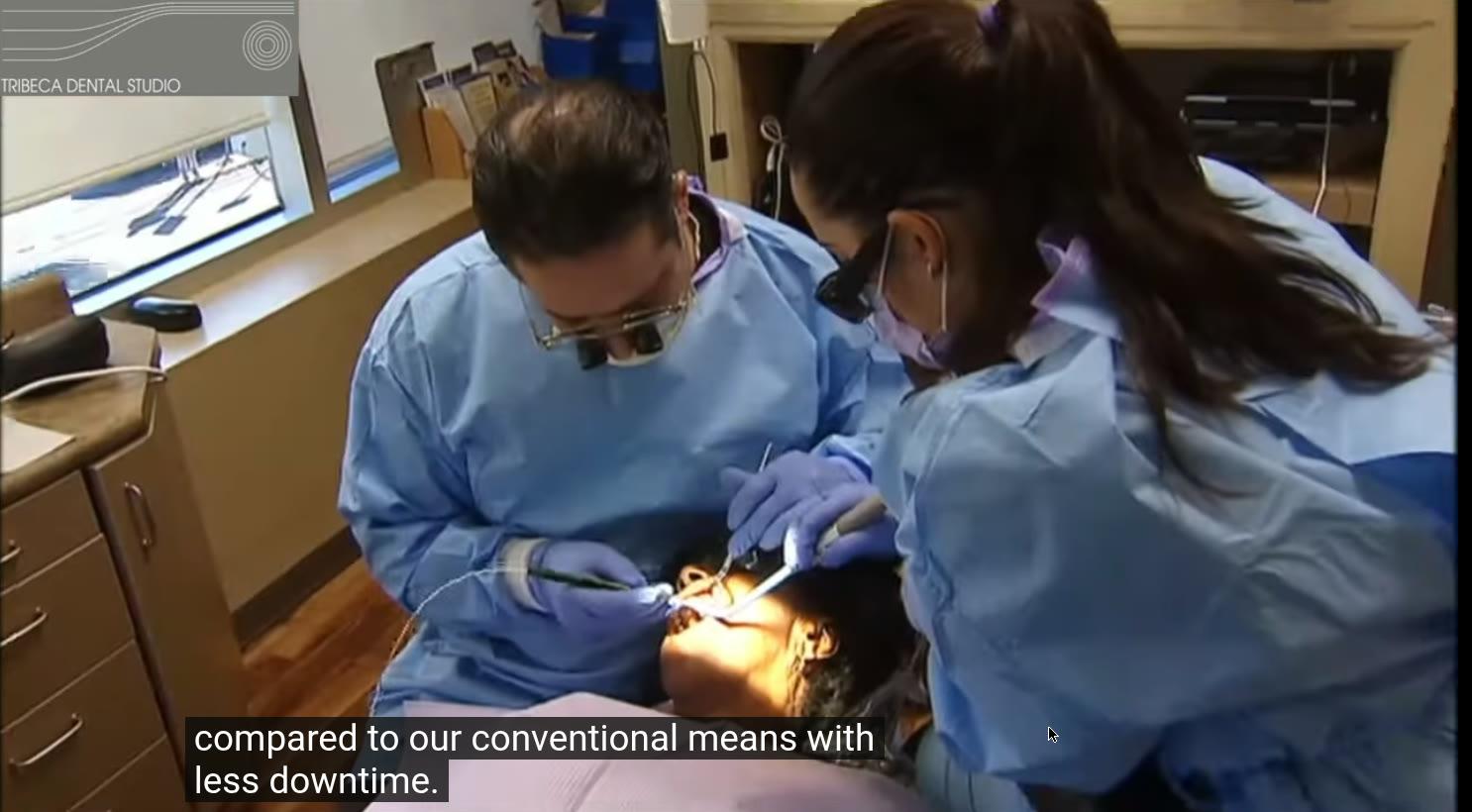
LANAP® stands for Laser-Assisted New Attachment Procedure. It is a set gum treatment plan. The plan uses the PerioLase® MVP-7™ Nd:YAG laser. It also cleans the root surfaces. It forms a clot and manages the bite when needed. Follow-up care is part of it too. The plan treats selected cases of periodontitis.
LANAP® may be an option for some patients with moderate to advanced periodontitis. These include people with deep gum pockets, swelling, bone loss, or weak tooth support. A gum exam is needed to tell if the plan is right for you.
No. Scaling and root planing is a nonsurgical gum treatment. It removes bacteria, deposits, and calculus from below the gumline. LANAP® is a fuller laser-based gum plan. It fits selected cases where more treatment is needed.
Local anesthesia is typically used during gum treatment. LANAP® avoids the scalpel flap and stitches used in standard osseous surgery. But soreness and sensitivity can still vary during recovery.
Treatment time depends on how many areas need care. It also depends on how severe the disease is. The outlook for each tooth and the plan matter too. Some patients need more than one visit. After a gum exam, your clinician can give a clearer schedule.
In some cases, control of gum infection and support for healing may improve the outlook of weak teeth. LANAP® cannot guarantee that every loose tooth can be saved. Bone support, looseness, fractures, decay, bite forces, and other factors affect the outlook.
Standard osseous surgery may lift the gum with cuts. This lets the surgeon reach the roots and bone directly. LANAP® uses a laser plan with no flap and no stitches. The right method depends on your gum condition and your treatment goals.
Periodontitis is a chronic condition that needs long-term care. LANAP® does not end the need for oral hygiene. Gum care visits are still needed. Quitting smoking still matters, when it applies. Health risks in the whole body still need control. Pro checks are still needed.
Coverage varies by insurer, plan, diagnosis, and gum benefits. Check your coverage and your out-of-pocket costs with your insurer before treatment.
Tribeca Dental Studio offers gum exams and LANAP® laser gum therapy. The office is at 54 Warren Street in Tribeca, New York, NY 10007. It serves patients from Tribeca, Lower Manhattan, and nearby areas.
A full gum exam can show how severe the disease is. It shows the outlook for the teeth involved. It shows which treatment best fits your needs.
LANAP — Laser-Assisted New Attachment Procedure — treats gum disease with a set laser plan, not a scalpel. A thin fiber is passed into the pocket between tooth and gum. There, the laser's energy targets the dark, sick tissue that lines the pocket. It also targets the bacteria that drive the infection. Healthy tissue is left largely undisturbed. The root surface is cleaned of deposits. Then the laser is used again to form a stable clot. The clot seals the pocket.
It is the scaffold from which the gum can reattach to the root. No cut is made and no stitches are placed. That is why recovery is gentler than with standard gum surgery.
The plan's discipline sets it apart from 'laser cleaning' as a sales phrase. LANAP is a defined, FDA-cleared procedure. It has specific steps and settings. It comes after the same strict diagnosis as any gum treatment here. That means full pocket measurements. It means imaging of the bone levels. It means a written plan. The plan names the teeth to be treated and the response we expect. We recommend LANAP where its profile fits.
That includes moderate to advanced periodontitis. It includes patients for whom surgery brings extra risk or extra reluctance. It is not a universal substitute for every gum procedure. Where standard surgery would serve a site better, that is what we recommend.
After treatment, the rules protect the clot and the reattachment it supports. Eat soft foods for a set period. Brush in a modified way around treated areas, as instructed. Come to follow-up visits so we can re-measure your pockets. Healing is then charted, not assumed. We also check the bite. We adjust it where harsh forces would disturb the healing sites. Patients rarely hear about this step. It has a real effect on results.
Gum disease stays chronic after LANAP, as after any therapy. Care visits at your prescribed interval defend the gains. Your daily plaque control is still half the treatment.
Both treat the same disease: infection in the pocket between tooth and gum. The honest comparison is about access and recovery. Standard surgery lifts the gum. The surgeon can then see and clean the root directly. The gum is put back with stitches. LANAP works through the pocket with a laser fiber. It targets sick tissue and bacteria. It stabilizes a clot that supports your body's own repair. There are no cuts and no stitches. Recovery from LANAP is typically easier.
It suits patients who cannot or should not have standard surgery. But depth and anatomy rule the choice. Some advanced sites are still better served by open surgery. A practice that offers only one option will recommend it for every case. We offer both. Your pocket measurements decide.
LANAP cuts the bacteria and sick tissue a lot. But no gum therapy sterilizes a pocket for good. Bacteria grow back. That is why the same discipline protects the result. You need careful daily plaque control. You need pro visits at the rhythm your case sets. The laser gives your tissues a real reset. It gives them the conditions to reattach. Maintenance is what keeps that gain. At follow-ups, we re-measure the treated pockets. Your response is charted.
If a site slips back, we catch it early. A small fix can still be enough then.
Every treatment at Tribeca Dental Studio starts with a diagnosis, not a sales pitch. Before we recommend anything, we examine the tooth or area in question, review imaging taken here in the office, and talk through what we see in plain language. You will always know what we recommend, why we recommend it, and what could safely wait.
That recommendation becomes a written plan, so the sequence, the timing, and the reasoning are clear before any treatment begins — and if a simpler option would serve you just as well, that is the option we will put in front of you.
Our studio brings every dental specialty under one roof at 54 Warren St in Tribeca, and it has since 2007. General dentistry, cosmetic care, implant surgery, periodontics, endodontics, orthodontics, airway care, and pediatric dentistry are handled by one team in one place, which means a treatment that touches several specialties is planned as a whole rather than handed off between offices across town.
Your records, your imaging, and your history stay with the same team from the first visit through every follow-up, so nothing is lost between providers and no step is planned in isolation.
We are open Monday to Friday from 8:00 AM to 6:00 PM, Saturday from 9:00 AM to 4:00 PM, and Sunday from 9:00 AM to 2:00 PM. You can book online at any time or call us at (212) 561-5303.
The studio sits between Greenwich Street and West Broadway, steps from the Chambers Street subway hub (1, 2, 3, A, C, E), with attended garages on Warren Street and Greenwich Street within a block of our door for patients who drive in.
Care does not end when the procedure does. We schedule reviews and follow-ups around your life, group staged treatment into planned steps when we can, and use each return visit to check healing and watch the details we flagged together. Between appointments we stay in touch with recall reminders and clear next steps, and if something feels off, we would rather see you quickly than have you wait and wonder.
The goal is a plan you understand, a team you recognize, and results that are checked over time rather than assumed.
LANAP follows a set sequence. Walking through it removes most of the mystery patients feel about laser treatment. First comes measurement. We chart the pockets around every tooth. We image the bone levels. The protocol treats diagnosed disease, not a vague sense of unhealthy gums. At the treatment visit, the area is numbed. A thin laser fiber is passed gently into the pocket between tooth and gum. The laser is used in specific passes. It targets the dark, sick pocket lining.
It targets the bacteria that drive the infection. Healthy tissue and the tooth root are preserved. The final passes help form a stable blood clot in the treated pocket. This clot is the natural seal the procedure is named for. The bite is then checked and adjusted. Treated teeth stay protected while healing begins.
LANAP suits patients with established gum disease. Signs include measured pockets, bleeding, and bone loss on imaging. These patients need real gum therapy. For them, a scalpel-free plan is a true advantage. Some feel anxious about standard surgery. For some, their medical picture makes standard flap surgery less attractive. Some cannot take on a long recovery. LANAP is a treatment for disease. That boundary matters in both directions.
What you do after LANAP protects what the protocol started. The treated pockets heal around a stabilized clot. The early rules all defend that clot. Eat soft foods for the period we specify. Do not probe the area with your tongue or a toothpick. Clean around treated sites in the modified way we show you. Be gentle where we say gentle. Resume normal brushing in stages, as healing allows. Some tenderness and mild swelling in the first days are normal. Sharp pain is not normal.
Growing swelling or a bad taste later are not normal either. If they occur, call us at (212) 561-5303. Do not wait.
The longer rhythm is gum maintenance care. It is not optional decoration on the result. Gum disease is a chronic susceptibility. It is not an infection cured once and forgotten. The bacteria return. Your mouth's tendency to react to them remains. Maintenance visits come at the interval set for you. In the period after treatment, that is commonly every three months. These visits remove new deposits below the gumline. They do so before the deposits can rebuild deep pockets.
We also re-measure your chart. A site that is slipping gets caught early. It stays a small correction, not a second disease.