Gum Recession & Grafting: The Honest Patient Guide
I'm Dr. Nina Izhaky. If your gums have pulled back — teeth looking longer, roots exposed, cold drinks making you wince — that's gum recession. And it doesn't grow back on its own. A gum graft restores the protective tissue your teeth are missing: we place a small amount of tissue where your gums have receded, and it bonds, heals, and becomes your own gum tissue. Here is the honest picture — what causes recession, what a graft does, and what recovery really feels like.
What a graft actually does for you
This isn't just cosmetic — though the cosmetic part is a real bonus.
Covers exposed roots.
Exposed roots are softer than enamel — they decay faster and they're sensitive. Covering them means less sensitivity to cold, heat, and touch, and less decay risk on the root surface.
Stops the recession from progressing.
Recession tends to keep receding. The grafted tissue is actually more resistant to recession than what was there — and we'll address the cause (brushing technique, grinding guard, gum disease treatment) so your results last.
Protects the bone underneath.
When recession keeps going, the bone underneath can follow. A graft rebuilds the band of protective gum tissue and helps guard the vulnerable root surfaces and surrounding periodontal structures.
Restores your smile line.
Teeth stop looking "long." A graft can improve gumline symmetry and bring back a balanced, healthy-looking smile — the visible difference patients notice first.
What the procedure is like
Gum grafting sounds intimidating and is genuinely routine.
Gum evaluation, first.
We figure out what's driving your recession — aggressive brushing (yes, really, scrubbing too hard), gum disease, grinding, genetics, or orthodontic history. The graft lasts longest when the cause is addressed too, so this step shapes everything.
Comfort and the tissue plan.
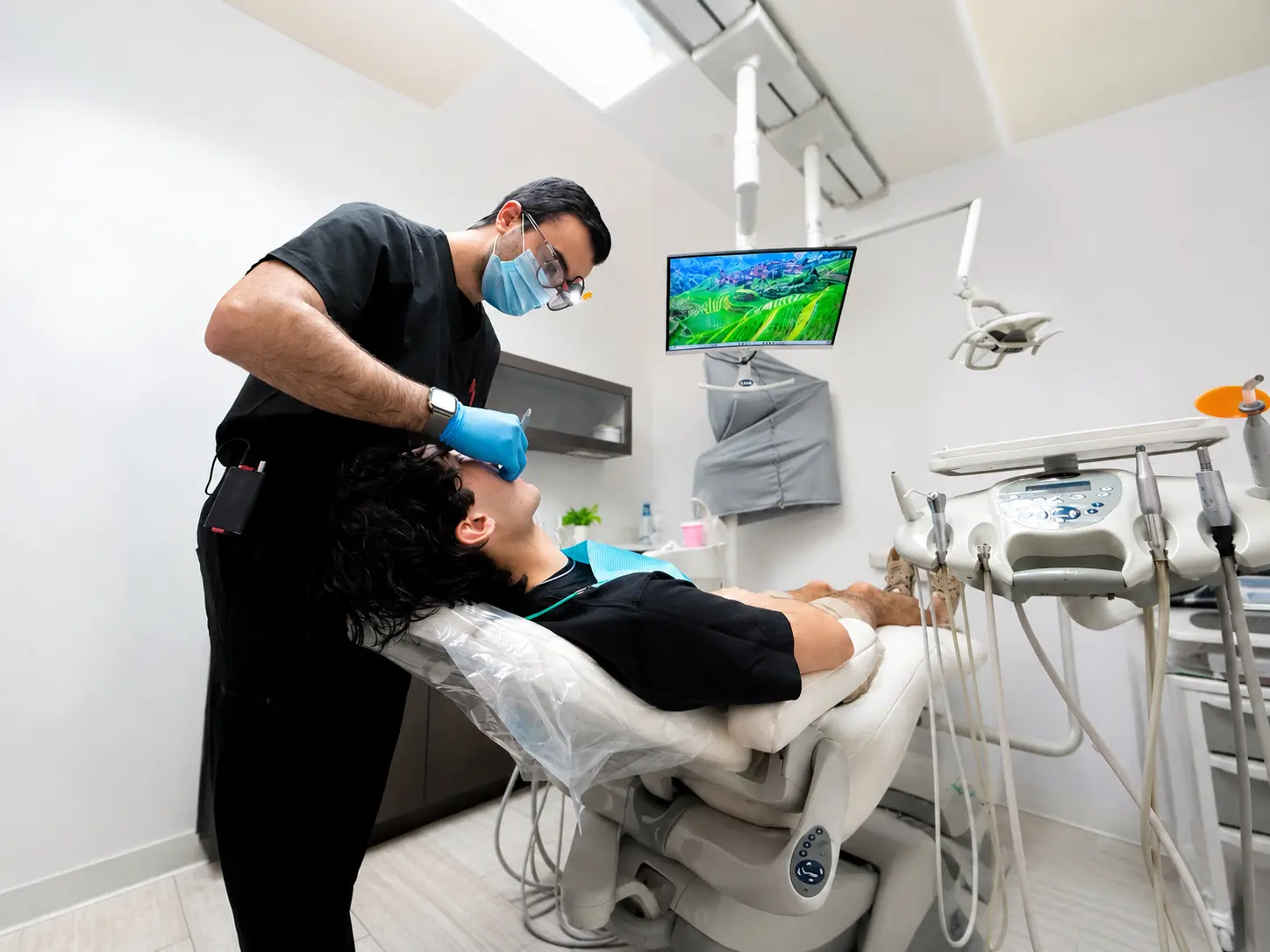
You're fully numb, and the appointment is typically about an hour. We take a small amount of tissue — usually from the roof of your mouth, or we use donor tissue so there's no second site. We'll talk through which option fits you best.
Placement and micro-suturing.
The new tissue is precisely positioned over the exposed root and secured with ultra-fine sutures. A protective dressing preserves the site as the graft begins to integrate and become your own tissue.
Recovery and check-ins.
Soft foods for a week or so, some soreness at the site, and we'll see you for a quick check to make sure healing is on track. Most people are back to normal routines within days — and we'll monitor you as the tissue fully matures over the coming months.
Gum grafting vs. a deep cleaning
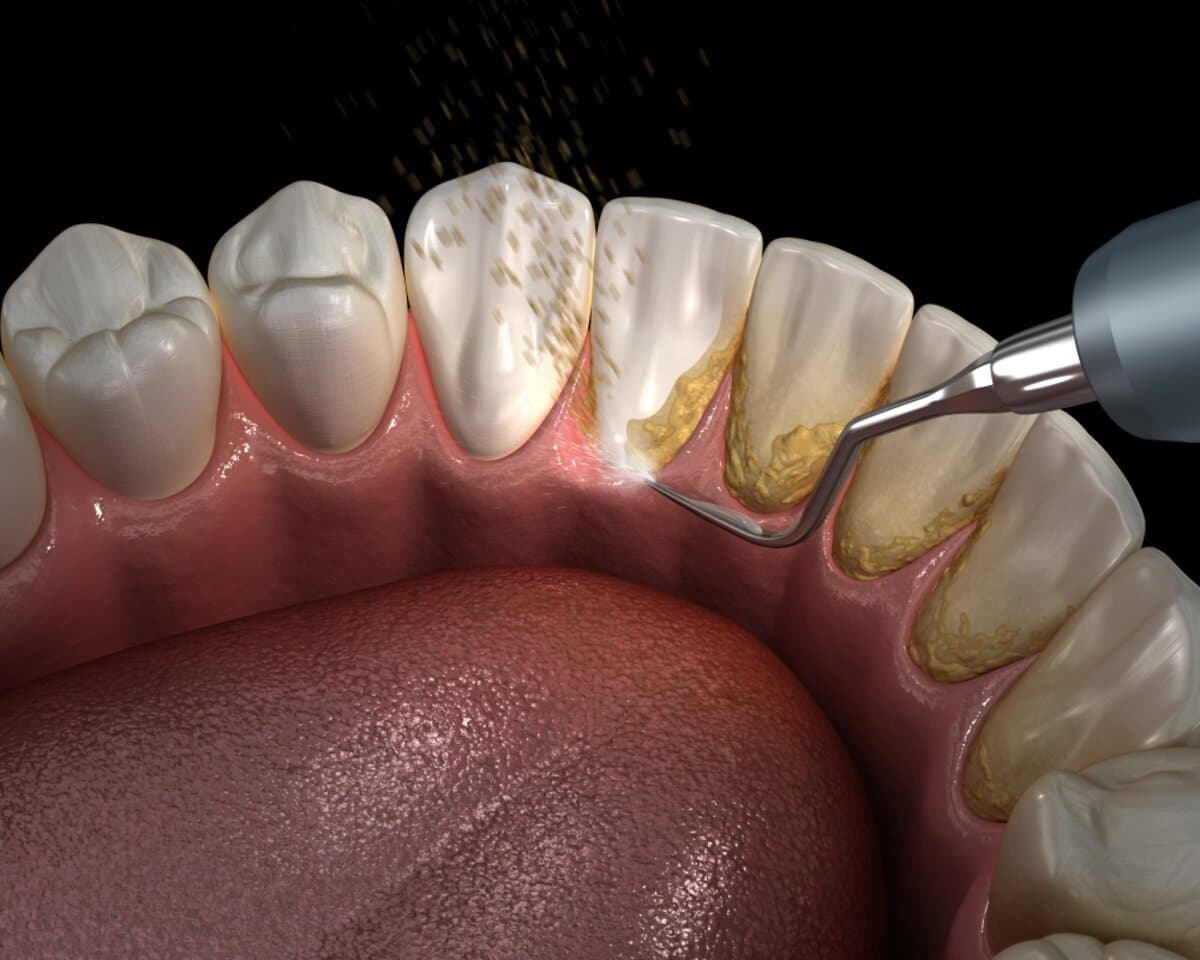
These do different jobs, and patients sometimes confuse them. Scaling and root planing — a "deep cleaning" — is a nonsurgical gum-disease treatment: it removes bacterial deposits and calculus from below the gumline and the affected root surfaces. A gum graft is different work entirely: it rebuilds protective tissue that's already gone. If gum disease caused your recession, we treat the disease first, then graft. Your evaluation will make the right sequence clear.
Hablamos español
We warmly welcome Spanish-speaking patients. Nuestro equipo le explica la recesión de encías y el injerto en su idioma — llámenos al (212) 561-5303. No facturamos directamente al seguro; le ayudamos con el financiamiento para que el plan se ajuste a su vida.
Receding Gums Don't Mean You Failed at Brushing
The most common cause of gum recession I see surprises people: brushing too hard. Years of enthusiastic scrubbing literally wear the gum tissue away, especially combined with grinding, a history of braces, or simply the way your gums are built. Gum disease is another major driver — and sometimes it's genetics, meaning your gums were always going to be thinner in spots. None of that is a personal failure. But it does need attention, because recession doesn't stop on its own, and the bone underneath can follow.
Here's the part patients need to hear straight: receded gums do not grow back. No toothpaste, no mouthwash, no brushing change will bring back what's gone. What does work is a gum graft — tissue placed where your gums receded that bonds, heals, and becomes your own gum tissue. And when we also address the cause — a softer brushing technique, a night guard for grinding, treatment for the underlying gum disease — the grafted tissue is more resistant to recession than what was there. That combination is why results last.
And the recovery, honestly: soft foods for a week or so, some soreness at the site — if we use your own tissue, the roof of your mouth feels like a pizza burn for a few days — and most patients tell us it was far easier than they feared. If cold drinks have been off the table for years, come in and let us show you exactly what's happening. A short evaluation is all it takes to know whether a graft is right for you.
Gum recession & grafting questions, answered
01Can receding gums grow back on their own?
No. Receded gums do not grow back on their own — no toothpaste, mouthwash, or brushing change will bring back what's gone. A gum graft is what restores the protective tissue: we place tissue where your gums receded, and it bonds, heals, and becomes your own gum tissue.
02What does a gum graft actually do?
The short version: we take a small amount of tissue — usually from the roof of your mouth, or we use donor tissue so there's no second site — and place it where your gums have receded. It bonds, heals, and becomes your own gum tissue — covering exposed roots, stopping further recession, and making your smile look like itself again.
03Why did my gums recede?
Common causes: aggressive brushing (yes, really — scrubbing too hard), gum disease, grinding, genetics, or orthodontic history. At your evaluation we'll figure out what's driving yours, because the graft lasts longest when the cause is addressed too.
04Does gum grafting hurt?
You're completely numb during the procedure, and most patients tell us it was far easier than they feared. Afterward, most manage with prescribed medication. The roof-of-mouth soreness (if we use your own tissue) feels like a pizza burn for a few days — uncomfortable, not unbearable.
05Is gum grafting just cosmetic?
No. Covering exposed roots prevents decay and sensitivity and protects the underlying bone. Exposed roots are softer than enamel, decay faster, and stay sensitive. The cosmetic improvement — teeth no longer looking "long" — is a bonus.
06How long does healing take?
Most people are back to normal routines within days, soft foods for a week or so. The site looks and feels significantly better within 1–2 weeks, and full maturation of the tissue takes a few months. We'll monitor you along the way and see you for a check to make sure healing is on track.
07Will my gums recede again after the graft?
The grafted tissue is actually more resistant to recession than what was there. We'll also address the cause — brushing technique, a grinding guard, gum disease treatment — so your results last.
08Is a graft different from a deep cleaning?
Yes. Scaling and root planing (a deep cleaning) is a nonsurgical treatment that removes bacterial deposits and calculus from below the gumline. A gum graft rebuilds protective tissue that's already gone. If gum disease caused your recession, we treat the disease first, then graft.
09How much does gum grafting cost?
It depends on how many areas need grafting. We'll give you an exact number at your evaluation and walk you through financing. We don't bill insurance directly.
Gum grafting in the heart of Tribeca
Find us at 54 Warren Street, New York, NY 10007 — in the heart of Tribeca, serving patients across Tribeca, SoHo, Battery Park City, the Financial District, and Downtown Manhattan.
Stop living with sensitivity.
Call (212) 561-5303 for a gum evaluation — we'll show you exactly what's happening and whether a graft is right for you. 54 Warren St, Tribeca.