Connective-Tissue Graft
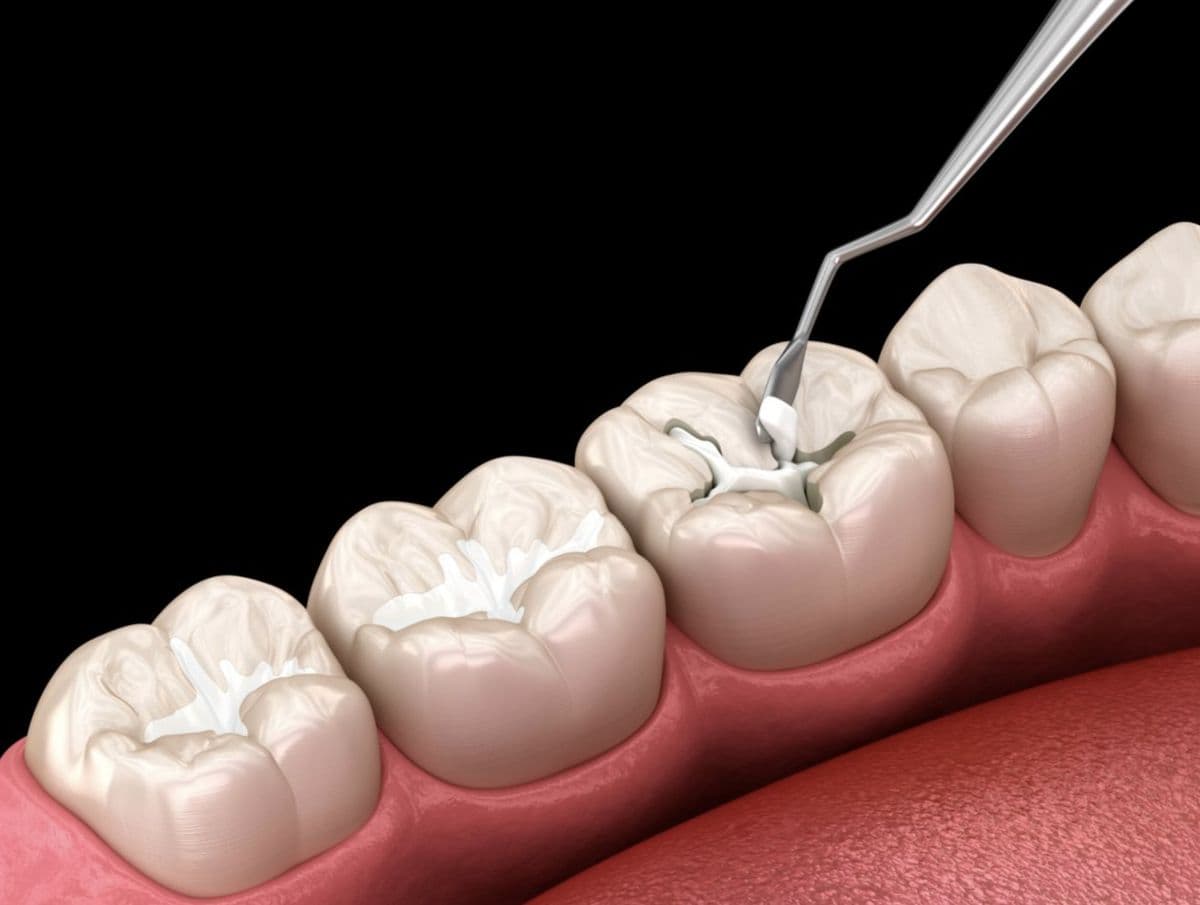
Connective tissue is obtained from beneath the palatal surface and positioned over an exposed root. It may be used for one or several recession sites depending on anatomy and treatment goals.
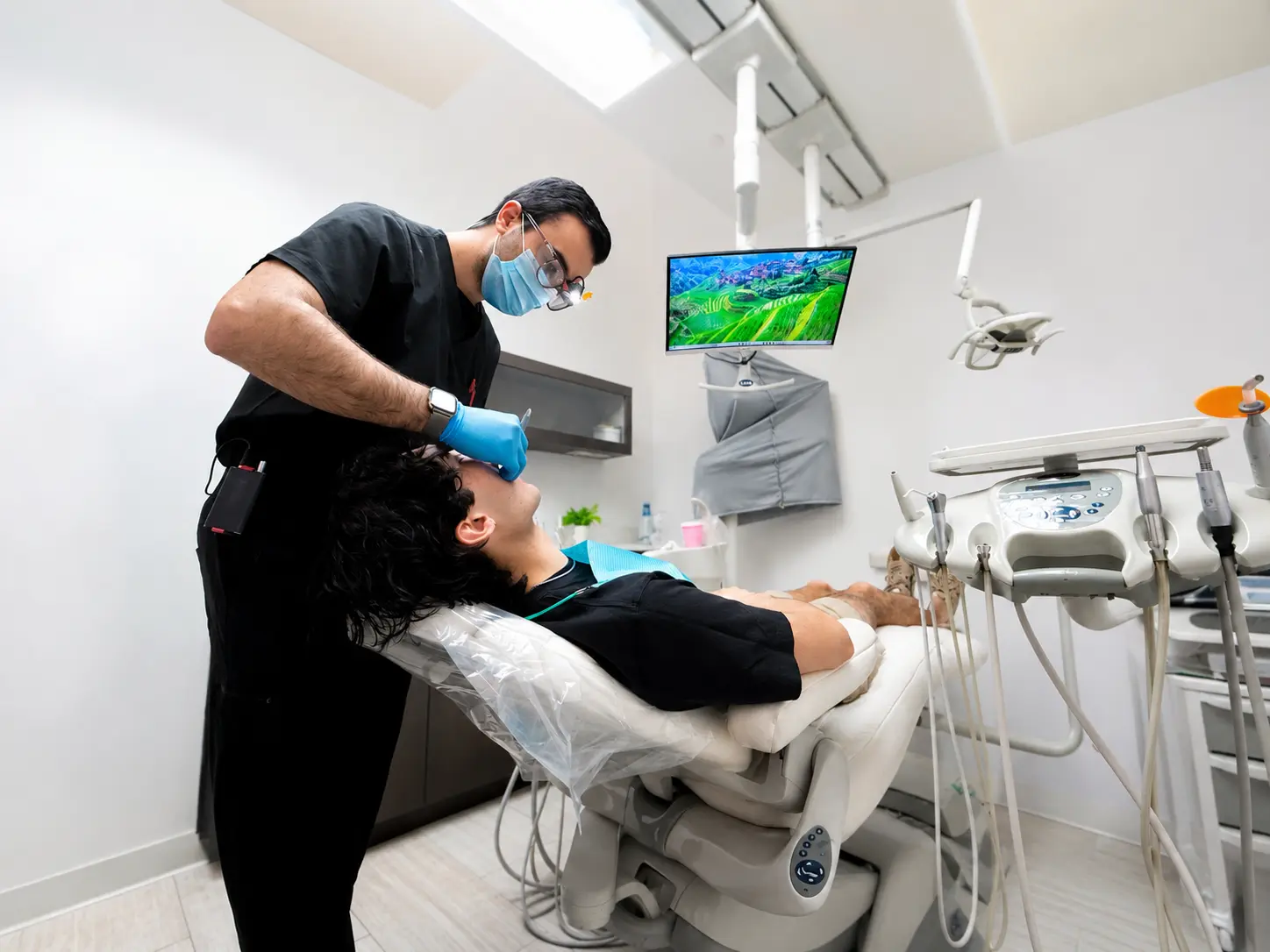
Restore lost gum tissue, cover selected exposed root surfaces, and support periodontal health. Gum grafting evaluations are available in Lower Manhattan.
The short answer
Gum recession quietly exposes your roots — and exposed roots are more vulnerable to decay, sensitivity, and further tissue loss. A gum graft covers those roots with tissue (from your own palate, donor tissue, or a collagen matrix), reducing sensitivity and guarding against future recession. It's outpatient under local anesthesia, and most patients are back at work the next day.
Gum recession occurs gradually as tissue pulls back, leaving delicate root surfaces exposed to temperature changes, bacteria, and decay. Whether caused by periodontitis, aggressive brushing, bruxism, or genetics, gum grafting surgery can rebuild the gumline, protect selected root surfaces, and may reduce sensitivity.
Covers selected exposed root surfaces and may reduce sensitivity to temperature or touch.
Rebuilds the band of keratinized gum tissue and may help protect vulnerable root surfaces and surrounding periodontal structures.
Can improve gumline symmetry and reduce the appearance of elongated teeth caused by recession.
Protects softer root dentin from bacterial invasion, plaque buildup, and aggressive root surface decay.
Connective tissue is obtained from beneath the palatal surface and positioned over an exposed root. It may be used for one or several recession sites depending on anatomy and treatment goals.
A layer of tissue is taken from the palate and attached to the recipient site. This approach may be considered when the primary goal is to increase the amount of firm keratinized gum tissue.
Nearby gum tissue is repositioned over the exposed root while maintaining part of its original blood supply. Not every recession pattern is suitable for this technique.
| Technique | When it's used |
|---|---|
| Connective-tissue graft | Connective tissue from the palate placed over the exposed root — common for root coverage. |
| Free gingival graft | A layer of palatal tissue to increase the amount of firm keratinized gum tissue. |
| Pedicle graft | Repositions nearby tissue while keeping part of its blood supply — not suitable for every recession pattern. |
Local anesthesia is used to support comfort. The surgical approach is selected based on the recession pattern and the type of graft planned.
Donor tissue is obtained from the palate or a biocompatible donor source using delicate microsurgical techniques.
The new tissue is precisely positioned over the exposed root and secured with ultra-fine sutures.
A protective dressing preserves the site as the graft integrates, restoring a healthy, strong gum barrier.
Gum recession is one of those problems that advances quietly. A millimeter here, another there — until one day you notice your teeth look longer, you feel sensitivity with something cold, or you see a yellowish tone near the gumline where root is exposed. Causes vary: aggressive brushing, gum disease, teeth grinding, even genetics. But the result is the same: exposed roots that are more vulnerable to decay, sensitivity, and further tissue loss.
Gum grafting reverses that process. We take tissue — from your own palate, processed donor tissue, or a collagen matrix — and place it carefully over the exposed roots, where it integrates with existing tissue. Beyond covering roots and reducing sensitivity, the graft creates a thicker, more resilient band of attached gum that guards against future recession. And there's a benefit our patients value enormously: the smile looks more balanced and youthful when the gumline returns to its natural position.
At Tribeca Dental Studio, we perform gum grafting as an outpatient procedure under local anesthesia, and most of our downtown Manhattan patients return to work the next day. The palate donor site — when we use your own tissue — heals within one to two weeks with the aftercare we provide. If the idea of a graft concerns you, a consultation at our Warren Street office will give you a clear picture of what to expect, with no obligation.
Patients often arrive asking for a gum graft when what they actually need is LANAP — or vice versa. They're two answers to two different problems, and the evaluation is what tells them apart. LANAP treats active gum disease: the laser clears infection from beneath the gumline and stimulates bone and tissue to regenerate, all without scalpels or stitches. It's for mouths where the disease is still doing damage right now.
Grafting is for what the disease — or aggressive brushing, grinding, or genetics — already took away. When roots are exposed and the gumline has receded, no laser can put that tissue back; a graft covers the roots, thickens the gum, and guards against future loss. Sometimes the honest answer is both: LANAP to stop the active infection, then grafting to rebuild what's missing. That's exactly the kind of sequencing our evaluation is designed to map out.
And whichever path your mouth needs, the approach here is minimally invasive. Dr. Sam Morhaim was one of the first periodontists to adopt LANAP — the healing is phenomenal, with recovery more like a filling than a surgical procedure. If the idea of gum surgery makes you nervous, come in for the evaluation first. You'll leave knowing exactly what your gums need and why — never a treatment you didn't ask to understand.
“Dr. Sam did the FOX interview on the LANAP procedure — he was one of the first to start using it. The healing is phenomenal, the recovery minimal — similar to a regular filling rather than a full surgical recovery with stitches. We also add additional protocols that enhance the results and bone regeneration. It's really short of a magical wand!”
— Dr. Nina Izhaky, Tribeca Dental Studio
With effective local anesthesia, you feel nothing during the procedure. Afterward, discomfort is mild and managed with prescribed medication. Most describe recovery as far easier than expected.
It can come from your own palate (the gold standard), processed donor tissue, or a collagen matrix. Each option has advantages depending on your case, which we discuss at your consultation.
Most return to normal activities within 24 to 48 hours. Full graft integration takes several weeks, during which we give you clear aftercare instructions.
Yes. By covering exposed roots and restoring the natural gumline, teeth look more proportioned and the smile more youthful. It's one of the benefits patients notice immediately.
Grafted tissue is thicker and more resilient than the original, making it far less prone to future recession. Gentle brushing technique and regular check-ups protect the result long-term.
LANAP treats active infection beneath the gumline; grafting rebuilds tissue already lost to recession. A periodontal evaluation determines which your mouth needs — and sometimes the honest answer is both, in sequence.
Yes. First LANAP stops the active disease and stimulates regeneration; then grafting covers the roots that remain exposed. Our periodontal team plans the full sequence under one roof.
Most return to normal activities within 24 to 48 hours, and full graft integration takes several weeks. Sensitivity usually improves early, and the gumline settles gradually as healing completes.
RELATED PERIODONTAL CARE
Learn how inflammation, periodontal pockets, and loss of supporting tissues are evaluated.
Review when laser-assisted periodontal therapy may be considered as part of a gum-disease treatment plan.
Explore gum and bone recontouring for selected restorative or aesthetic indications.
TRIBECA • NEW YORK
Schedule your consultation for gum grafting surgery in Lower Manhattan today.
SCHEDULE CONSULTATION