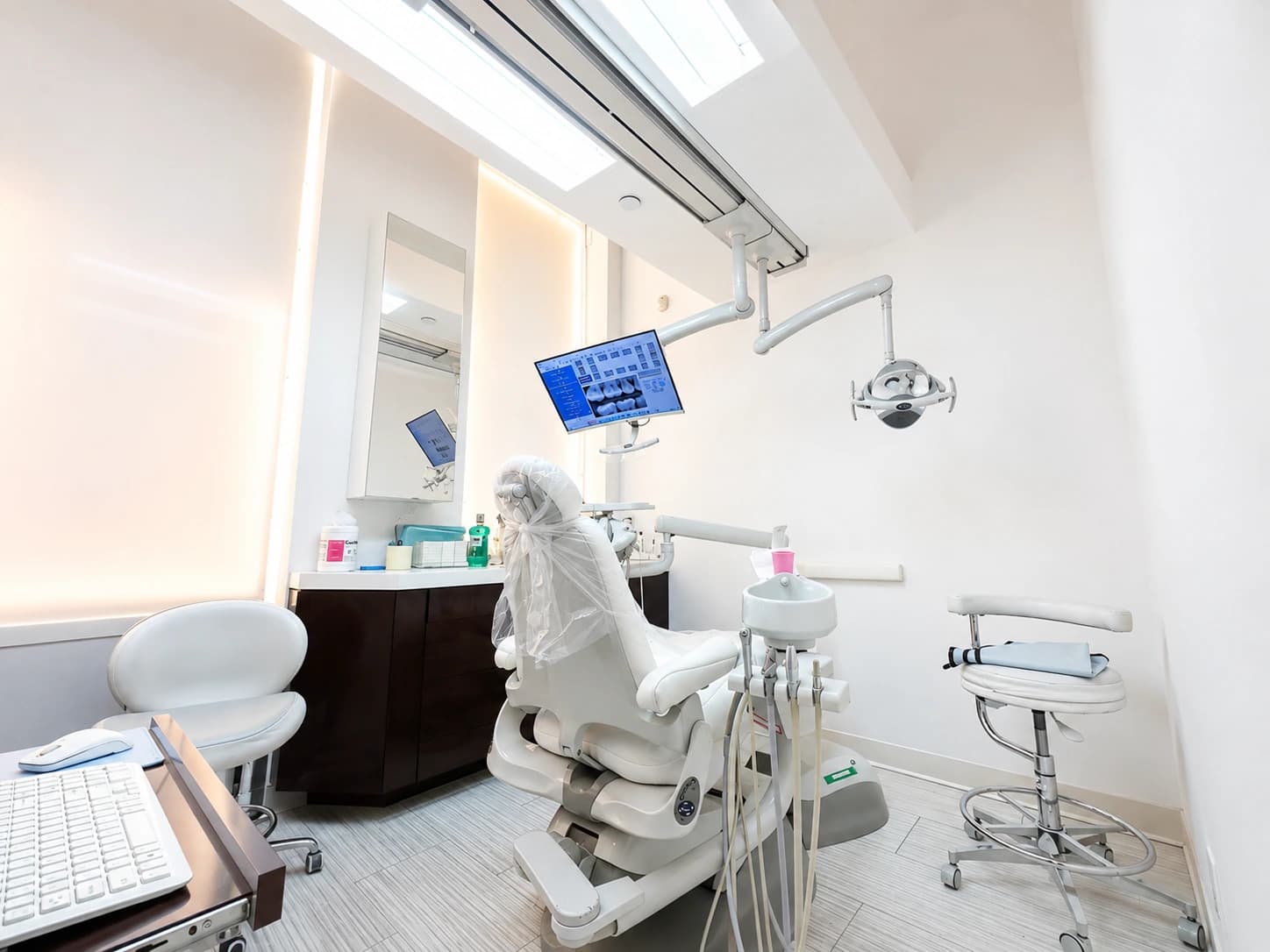
Oral Surgery in Tribeca
Precise surgical extractions, wisdom tooth removal, and complex care delivered with advanced 3D imaging and tailored sedation options in Lower Manhattan.
The short answer
Some teeth need more than a routine visit. Our oral surgeons handle complex extractions and impacted wisdom teeth with 3D CBCT imaging and sedation options from local anesthesia to IV — you feel nothing during the procedure. Most routine extractions mean back to normal within 24 to 48 hours.
Precision surgical care designed for absolute peace of mind.
Not every dental condition can be resolved with routine care. At Tribeca Dental Studio, our oral surgeons possess advanced training to handle complex extractions, impacted wisdom teeth, and structural jaw treatments. We pair state-of-the-art 3D CBCT imaging with tailored sedation to ensure every procedure is comfortable, safe, and efficient.
Why choose an oral surgeon for my procedure?
Minimally Invasive Extractions
Precise techniques and gentle instrumentation preserve surrounding jawbone and soft tissue during tooth removal.
Specialized Wisdom Tooth Care
Safe, efficient removal of impacted or partially erupted wisdom teeth to prevent infection and crowding.
Tailored Sedation Options
From local anesthesia and nitrous oxide to IV sedation supervised by board-certified anesthesiologists.
3D CBCT Surgical Planning
High-definition 3D imaging maps nerve pathways and root architecture for predictable, safe surgical execution.
Comprehensive Oral Surgery Services
Surgical Tooth Extractions
When a tooth cannot be preserved due to extreme decay, fracture, or advanced infection, surgical removal protects adjacent teeth and surrounding bone. Performed gently under local numbing or full sedation to ensure zero pain.
What happens during oral surgery?
3D Scanning & Consultation
We perform CBCT digital imaging and review your medical history to map nerve structures and design a custom surgical plan.
Personalized Sedation
Anesthesia is administered based on your comfort needs, ensuring a completely relaxed, pain-free surgical experience.
Microsurgical Procedure
Our oral surgeons utilize advanced, gentle surgical tools to perform extractions or corrections with minimal trauma.
Guided Aftercare & Healing
You receive clear post-op instructions, protective guidelines to prevent dry socket, and direct follow-up support.
| Procedure | Typical recovery |
|---|---|
| Routine extraction | Return to normal activities within 24 to 48 hours. |
| Impacted wisdom teeth | May need 3 to 5 days. |
| With sedation (beyond local anesthesia) | A responsible adult must escort you home. |
Oral Surgery Without the Fear Around It
The phrase “oral surgery” triggers anxiety in almost everyone. But the modern reality is very different from what most imagine: with 3D imaging showing every root, nerve, and sinus before we begin, effective anesthesia, and sedation options ranging from mild relaxation to conscious sleep, procedures that were once dreaded are now completed with a comfort that surprises our patients.
At Tribeca Dental Studio, we perform extractions — from badly damaged teeth to impacted wisdom teeth — with a preservation-first mindset. Every extraction is planned to protect surrounding bone, because that bone may become the foundation for a future implant. When we remove a wisdom tooth or unsalvageable tooth, we frequently place graft material in the same visit to preserve bone volume — a decision that enormously simplifies any future restoration.
For our downtown Manhattan patients, the deciding factor is usually recovery time. Most routine extractions allow a return to work the next day; even impacted wisdom teeth rarely require more than a few days. We give clear post-operative instructions, remain available for any concerns, and schedule follow-up to ensure healing progresses as it should.
A Word About Wisdom Teeth — Especially for Teens and Parents
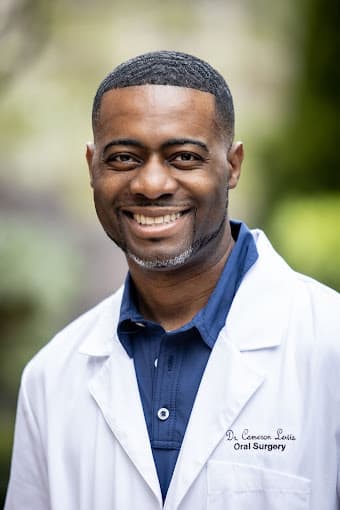
If you have a teenager at home, this part is for you. Our oral surgeon regularly sees teens for wisdom-tooth evaluations — a short, comfortable visit where 3D CBCT imaging shows exactly where the third molars are sitting, how much room they have, and whether they're likely to cause trouble down the road. No guesswork, no waiting for pain to make the decision for you.
Timing matters more than most families realize. When wisdom teeth are still developing, removal is usually simpler: the roots haven't fully formed, and the surrounding bone is more forgiving. Waiting until a tooth becomes infected, damages the molar next to it, or crowds front teeth can turn a straightforward visit into a much harder one. That's why we invite teens in for an evaluation before there's ever an emergency — so your family can make a calm, informed choice with a clear picture in front of you.
And for parents, the comfort question is usually the biggest one. Your teen can choose from the same sedation options our adult patients use — many teens rest comfortably through the procedure and remember nothing afterward — and most are back to school and normal life within a few days. You'll leave with clear written aftercare instructions and a way to reach us with questions, because the first evening at home is when you want answers, not a voicemail.
Wisdom teeth can cause trouble at any age, not just the teens — if yours are aching, swelling, or trapping food, the same evaluation applies. Come in, see the 3D image of what's happening, and decide from there.
Frequently Asked Questions
Is oral surgery painful?
+What sedation options are available?
+How long is recovery after oral surgery?
+Do I need someone to drive me home?
+What can I eat after oral surgery?
+I'm terrified of dental surgery. What do you do for anxious patients?
+Will I need to take time off work?
+Explore Related Services
TRIBECA • NEW YORK
Schedule Your Surgical Consultation
Consult with our experienced oral surgery team in Lower Manhattan for a safe, stress-free experience.
SCHEDULE CONSULTATIONOral Surgery in Depth: Surgical Care Without the Referral
Oral surgery in this studio covers the surgical side of dentistry under one roof: extractions including complex and impacted teeth, implant placement and the grafting that supports it, biopsies of tissue that needs a laboratory answer, and corrective procedures on the bone and soft tissues of the mouth.
Keeping surgery in-house matters beyond convenience: the surgeon works from the same imaging, the same records, and the same overall plan as your general and restorative care, so a surgical step is never performed in isolation from the result it is meant to serve — an extraction is planned with its replacement in mind, a graft with the implant it will carry.
Preparation is where surgical outcomes are largely decided. Your assessment reviews the imaging of the specific site — root shapes, nerve positions, sinus anatomy — alongside your medical history and medications, and it settles the comfort plan in advance: local anesthesia, or sedation options where your case and your anxiety call for them, chosen and explained before the day.
You receive written instructions for before and after, including what to arrange at home, because recovery goes better when nothing about it is improvised. If we find a reason your surgery belongs in a different setting, we will tell you at this stage, not on the day.
Recovery follows the same pattern across most oral surgery here: the first days are protected — rest, soft foods, the specific site care in your written instructions — and then healing is reviewed in person, with sutures removed or checked and the site examined against expectations. You are told exactly which sensations are normal healing and which warrant a call, and the office number reaches a team that has your surgical record in front of it.
Surgery is recommended only where it is the right tool; where a tooth can be saved or a problem managed without it, that is the recommendation you will hear first.
Can most oral surgery really be done in a dental studio?
Often, yes — and avoiding referral is more than a convenience. Our surgeons work from the same records, imaging, and treatment plan as the rest of your care, so a surgical step inside a larger sequence — an implant plan, an orthodontic plan, a restorative rebuild — is timed and executed by the team that owns the whole result.
Referral remains the right answer for the uncommon case that needs a hospital setting or a specialist beyond oral surgery's scope, and we will say so plainly when yours is one. For the great majority of surgical dentistry, though, keeping it in-house keeps it coordinated.
How We Plan Your Care at Tribeca Dental Studio
Every treatment at Tribeca Dental Studio starts with a diagnosis, not a sales pitch. Before we recommend anything, we examine the tooth or area in question, review imaging taken here in the office, and talk through what we see in plain language. You will always know what we recommend, why we recommend it, and what could safely wait.
That recommendation becomes a written plan, so the sequence, the timing, and the reasoning are clear before any treatment begins — and if a simpler option would serve you just as well, that is the option we will put in front of you.
Our studio brings every dental specialty under one roof at 54 Warren St in Tribeca, and it has since 2007. General dentistry, cosmetic care, implant surgery, periodontics, endodontics, orthodontics, airway care, and pediatric dentistry are handled by one team in one place, which means a treatment that touches several specialties is planned as a whole rather than handed off between offices across town.
Your records, your imaging, and your history stay with the same team from the first visit through every follow-up, so nothing is lost between providers and no step is planned in isolation.
We are open Monday to Friday from 8:00 AM to 6:00 PM, Saturday from 9:00 AM to 4:00 PM, and Sunday from 9:00 AM to 2:00 PM. You can book online at any time or call us at (212) 561-5303.
The studio sits between Greenwich Street and West Broadway, steps from the Chambers Street subway hub (1, 2, 3, A, C, E), with attended garages on Warren Street and Greenwich Street within a block of our door for patients who drive in.
Care does not end when the procedure does. We schedule reviews and follow-ups around your life, group staged treatment into planned steps when we can, and use each return visit to check healing and watch the details we flagged together. Between appointments we stay in touch with recall reminders and clear next steps, and if something feels off, we would rather see you quickly than have you wait and wonder.
The goal is a plan you understand, a team you recognize, and results that are checked over time rather than assumed.