Root Canal SoHo, NYC
A root canal — SoHo is twelve minutes from our door, and a toothache makes it feel like a hundred miles. I'm Dr. Nina Izhaky. Root canal treatment removes the infected tissue from inside a tooth, cleans and seals the canals under a microscope, and lets a tooth that would otherwise be lost stay in your mouth and keep working.
The reputation is decades out of date: with proper anesthesia, most of our patients are surprised by how ordinary the appointment feels — and how completely the pain that brought them in is gone.
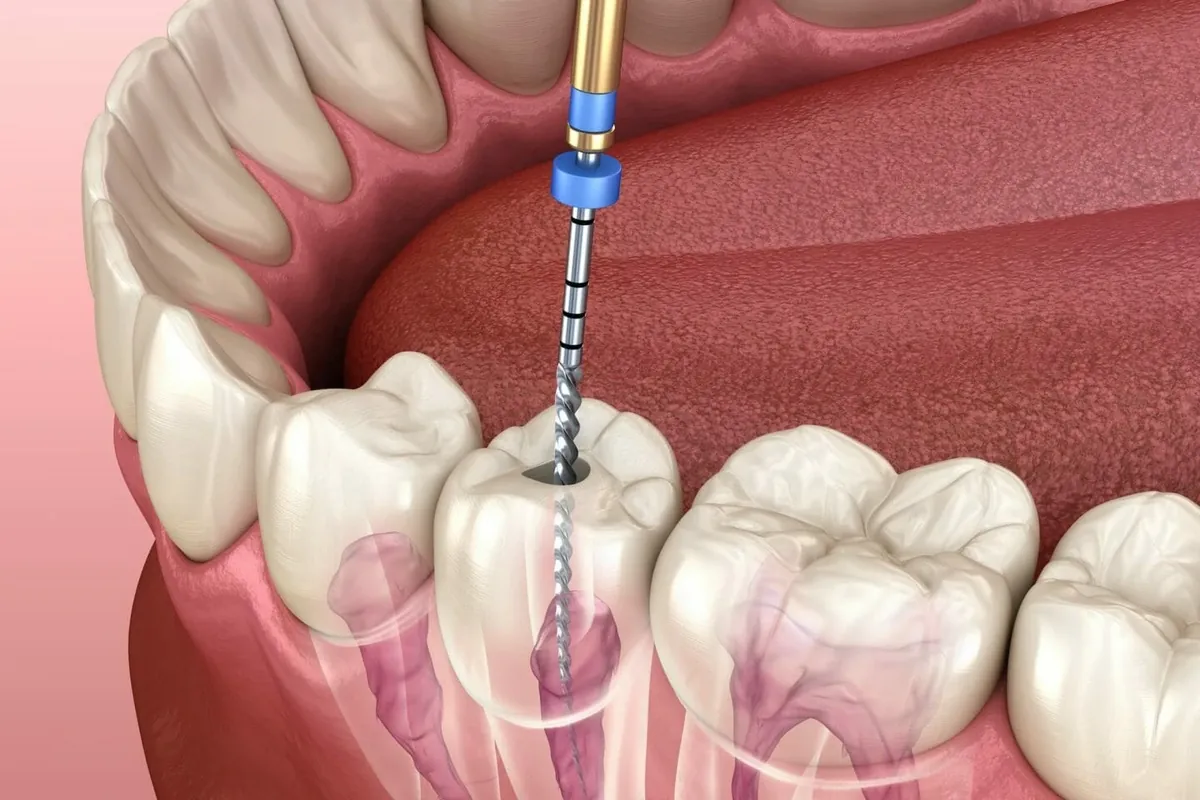
Why our root canals work in SoHo
A root canal removes inflamed or infected pulp from inside the tooth, then cleans, shapes, and seals the canal system — saving a tooth that might otherwise need extraction. Here's how we handle it.
Persistent tooth pain.
Pain that lingers — especially to heat or cold — can signal inflamed or infected pulp that a filling can't fix.
Swelling or tenderness.
Swelling near the tooth or tenderness when you bite can mean the infection has spread beyond the pulp.
A deep crack or deep decay.
A deep crack or cavity that reaches the nerve usually needs the pulp treated — the question is whether the tooth can still be saved.
Saving beats replacing.
A root canal preserves your natural tooth. Keeping it avoids extraction, and everything an extraction would trigger — a gap, a bridge, or an implant.
What happens at a root canal visit
Four steps — most patients tell us the procedure felt like getting a filling.
Diagnosis first.
We confirm whether the pulp is inflamed or infected — and whether the tooth can be saved. If extraction is the better call, we'll tell you that too.
You're fully numb.
Effective local anesthesia keeps you completely comfortable. Most patients tell us the procedure felt like getting a filling.
Cleaning and sealing the canals.
The inflamed or infected pulp is removed, the internal canal system is cleaned, shaped, and sealed — the infection source is gone.
Protecting the tooth.
A treated tooth is often weakened, so a crown is frequently recommended to protect it. We plan that restoration with you at the visit.
Next door: a short walk south from SoHo
SoHo is our next-door neighbor — close enough that many of our SoHo patients simply walk down. They come from the cast-iron lofts on Greene and Mercer, the boutiques along Broadway, and the small offices tucked over the shops on Prince and Spring. Cross Canal Street and you're in Tribeca; our office at 54 Warren Street is a few minutes further, between Greenwich Street and West Broadway.
Getting here by subway
- On foot down West Broadway to Warren Street — about twelve minutes from Prince Street
- A, C, E from Canal Street to Chambers Street — one stop
- R, W from Prince Street to City Hall, then a five-minute walk west
- B, D, F, M from Broadway–Lafayette to West 4th Street, then the A, C, or E downtown
- Citi Bike stations along Broadway and West Broadway the whole way down
Driving and parking
SoHo street parking is famously scarce — cobblestones, loading zones, and shopping crowds. Walking down or the one-stop subway ride is easier; if you drive, attended garages on Warren and Greenwich Streets sit within a block of our door.
Keep the Tooth. Lose the Pain.
Start with why we bother saving the tooth at all. Your natural tooth holds your bite in balance and keeps the bone around it alive and loaded; take it out and the bone begins to shrink, the neighbors begin to drift, and the replacement conversation — implant, bridge — is longer and more expensive than the rescue was. Root canal treatment is the rescue: it is almost always the conservative option, even when it doesn't feel like the dramatic one.
The signs are consistent: sensitivity to heat that lingers, spontaneous throbbing, pain on biting, a gum that swells near one tooth, or a tooth quietly darkening after an old injury. Inside, the pulp is infected, and no antibiotic alone fixes that — the bacteria live where blood no longer reaches. We numb thoroughly, work under magnification, disinfect and seal the canals, and then protect the tooth, usually with a crown, because treated teeth are more brittle.
Most cases take one visit; soreness for a few days is normal, agony is not.
From SoHo, the practical part is easy: walk down West Broadway or ride one stop, and we hold same-day time for patients in pain, so a morning call usually means a same-day rescue. What we'd ask you not to do is the neighborhood's classic move — schedule it for "after this project, after this season." Infected teeth don't do seasons. The tooth you save this week is the implant you never have to buy.
Root Canal Treatment in SoHo: The Complete Picture
A root canal suits a tooth whose pulp has become inflamed or infected, but which can still be saved. Common signals include pain that lingers, especially to heat or cold, swelling near the tooth, or tenderness when you bite. A deep crack or a cavity that reaches the nerve can also mean the pulp needs treating, because a filling cannot fix that kind of problem.
For patients in SoHo, the first question is never simply whether to treat, but whether the tooth can be saved at all. We confirm the diagnosis first, and if extraction is the better call for your tooth, we will tell you that honestly too. That honesty matters, because treatment should only begin once saving the tooth is realistic.
Treatment removes the inflamed or infected pulp from inside the tooth, then cleans, shapes, and seals the internal canal system, so the source of the infection is gone. You are fully numb with effective local anesthesia throughout, and most patients tell us the procedure felt like getting a filling. The pain people fear usually comes from the infection itself, and treatment relieves it rather than causing it.
Once the canals are sealed, we turn to protecting the tooth: a treated tooth is often weakened, so a crown is frequently recommended to protect it from fracturing. We plan that restoration with you at the visit, built around your bite and your goals.
Saving your natural tooth is usually the better outcome, and that is the whole point of root canal treatment. Keeping the tooth avoids extraction and everything an extraction would trigger, including a gap, a bridge, or an implant, along with the further decisions each of those involves. Swelling near a tooth or tenderness when biting can mean infection has spread beyond the pulp, which is why lingering symptoms should not simply be waited out.
At the same time, we are honest about limits: not every tooth can be saved. The evaluation determines whether yours can, and we would rather give you that straight answer than treat a tooth without a future.
After treatment, the focus is on protecting the result. Because a treated tooth is often weakened, a crown is frequently recommended, and we plan that restoration with you rather than leaving it as an afterthought. The crown recommendation is built around your bite and your goals, and its purpose is to protect the tooth from fracturing.
Just as important is the diagnosis that came first: we confirmed whether the pulp was inflamed or infected and whether the tooth could be saved before any treatment began. That sequence, diagnose, treat, then protect, is what gives a saved tooth its best chance of continuing to serve you well. Protecting the tooth in this way guards it against fracturing, which is the main purpose.
At Tribeca Dental Studio, root canal care for patients from SoHo is diagnosis-first, with a written plan. We have served downtown since 2007 from 54 Warren Street, New York, NY 10007, with every dental specialty under one roof, so diagnosis, treatment, and the crown that often follows can be planned together in one place.
Our hours are Monday to Friday 8 AM to 6 PM, Saturday 9 AM to 4 PM, and Sunday 9 AM to 2 PM, and our phone number is (212) 561-5303. If you have lingering pain, swelling, or bite tenderness, call us and we will confirm what is happening inside the tooth. We will explain what we find and set out the recommended plan in writing.
The most important question before you start is not simply whether you need treatment, but whether your tooth can realistically be saved. We confirm the diagnosis first for patients from SoHo, checking whether the pulp is inflamed or infected and whether saving the tooth is the better call, and if extraction is better, we will tell you honestly.
Ask what signals point to pulp involvement, such as lingering pain to heat or cold, swelling, bite tenderness, or a deep crack or cavity reaching the nerve. Ask how the canals will be cleaned, shaped, and sealed, how comfort is managed with local anesthesia, and whether a crown will be recommended afterwards to protect the weakened tooth from fracturing.
Ask also what keeping your natural tooth avoids, and how the restoration will be built around your bite and your goals in a written plan before treatment begins.
Root Canal Treatment questions, answered
01Does a root canal hurt?
You're fully numb with effective local anesthesia, and most patients tell us the procedure felt like getting a filling. The pain people fear usually comes from the infection itself — treatment relieves it, it doesn't cause it.
02How do I know if I need a root canal?
Common signals include pain that lingers with heat or cold, swelling near the tooth, tenderness when you bite, or a deep crack or cavity that reaches the nerve. At your visit we confirm whether the pulp is inflamed or infected and whether the tooth can still be saved.
03Should I get a root canal or just extract the tooth?
Saving your natural tooth is usually the better outcome — extraction triggers a chain of decisions (a gap, a bridge, or an implant). But extraction is sometimes the right call, and if it is, we'll tell you that honestly rather than treat a tooth that can't be saved.
04Will I need a crown after my root canal?
A treated tooth is often weakened, so a crown is frequently recommended to protect it from fracturing. We plan that restoration with you at the visit, built around your bite and your goals.
05Can I keep my tooth instead of replacing it?
That's the whole point of a root canal: preserving your natural tooth. Keeping it avoids extraction and everything an extraction would trigger. Whether your specific tooth can be saved is what the evaluation determines.
06How do I know if I need a root canal in SoHo?
Common signals include pain that lingers with heat or cold, swelling near the tooth, tenderness when you bite, or a deep crack or cavity that reaches the nerve. None of these confirms the diagnosis on its own. At your visit, we confirm whether the pulp is inflamed or infected and whether the tooth can still be saved, and we explain the finding before any treatment begins.
07Will I need a crown after my root canal?
Often, yes. A treated tooth is frequently weakened, so a crown is commonly recommended to protect it from fracturing. We plan that restoration with you at the visit, built around your bite and your goals. Protecting the tooth after the canals have been cleaned and sealed is part of the treatment plan, not an optional extra added later without discussion or a clear reason.
08Is saving the tooth better than extracting it?
Saving your natural tooth is usually the better outcome, because extraction triggers a chain of decisions: a gap, a bridge, or an implant. A root canal preserves your natural tooth and avoids that chain. However, extraction is sometimes the right call, and if it is, we will tell you honestly rather than treat a tooth that cannot be saved.
09How do you confirm a root canal is needed in SoHo?
We start by confirming whether the pulp is inflamed or infected and whether the tooth can still be saved, rather than assuming treatment is needed. Signals we assess include lingering pain to heat or cold, swelling near the tooth, tenderness when you bite, and a deep crack or cavity reaching the nerve. If extraction is the better call for your tooth, we tell you honestly before any treatment begins and explain why.
010How do I get to you from SoHo?
Most SoHo patients walk: West Broadway straight down across Canal Street to Warren Street — about twelve minutes from Prince Street. Or take the A, C, or E one stop from Canal Street to Chambers Street and walk five minutes up Warren to number 54.
011Where do I park coming from SoHo?
Honestly, walk or take the subway one stop — SoHo and Tribeca street parking are both scarce. Drivers will find attended garages on Warren and Greenwich Streets within a block of 54 Warren Street.
Visit us from SoHo
Tribeca Dental Studio is at 54 Warren Street, New York, NY 10007 — a short walk south from SoHo. Head down West Broadway, cross Canal Street, and continue to Warren; we're between Greenwich Street and West Broadway, steps from Washington Market Park.
Your root canal treatment consultation starts here
Call (212) 561-5303 or book online — tell us you're coming from SoHo and we'll make the trip worth it.
4.7 out of 5 from 685 Google reviews
Real reviews from real patients at 54 Warren Street.
Root Canal Treatment at This Studio: Two Commitments
The root canal guide above covers diagnosis, the procedure, and aftercare in full. This section adds the two commitments that govern endodontic care here. The first is diagnostic honesty: a root canal is recommended only when testing and imaging confirm that the pulp is inflamed beyond recovery or infected, and when the tooth itself — its structure, its bone support, what it contributes to your bite — justifies saving.
Some teeth that hurt are not root canal cases at all, and some root canal candidates should honestly be replaced instead; you will hear which yours is, with the evidence on screen, before any treatment is scheduled.
The second commitment is that the treatment is planned together with its restoration. A root canal saves the inside of the tooth; the crown or restoration that usually follows protects the outside, and a root canal planned without its final restoration is a job half-planned.
Because endodontics and restorative care sit in the same studio, the whole sequence — diagnosis, treatment, protection — is in your written plan from the first visit, with the timing between stages made explicit. A tooth saved this way, and protected this way, can serve for decades; our job is to make sure both halves of that sentence happen.
How do I know if I need a root canal?
The guide above gives the full picture, so briefly: the signals are lingering pain to heat or cold, pain that wakes you at night, tenderness when biting, swelling, or a deep cavity or crack that has reached the nerve — and the diagnosis is confirmed with testing and imaging before anything is recommended, because several conditions imitate pulp pain.
If the tooth can be saved, root canal treatment is usually the saving route; if it cannot, we will show you the finding that decides it and plan the replacement honestly.
How We Plan Your Care at Tribeca Dental Studio
Every treatment at Tribeca Dental Studio starts with a diagnosis, not a sales pitch. Before we recommend anything, we examine the tooth or area in question, review imaging taken here in the office, and talk through what we see in plain language. You will always know what we recommend, why we recommend it, and what could safely wait.
That recommendation becomes a written plan, so the sequence, the timing, and the reasoning are clear before any treatment begins — and if a simpler option would serve you just as well, that is the option we will put in front of you.
Our studio brings every dental specialty under one roof at 54 Warren St in Tribeca, and it has since 2007. General dentistry, cosmetic care, implant surgery, periodontics, endodontics, orthodontics, airway care, and pediatric dentistry are handled by one team in one place, which means a treatment that touches several specialties is planned as a whole rather than handed off between offices across town.
Your records, your imaging, and your history stay with the same team from the first visit through every follow-up, so nothing is lost between providers and no step is planned in isolation.
We are open Monday to Friday from 8:00 AM to 6:00 PM, Saturday from 9:00 AM to 4:00 PM, and Sunday from 9:00 AM to 2:00 PM. You can book online at any time or call us at (212) 561-5303.
The studio sits between Greenwich Street and West Broadway, steps from the Chambers Street subway hub (1, 2, 3, A, C, E), with attended garages on Warren Street and Greenwich Street within a block of our door for patients who drive in.
Care does not end when the procedure does. We schedule reviews and follow-ups around your life, group staged treatment into planned steps when we can, and use each return visit to check healing and watch the details we flagged together. Between appointments we stay in touch with recall reminders and clear next steps, and if something feels off, we would rather see you quickly than have you wait and wonder.
The goal is a plan you understand, a team you recognize, and results that are checked over time rather than assumed.