Can MARPE Alone — or Combined With NightLase — Fix Sleep Apnea? (NYC Guide)
November 24, 2025
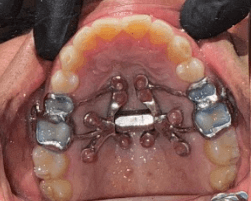
Sleep apnea affects millions of adults — often silently. Many patients don’t realize that the real cause of their nighttime breathing problems is a narrow palate, restricted nasal airflow, or a collapsed soft palate. At Tribeca Dental Studio, we specialize in two powerful modern airway treatments:
- MARPE (Miniscrew-Assisted Rapid Palatal Expansion)
- NightLase® (non-surgical laser airway tightening)
Individually, both treatments offer major breathing benefits. Combined, they can drastically reduce the need for CPAP machines and help patients finally sleep through the night.
So, the big question is:
Can MARPE alone fix sleep apnea? Or is MARPE + NightLase the best solution?
Let’s break it down clearly.
What Is MARPE?
MARPE, or Miniscrew-Assisted Rapid Palatal Expansion, is a non-surgical method of widening the upper jaw. Unlike traditional expanders, MARPE works for adults, because it anchors to mini-implants in the palate — creating true skeletal expansion.
What MARPE does:
- Expands the nasal airway
- Lowers nasal resistance
- Creates more room for the tongue
- Reduces snoring caused by crowding
- Helps correct “mouth breathing”
- Improves jaw and facial development
Think of MARPE as opening the “hard structure” of your airway — making more space for air to pass through naturally.
Can MARPE Alone Fix Sleep Apnea?
Sometimes: YES.
If your sleep apnea is caused primarily by:
- A narrow maxilla (narrow upper jaw)
- Limited nasal volume
- High tongue position due to lack of room
- Chronic nasal resistance
- Collapsed nasal walls
Then MARPE can significantly improve or even resolve sleep apnea symptoms in adults.
But sometimes: MARPE is only half the solution.
Sleep apnea also often involves:
- Vibrating or collapsing soft palate
- Weak throat tissues
- Snoring caused by soft-tissue laxity
- Uvula collapse
- Posture-related airway collapse
In these cases, MARPE improves airflow, but you still need soft-tissue tightening. That’s where NightLase® comes in.
What Is NightLase® and How Does It Help?
NightLase® is a non-invasive laser therapy for snoring and sleep-disordered breathing. The treatment gently tightens the tissues of the soft palate and throat — improving airflow without surgery.
NightLase helps with:
- Snoring
- Soft-palate collapse
- Mild–moderate sleep apnea
- Mouth breathing
- Vibration symptoms
NightLase does not change bone structure. That’s why combining it with MARPE gives you both skeletal AND soft-tissue improvement.
| Treatment | Best For | Pros | Limitations |
| MARPE | Structural, bone/nasal issues |
Expands airway permanently | Doesn’t tighten soft palate |
| NightLase | Soft tissue collapse | Non-surgical, painless, no downtime | Doesn’t widen bone structure |
| MARPE + NightLase | Moderate–severe airway restriction | Addresses both causes of apnea | None — best combined result |
Why MARPE + NightLase Is the Most Effective Combo for Sleep Apnea
Most adults with sleep apnea have both structural AND soft-tissue issues.
This means:
- MARPE expands the hard airway
- NightLase tightens the soft airway
- You breathe better through the nose
- The tongue finally fits in the mouth properly
- Snoring decreases from both angles
- CPAP use often drops or becomes unnecessary
This combination is especially effective for:
- Chronic snorers
- Patients with “collapsing airway” diagnosis
- CPAP-intolerant adults
- Long-term mouth breathers
- People with narrow palates + soft palate instability
What Results Should You Expect?
With MARPE alone:
- Up to 30% more nasal airway volume
- Improved breathing at rest
- Reduced nasal blockage
- Less mouth breathing
- Better sleep continuity
With NightLase alone:
- 40–60% reduction in snoring intensity
- Improved tissue tone
- Less airway collapse during sleep
With both combined:
- Maximum airway opening
- Major snoring reduction
- Better sleep quality
- Much easier nasal breathing
- Lower CPAP pressure or CPAP elimination in some patients
Is MARPE or NightLase Painful?
- MARPE: mild soreness during the first few days
- NightLase: painless, feels warm, no downtime
- No needles, no surgery, no sedation required
How Long Does Treatment Take?
MARPE
- Activation phase: 2–4 weeks
- Stabilization: 3–6 months
NightLase
- 3 sessions, 3–4 weeks apart
- Results last up to 1 year
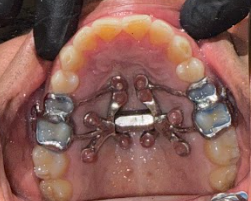
Before and After
Together, these treatments deliver long-lasting, structural improvements.
Are You a Candidate?
You may be a strong candidate for MARPE, NightLase, or both if you have:
- Snoring
- Sleep apnea
- Trouble breathing through your nose
- Mouth breathing
- Small palate
- Crowded teeth
- Chronic fatigue
- Daytime sleepiness
A 3D airway scan can determine exactly what type of obstruction you have.
FAQ
Does MARPE cure sleep apnea?Sometimes. MARPE can significantly improve sleep apnea if the main issue is a narrow palate or nasal restriction. For complete relief, many adults benefit from adding NightLase.
Is MARPE effective for adults?Yes. MARPE uses miniscrews to create true skeletal expansion even in adults whose sutures have fused.
Can MARPE replace CPAP?Some patients reduce or eliminate CPAP, depending on their type of apnea.
Is NightLase permanent?NightLase provides results that last up to a year and can be repeated annually.
Is the combo of MARPE and NightLase safe?Absolutely. Both treatments are non-surgical, safe, and well-studied for airway improvement.
About Tribeca Dental Studio
Tribeca Dental Studio, located at 54 Warren St, New York, NY 10007, has provided comprehensive dental care to Lower Manhattan since 2007. Led by Dr. Nina Izhaky, our practice combines general, pediatric, orthodontic, oral surgery, and periodontal care under one roof.
Our focus on airway health, dental implants, veneers, and pediatric dentistry sets us apart. We use 3D CBCT imaging, digital planning, and laser technology — including NightLase for snoring — to deliver precise, comfortable care.
To schedule a consultation, call (212) 561-5303 or book online. We welcome patients from Tribeca, SoHo, Battery Park City, the Financial District, and throughout downtown Manhattan.
How We Write — and How We Practice
The articles on this blog are written from the same standard we apply in the treatment rooms: diagnosis before recommendation. When we explain a treatment here — an implant, an aligner plan, a sleep appliance — we explain how the decision is actually made in practice: the examination, the imaging, the alternatives considered, and the reasons one path is chosen over another.
If a topic has a genuine controversy or a matter of professional judgment, we say so rather than smoothing it over, because a reader who understands the trade-offs makes better decisions than one who has only seen the brochure version.
Nothing here replaces an examination of your own mouth, and we are careful about the difference. General information can tell you what questions to ask and what a thorough answer sounds like; it cannot tell you whether your bone will hold an implant, whether your snoring is apnea, or whether a tooth can be saved. When an article touches your situation, treat it as preparation for a conversation — then have the conversation.
We hold same-day slots for emergencies, and consultations carry no obligation: book online or call (212) 561-5303.
About the Practice
Tribeca Dental Studio has served Lower Manhattan from 54 Warren St since 2007, with general, cosmetic, implant, periodontal, endodontic, orthodontic, airway, and pediatric care under one roof and one team's direction. The questions our patients ask in the chair are the ones this blog answers: what a treatment involves, how long it takes, what recovery feels like, what it costs to do it properly, and how to tell a careful plan from a rushed one.
If your question is not covered, ask us at your visit — the honest answer is the house style.
To schedule, book online at any time or call (212) 561-5303. The studio is open Monday to Friday from 8:00 AM to 6:00 PM, Saturday from 9:00 AM to 4:00 PM, and Sunday from 9:00 AM to 2:00 PM, steps from the Chambers Street subway hub, and welcomes patients from Tribeca, the Financial District, Battery Park City, SoHo, and across downtown Manhattan.
A Note on Symptoms and Self-Diagnosis
Readers often arrive here after a search that began with a symptom — a tooth that throbs at night, gums that bleed, a snore a partner can no longer sleep through. A word of honest framing: an article can help you understand what a symptom commonly means and how urgently it usually needs attention, but it cannot rank your case.
Bleeding gums are sometimes a hygiene problem and sometimes the first sign of periodontal disease; a twinge is sometimes a high filling and sometimes a dying nerve. The difference is found in an examination and imaging, not in a paragraph — which is why these articles end where they do: with an invitation to be seen, not a verdict.
If what you are feeling cannot wait, do not let reading substitute for calling. The studio holds same-day emergency slots daily, and a call to (212) 561-5303 with a plain description of the problem is the fastest route to a real answer. For everything else, bring the article to your appointment. Mark the passage that matched your situation.
It gives the conversation a head start, and it gives you a way to check that the plan you are offered actually addresses the thing that brought you in.
What Things Cost, and Why We Answer That Way
Cost questions deserve a straight answer, and the straightest one available before an examination is structural: dental fees follow diagnosis, materials, laboratory work, and time, in that order. That is why this blog explains what drives the cost of the treatments it covers — the imaging, the grafting, the stages, the restoration — instead of printing numbers that would be fiction for most readers.
After an examination, the answer becomes exact: a written plan with each stage and its fee, which you can consider without obligation and compare against any other opinion you choose to get.
We would rather earn a patient with a clear plan than close one with a fast number. If you are comparing practices, compare plans: what was examined, what was imaged, what is included, what happens if healing changes the sequence. The articles here are written to give you those questions. The studio's answers, for your mouth specifically, are one appointment away.
No Miracles, No Scares
One more commitment, because it decides whether health writing helps or harms: we do not publish scares or miracles. A treatment described here does what it does within limits we will name — an appliance manages apnea for the patients whose anatomy suits it, a laser protocol helps the snoring cases it is indicated for, an implant succeeds at the rate careful planning produces, not at a hundred percent.
If a claim anywhere in dentistry sounds too clean, it is missing its conditions, and our articles try to restore them. You will make better decisions with the conditions attached, and so will we.
Questions Worth Bringing to Your Appointment
The most useful thing you can bring to a dental appointment is a good question, so here is the short list our doctors wish every new patient asked — of us, and of any practice being considered. What did the examination and imaging actually show? Which parts of the plan are urgent, which protect the teeth around them, and which are elective? What happens if each part waits six months? What are the alternatives, and why is this one recommended over them?
And what will the follow-up look like — how will we know the treatment worked? A practice that answers those questions completely, in writing, has shown you its standard before it has touched a tooth.
Notice what is not on the list: the brand names of equipment, the décor of the office, the speed of the sales process. Dentistry is a long relationship disguised as a series of procedures. The practices worth keeping are the ones whose plans you understand, whose reasoning you can repeat to a spouse at the kitchen table, and whose follow-ups happen whether or not you remember to ask.
That is the relationship this studio has tried to build since 2007, one written plan at a time.
If an article here has started a question we have not answered, the consultation is where it gets answered for your mouth specifically. Book online at any time or call (212) 561-5303. Bring the page, bring the question, and expect the answer to involve an examination, imaging where it matters, and a plan you can take home and think over. That is not a sales technique. It is the whole technique.
How This Journal Treats Uncertainty
A closing note on how this journal treats uncertainty, because dental information online rarely does. Where a question has a settled answer, the articles here give it plainly. Where the honest answer is that it depends — on imaging, on anatomy, on the findings of an examination nobody can perform through a screen — the articles say that too, and explain what it depends on and how the dependence gets resolved in a real appointment. That restraint is deliberate.
A journal that pretends every question has a universal answer trains its readers to expect certainty from their treatment as well, and dentistry, practiced honestly, offers something better than certainty: a diagnosis, a plan with its reasoning shown, and follow-up that checks whether the reasoning was right.
If you have read this far down any page of this site, you are the reader these pieces are written for — the one who checks. Bring the checking with you. The consultation at 54 Warren St rewards it: findings first, options with trade-offs, costs in writing, and time to decide. Book online at any hour or call (212) 561-5303.