Waterlase Dentistry in Tribeca, NYC
Waterlase dentistry is dentistry done with a laser that cuts with water instead of heat. Our Biolase Waterlase sends its energy into a fine spray of water, and the energized water — not a burning beam — does the cutting, so teeth and gums are treated coolly and gently. Our second laser, the Fotona LightWalker, does the deep work: one of its two wavelengths reaches the bacteria under the gumline that cause gum disease. Two lasers, two different jobs — this page explains both, and the difference between a water laser and a heat laser.
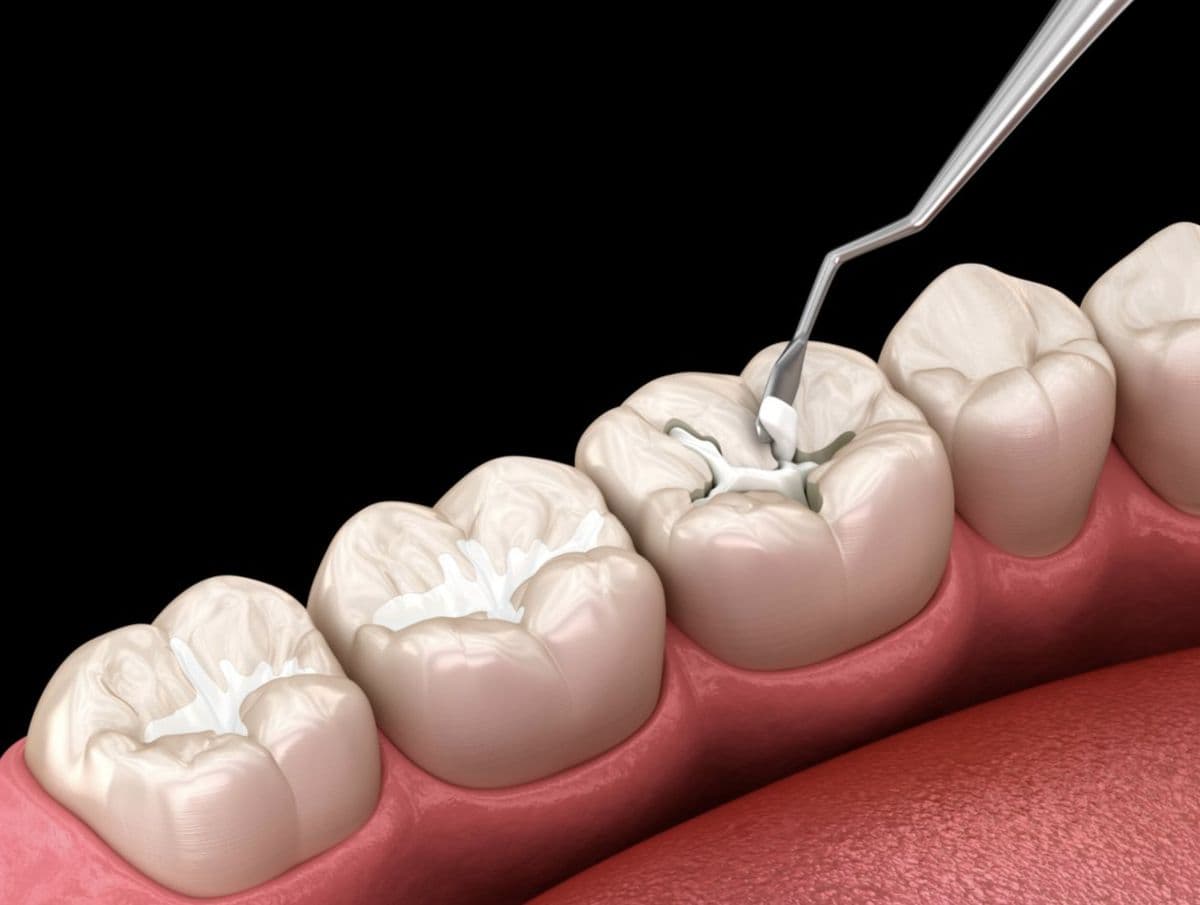
Why we invested in two lasers
Most dental lasers cut by burning tissue. Ours is best known for the one that doesn't — the water laser — backed by a second laser built for deep gum work.
It cuts with water, not heat
The Waterlase cuts with energized water, so there is very little heat at the treatment site. No heat means less trauma to the tooth and the tissue around it — and none of the burning associated with heat-based lasers.
No drill sound or vibration
When the water laser treats a tooth, there is no drill — no high-pitched whine, no vibration through the jaw, no pressure. For patients whose anxiety starts with the drill, this is the difference that matters.
Often little or no numbing
Because the water laser is so gentle on the tooth, many fillings can be done with little or no numbing. Not every case — deep decay near the nerve can still call for anesthetic — but far fewer than with a drill.
A second laser for deep gum work
The LightWalker's two wavelengths let one machine treat surfaces — enamel and gum — and reach deep under the gumline to reduce the bacteria that cause gum disease. It is the laser behind our gum therapy.
Precise, and kind to what's around it
Both lasers work on a very small area at a time and leave the surrounding tissue largely alone. Less collateral damage means less soreness afterward and faster, quieter healing.
Two lasers cover most treatments
The water laser handles teeth and surface gum work; the LightWalker handles gum therapy and other deep work, and also performs our NightLase snoring treatment. Between them, most of what a drill and a scalpel used to do here has a laser option.
How a laser appointment goes
Every treatment starts with the same question: which laser, if any, is the right tool for this tooth or this gum?
We match the laser to the job
We examine the tooth or gum and decide which laser fits: the water laser for teeth and surface tissue, the deep-acting LightWalker wavelength for work under the gumline.
Numbing, if you need it
Many laser treatments need little or no numbing, but that depends on the treatment and the tooth. We numb whenever comfort calls for it — laser dentistry is about less trauma, not about toughing it out.
The laser does the work
The laser does the cutting, disinfecting, or contouring with minimal effect on the tissue around the treatment site. No drill noise or vibration when the water laser is on the job.
A quieter recovery
Laser-treated tissue usually heals quickly and quietly. Most patients return to their normal day right away, with little more than mild tenderness where the work was done.
Water laser vs heat laser — the real difference
Some dental lasers cut with heat: a thermal laser concentrates energy into the tissue until it vaporizes — precise, but a burn by design. The Waterlase takes a different path: its energy is absorbed by water, and the energized spray cuts the tooth or gum, so very little heat is generated. Heat lasers burn their way through; the water laser washes its way through. Our LightWalker sits between the two: its surface wavelength is absorbed by water in the tissue, and its deep wavelength reaches the bacteria below the gumline without cutting the surface at all.
Hablamos español
We warmly welcome Spanish-speaking patients. Your laser options, your treatment, and your aftercare instructions are explained in your language — call us at (212) 561-5303 and ask for care in Spanish.
Questions about our lasers
01What is the difference between your two lasers?
The Waterlase is the water laser. The LightWalker is a two-wavelength laser: one wavelength works on surfaces (tooth enamel and gum), and the other reaches deeper, under the gumline, where gum-disease bacteria live. Different tools for different jobs — we match the laser to the treatment.
02How does the water laser work?
It cuts with water. The laser energy is absorbed by a fine spray of water, and the energized water does the cutting — so there is very little heat involved. Heat-based lasers cut by heating the tissue itself, which is precise but thermal. The water laser is the cool-cutting option, and it is why many Waterlase treatments are so gentle.
03Can the water laser replace the drill?
Often, yes. For many fillings the Waterlase removes decay without the sound, vibration, or pressure of the drill, and many patients need little or no numbing. It is not a promise for every tooth — deep or complex work can still call for conventional instruments — and we will always tell you which applies to yours.
04Does laser dentistry hurt?
The treatments are designed to be comfortable: laser dentistry usually means less heat, less pressure, and less trauma to the surrounding tissue than conventional cutting. Many treatments need little or no numbing. We would rather set honest expectations than promise pain-free dentistry — what we can say is that patients who dread the drill are usually pleasantly surprised.
05Which laser treats gum disease?
The LightWalker — its deep-acting wavelength reaches the bacteria under the gumline, which is the work gum therapy depends on. It is the laser behind our laser periodontal therapy and our LANAP-family gum treatment. The Waterlase is used mainly on teeth and surface gum tissue.
06Is laser dentistry safe?
Yes. Dental lasers have been in clinical use for decades, and both of our systems are established medical devices used in practices worldwide. The settings are chosen for each tissue and each task, and your eyes are protected with specialist eyewear during treatment.
07Can a laser help with snoring?
Sometimes. For snoring and sleep apnea, our LightWalker also performs NightLase — a laser treatment that tightens the tissue at the back of the throat. If snoring is your concern, ask us about it at your visit and we will explain whether it fits your case.
Waterlase dentistry in Tribeca
Tribeca Dental Studio is at 54 Warren Street, New York, NY 10007, in the heart of Tribeca — serving Tribeca, SoHo, Battery Park City, the Financial District, and Downtown Manhattan. Call (212) 561-5303 to ask about laser treatment.
Meet the lasers before you meet the drill
If the drill is what has been keeping you away, come and see the alternative. We will examine your teeth and gums, tell you which laser — water or deep-acting — fits your treatment, and explain exactly what it would feel like before anything begins.
Your Visit from Tribeca
Getting here from Tribeca is a short walk, not a trip, and that is how most of our neighbors arrive. If you are coming by subway, the 1, 2, 3, A, C, and E trains stop at Chambers Street, about a five-minute walk up Warren to our door. The 4, 5, and 6 at Brooklyn Bridge–City Hall are ten minutes on foot through the civic center, and the J and Z also stop at Chambers Street for the east-side connection.
Citi Bike stations sit on Warren Street and Greenwich Street, and New Jersey commuters can take PATH to the World Trade Center Oculus.
When you arrive at 54 Warren Street, we keep the day simple and unhurried from the moment you check in. Our team works together under one roof, so your visit stays in one place instead of sending you across town for another appointment or another opinion. We talk through what brought you in, take any imaging we need here in the office, and explain what we are seeing in plain language before we discuss next steps together.
You will always know what we recommend, why we recommend it, and what can wait, so you leave with a clear plan rather than unanswered questions.
Life in Tribeca moves between the cast-iron lofts on Franklin Street, the towers along West Street, and afternoons with families at Washington Market Park, and we schedule with that rhythm in mind. We are open Monday through Friday from 8 AM to 6 PM, Saturday from 9 AM to 4 PM, and Sunday from 9 AM to 2 PM, and you can book online any time or call us at (212) 561-5303.
Street parking here is tight, with cobblestone blocks and film shoots, but attended garages on Warren Street and Greenwich Street sit within a block of our door. Follow-ups stay with our same team, so your care feels continuous.
Ongoing care is where being neighbors really pays off for our Tribeca patients. A six-month recall is just a short walk over, a quick check-in with the team who already knows your history, and a cleaning that fits between school drop-off and the rest of your day. When treatment takes more than one visit, we sequence it sensibly, review healing in person, and adjust the plan together rather than by phone tag.
Because we have cared for families here since 2007, we notice small changes early, keep your records continuous, and remind you when you are due — so staying on track never feels like starting over.
How Care Is Planned at Our Tribeca Studio
Every treatment plan at Tribeca Dental Studio begins with a diagnosis, not a recommendation made in the abstract. We examine the tooth or area in question, review imaging taken here in the office — including 3D CBCT scans when the case calls for them — and talk through what we see in plain language before any treatment is proposed. You will always know what we recommend, why we recommend it, and what could safely wait.
When several options would serve you well, we lay them side by side: what each involves, how many visits it takes, how long it is expected to last, and what it asks of the neighboring teeth and bone.
That conversation becomes a written plan. The sequence, the timing, and the reasoning are set down before treatment begins, so there are no surprises mid-course and no step is improvised. Staged treatment is grouped into planned steps when we can, and each stage is checked before the next one starts.
If a simpler option would serve you just as well, that is the option we will put in front of you — and if the honest answer is that a tooth or a treatment can be watched rather than treated today, we will say that instead.
Because every specialty sits under one roof at 54 Warren St, a plan that touches several disciplines is designed as a whole. Implant surgery, periodontics, endodontics, orthodontics, cosmetic work, airway care, and pediatric dentistry are handled by one team in one place, which means the implant plan accounts for the gum plan, the orthodontic plan accounts for the airway, and nothing is lost between offices across town.
Your records, your imaging, and your history stay with the same team from the first visit through every follow-up.
Technology We Use — and Why It Matters
Good planning depends on seeing clearly. Our studio works with 3D CBCT imaging, which shows bone volume, nerve positions, sinus anatomy, and root form in three dimensions rather than the flat shadow of a standard X-ray. Implant positions, grafting decisions, root canal anatomy, and expansion planning are all worked out on that imaging before treatment begins, so the day of the procedure holds as few unknowns as possible.
Digital planning carries the same approach into orthodontics and cosmetic work: tooth movement and smile design are mapped in advance, and you can see the intended direction before committing to it.
Laser technology is part of everyday care here, from gum therapy to the NightLase protocol we use for snoring. Lasers let us treat soft tissue with precision and, in many cases, with a quieter recovery than traditional surgery. For sleep concerns, we use at-home sleep testing rather than assumptions: your breathing is measured in your own bed, and the results — not a guess — decide whether an oral appliance, NightLase, or a referral is the right path.
Technology earns its place in the plan only when it changes a decision or improves an outcome; that is the standard each tool here is held to.
Costs, Insurance, and Written Estimates
Before treatment begins, you receive the plan in writing — including what each stage involves and what it costs — so you can decide with the full picture in front of you. There is no obligation attached to a consultation, and a second opinion is a reasonable thing to want; we would rather you choose with clear information than feel rushed into a chair.
If you have dental insurance, our team verifies your coverage and explains what it does and does not apply to before we start, and if you do not, the written plan still lets you stage treatment sensibly over time.
Dental treatment is often easier to approach in planned stages than all at once. A written plan lets you sequence what is urgent, what protects the teeth around it, and what is elective, so each visit moves the whole plan forward. If something changes along the way — a tooth responds better or worse than expected — the plan is revisited with you, in writing, before the next step. That discipline is what keeps a long course of treatment from becoming a series of surprises.
Comfort, Recovery, and Follow-Up
Most dental anxiety comes from the unknown, so we work to remove it: what will happen, how long it takes, what it will feel like, and what recovery looks like are all covered before we begin. During treatment we check in rather than push through, and after it we tell you plainly what is normal, what is not, and when to call.
Written aftercare instructions go home with you, and the precautions in them — protecting a healing site, eating soft foods for a few days, keeping the area clean — are the difference between an uneventful recovery and a complicated one.
Follow-up is part of the treatment, not an extra. We schedule reviews around your life, use return visits to check healing and the details we flagged together, and keep recall reminders running so maintenance does not drift. If something feels off between visits, we would rather see you quickly than have you wait and wonder.
Call us at (212) 561-5303 or book online at any time — the studio is open Monday to Friday from 8:00 AM to 6:00 PM, Saturday from 9:00 AM to 4:00 PM, and Sunday from 9:00 AM to 2:00 PM.
Before You Book
A final word on how to use pages like this one. Treatment pages describe what is possible; a consultation decides what is appropriate — for your anatomy, your history, your goals, and your budget, in that order of conversation. If anything here has raised a question we have not answered, bring it with you: patients who arrive with marked-up pages and specific questions get the most from their first visit, and the plan we write together is better for it.
Tribeca Dental Studio is at 54 Warren St in Tribeca, and new patients are welcome at any of the services described on this site. Book online at any time or call (212) 561-5303. The first step is an examination and an honest conversation; everything else in dentistry follows from those two things done properly.
The Next Step Is a Conversation
Wherever this page found you — a search at midnight, a partner's forwarded link, a dentist's suggestion — the next step is smaller than the worry usually makes it feel. A consultation at the studio is an examination and a conversation, not a commitment: findings first, options with their honest trade-offs, a written plan with costs, and time to decide at home.
Patients tell us the plan is what they actually came for, whether they proceed here, proceed elsewhere, or proceed nowhere for now. That is the offer, and it stands on every page of this site: 54 Warren St, bookable online at any hour, or at (212) 561-5303 — Monday to Friday 8:00 AM to 6:00 PM, Saturday 9:00 AM to 4:00 PM, Sunday 9:00 AM to 2:00 PM.
The Consultation Is Not a Funnel
A last word that applies to every page in this series, whichever treatment brought you here: the consultation is not a funnel. Patients arrive at these pages mid-worry — about a tooth, a jaw, a night's sleep, a smile in photographs — and the studio's answer has been the same since 2007. An examination. Imaging where imaging decides. A written plan with the options and their costs, including the option of doing less, or nothing yet.
Then time to think, at home, without a follow-up call designed to hurry you. If that is the experience you were hoping dentistry could be, the door is at 54 Warren St, and it opens online at any hour or at (212) 561-5303.
How We Plan Your Care at Tribeca Dental Studio
Every treatment at Tribeca Dental Studio starts with a diagnosis, not a sales pitch. Before we recommend anything, we examine the tooth or area in question, review imaging taken here in the office, and talk through what we see in plain language. You will always know what we recommend, why we recommend it, and what could safely wait.
That recommendation becomes a written plan, so the sequence, the timing, and the reasoning are clear before any treatment begins — and if a simpler option would serve you just as well, that is the option we will put in front of you.
Our studio brings every dental specialty under one roof at 54 Warren St in Tribeca, and it has since 2007. General dentistry, cosmetic care, implant surgery, periodontics, endodontics, orthodontics, airway care, and pediatric dentistry are handled by one team in one place, which means a treatment that touches several specialties is planned as a whole rather than handed off between offices across town.
Your records, your imaging, and your history stay with the same team from the first visit through every follow-up, so nothing is lost between providers and no step is planned in isolation.
We are open Monday to Friday from 8:00 AM to 6:00 PM, Saturday from 9:00 AM to 4:00 PM, and Sunday from 9:00 AM to 2:00 PM. You can book online at any time or call us at (212) 561-5303.
The studio sits between Greenwich Street and West Broadway, steps from the Chambers Street subway hub (1, 2, 3, A, C, E), with attended garages on Warren Street and Greenwich Street within a block of our door for patients who drive in.
Care does not end when the procedure does. We schedule reviews and follow-ups around your life, group staged treatment into planned steps when we can, and use each return visit to check healing and watch the details we flagged together. Between appointments we stay in touch with recall reminders and clear next steps, and if something feels off, we would rather see you quickly than have you wait and wonder.
The goal is a plan you understand, a team you recognize, and results that are checked over time rather than assumed.