The Interview
We ask about your sleep and breathing symptoms: do you wake up tired in the morning? Not feeling rested? Circles under your eyes? Mouth breathing? Waking up with dry mouth? Snoring?
Every MARPE treatment at our Tribeca practice starts with a full interview about your sleep and breathing symptoms, followed by CBCT 3D imaging. If your symptoms come from a narrow palate or narrow nasal floor, MARPE expands the palate to give you more air through the nose — without surgery.
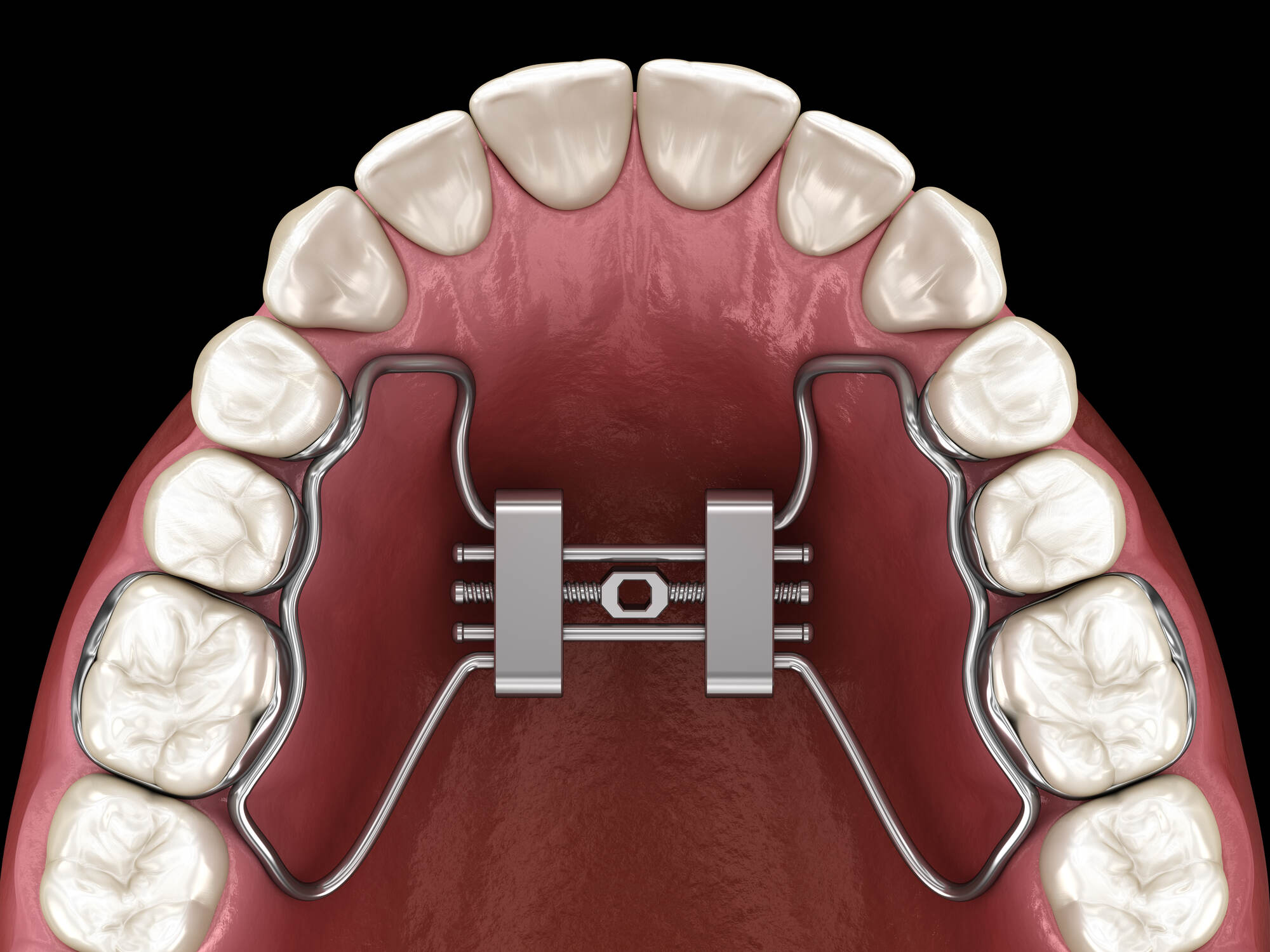
Skeletal Palatal Expansion (MSE)
Anchored directly to the maxilla for non-surgical adult skeletal expansion.
The short answer
MARPE widens a narrow upper jaw without surgery — using a small expander anchored to mini-implants. More palate width means more room for your tongue and more air through your nose. Every treatment here starts with a full interview about your sleep and breathing, plus CBCT 3D imaging, because we treat the cause, not just the crowding.
We never place an expander without first understanding why you snore. Every MARPE evaluation at Tribeca Dental Studio starts with a conversation, not an appliance:
We ask about your sleep and breathing symptoms: do you wake up tired in the morning? Not feeling rested? Circles under your eyes? Mouth breathing? Waking up with dry mouth? Snoring?
Then we run a series of tests: a CBCT scan of the head and nasal floor, digital scans of the teeth, and photos of the findings.
There are different reasons why people snore, and different reasons why people have sleep apnea. If your symptoms are due to a narrow palate or a narrow nasal floor, we can expand the palate and correct it — giving you more air through the nose.
Real photos of the MARPE appliance used at our Tribeca, NYC practice — note the miniscrew ports that anchor the expander directly into the palatal bone:
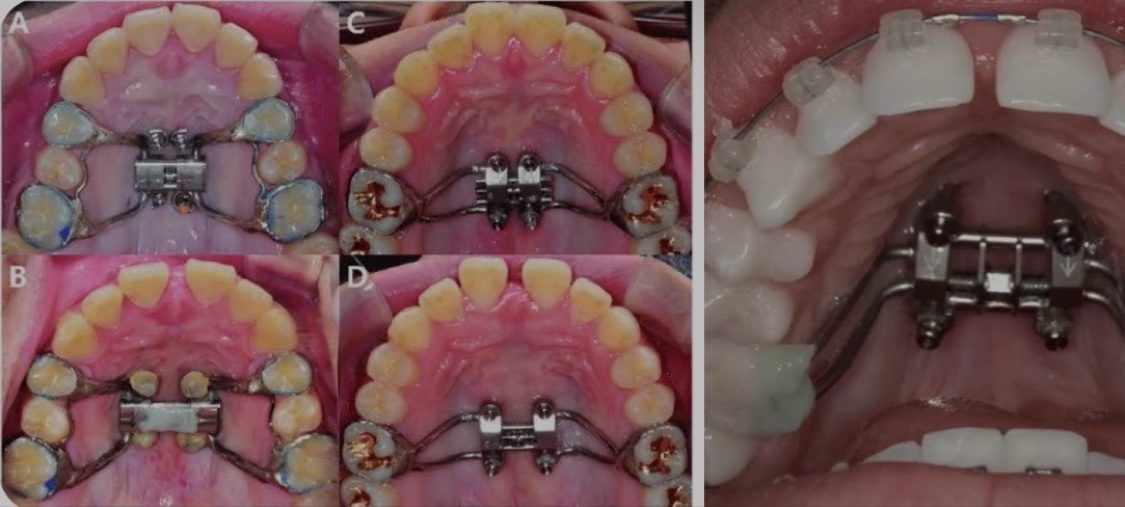
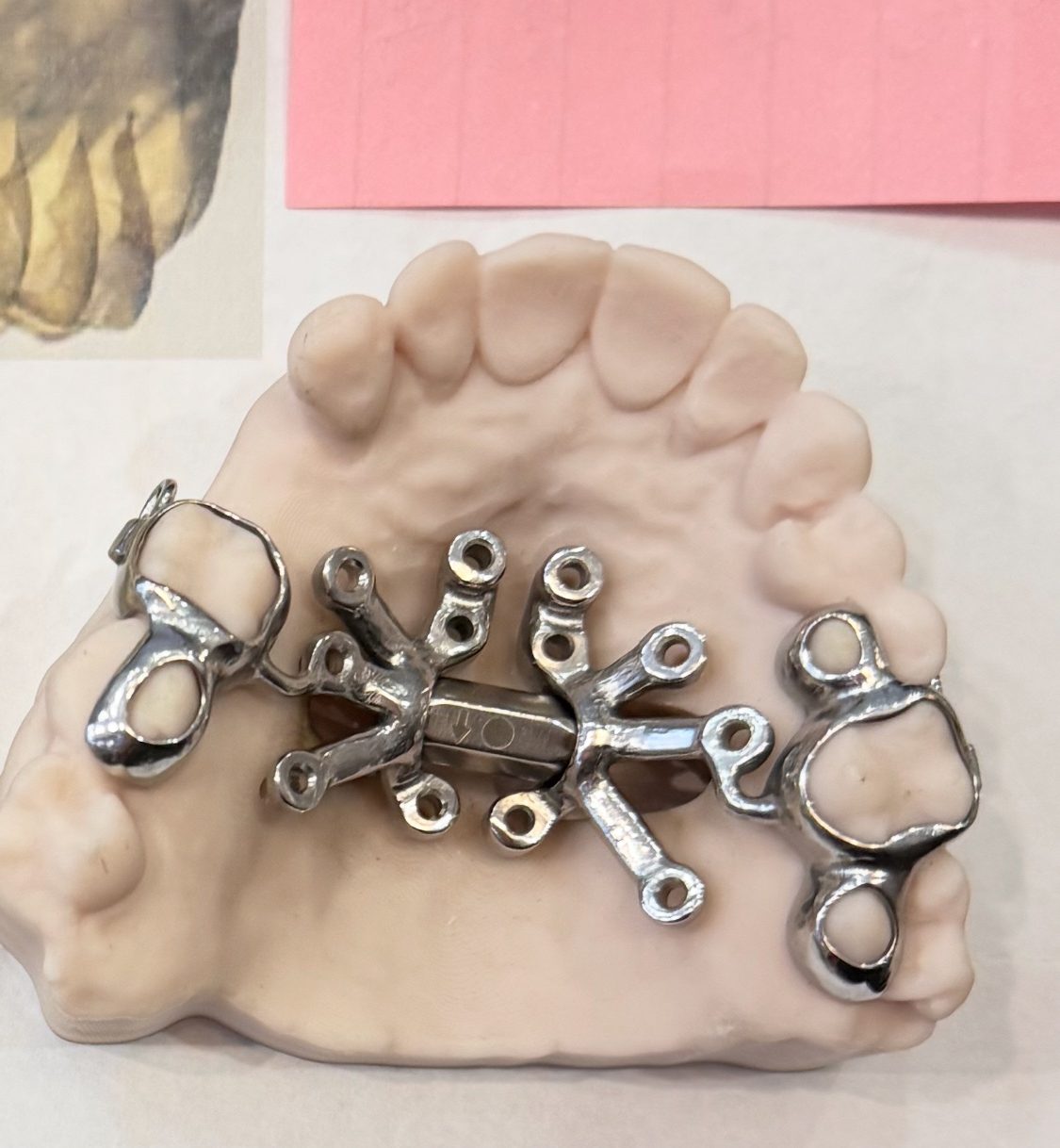
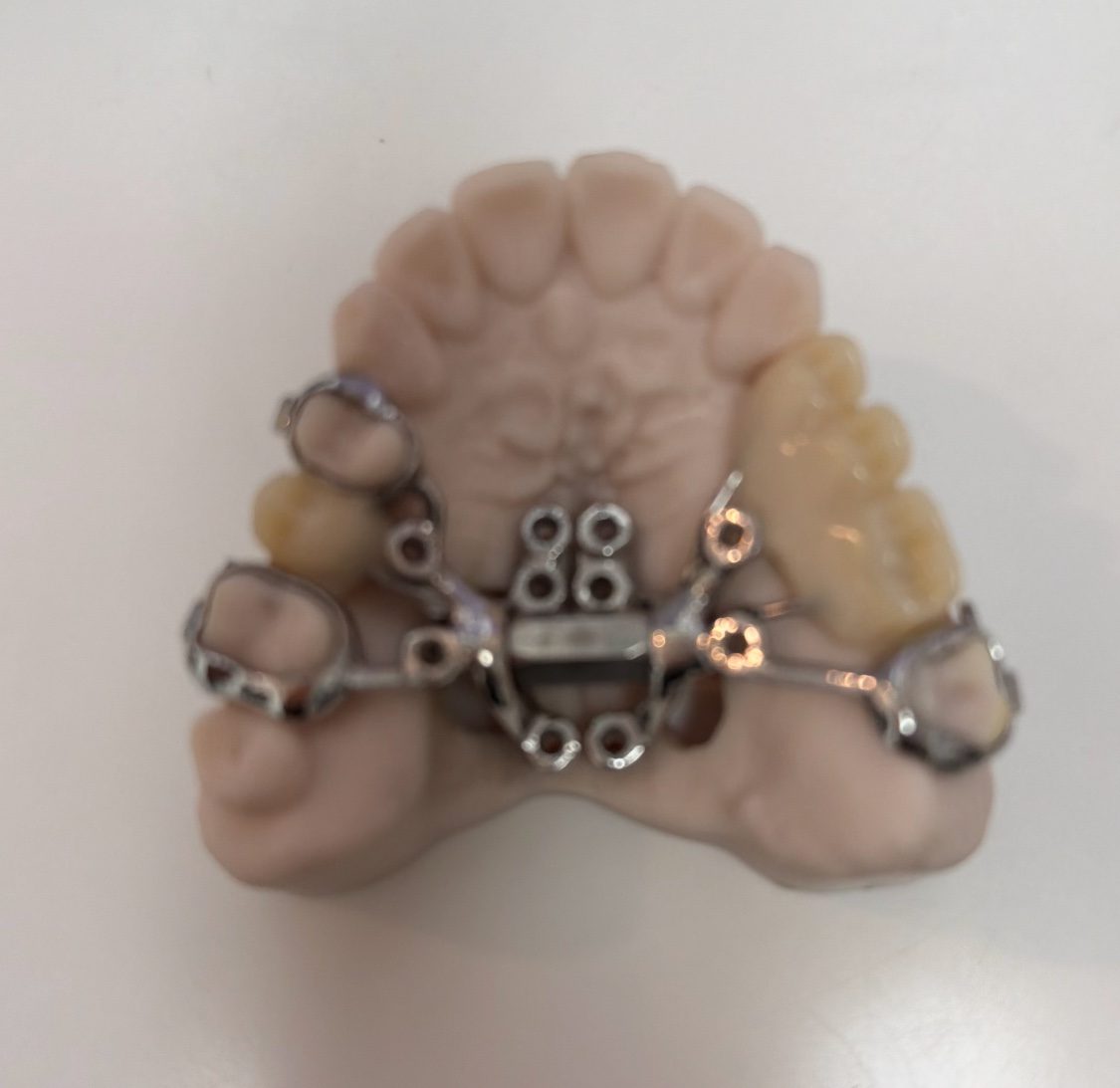
Not all snoring comes from the palate. That is why our diagnosis identifies the cause before recommending treatment:
If your symptoms are due to a narrow palate or narrow nasal floor, we expand the palate with MARPE to give you more air through the nose.
For those who do not have difficulty breathing through the nose but whose soft palate is the issue, we offer NightLase: a gentle, non-painful, non-invasive laser delivered as a series of treatments.
A constricted upper maxilla restricts both nasal airflow volume and proper tongue posture, frequently leading to:
The roof of the mouth is the floor of the nose — and down its center runs the midpalatal suture, the seam where the two halves of the upper jaw meet. In children this suture is still flexible, which is why a conventional expander can widen a young palate. By the mid-teens it typically fuses into solid bone, and from that point on, tooth-borne expanders can only push the teeth sideways — they cannot widen the jaw itself.
MARPE — miniscrew-assisted rapid palatal expansion — and its skeletal variant MSE change where the force goes. Four small titanium miniscrews are placed through the appliance directly into the palatal bone, gripping the inner and outer layers of hard bone. A jackscrew mechanism joins them at the center of the palate. When the patient turns the activation key, gentle and carefully controlled pressure pushes outward against the bone itself — not the teeth — gradually separating the fused midpalatal suture in an even, parallel widening.
Because the widening happens at the bone level, the palate, the floor of the nasal cavity above it, and the dental arch all expand together. After the active phase, the appliance stays in place for several months of retention while new bone fills the separated suture and solidifies — locking in the new width before the appliance is removed and any follow-up orthodontics begins.
Controlled force reopens the fused seam at the center of the upper jaw, allowing the two maxillary halves to move apart evenly.
Titanium miniscrews grip the palatal bone directly, so expansion force moves bone — not teeth — even in fully mature adults.
Daily key turns add small, measured increments, producing an even front-to-back widening of the palate and nasal floor.
Candidacy is determined by a clinical exam and 3D CBCT imaging. In general, the following patients are most often evaluated for bone-anchored expansion in Tribeca and Lower Manhattan:
In teens, the midpalatal suture is often still partially open, so expansion tends to be faster and more straightforward. In adults, the fused suture is denser — that is exactly what the miniscrews are for: by anchoring into both layers of palatal bone, MARPE and MSE can separate a mature suture without surgery. Older adults are evaluated individually with 3D CBCT imaging to confirm there is enough bone to support the miniscrews safely.
Conventional expanders are limited to young children before the midpalatal suture fuses (around ages 12–15). Applying them to adults merely tips the teeth outward rather than widening the bone.
Tooth-borne only. In adults, it pushes teeth outward without widening the actual palatal bone, risking root damage.
Invasive jaw surgery under general anesthesia required to cut the maxilla in adults with fused sutures.
Anchors directly to palatal bone via micro-implants, generating true parallel bone expansion non-surgically in teens and adults.
A side-by-side look at the three approaches to widening the upper jaw:
| Feature | Traditional RPE | Surgical SARPE | MARPE / MSE |
|---|---|---|---|
| What it anchors to | Teeth only | Bone (after surgical cuts) | Palatal bone via miniscrews |
| Best suited for | Children under ~12–15 | Adults with severe deficiency | Teens and adults |
| Surgery required | No | Yes — general anesthesia | No |
| Type of expansion | Dental (teeth tip outward) | Skeletal, after bone cuts | Skeletal and parallel |
| Recovery profile | Mild soreness | Weeks of surgical healing | Mild pressure during activation |
| Airway effect | Limited in adults | Significant, with surgical risk | Widens nasal floor without surgery |
Straightening teeth is only part of the story. Because MARPE and MSE change the shape of the upper jaw itself, patients in NYC are often evaluated for these broader functional improvements:
The floor of the nose sits directly above the palate, so widening the maxilla can increase nasal volume and reduce airflow resistance. Many patients report breathing more comfortably through the nose — especially at night — once expansion is complete.
A narrow upper jaw forces the lower jaw to shift or strain to find a bite, which can contribute to chewing difficulty and jaw tension. A properly widened arch gives the teeth a stable, balanced foundation to meet against.
A constricted palate leaves the tongue no place to rest upward, encouraging a low tongue posture and mouth breathing. Expansion creates the space the tongue needs for a natural resting position, which supports healthier oral function around the clock.
Dr. Reem conducts CBCT 3D bone mapping and digital impressions to map your palate.
Under comfortable local anesthesia, the custom MSE device is anchored gently to the palatal bone.
You turn the activation key at home as directed. A soft internal 'pop' signifies the suture separation working successfully.
The appliance remains passive for a few months while new bone regenerates, followed by Invisalign® or braces.
Every case is individual, but most MARPE and MSE treatments at our Lower Manhattan practice follow this general sequence:
A clinical exam, review of your dental and airway history, and discussion of your goals to determine whether bone-anchored expansion is appropriate for you.
A low-dose 3D scan maps palatal bone thickness, suture maturity, and airway volume so the appliance and miniscrew positions can be planned precisely.
The custom expander is fitted and the miniscrews are placed under local anesthesia. Most patients return to normal activities the same day.
You turn the key as instructed — often once or twice daily. Mild pressure is normal; a small temporary gap between the front teeth signals the suture is opening as intended.
The appliance stays in place passively while new bone solidifies. Then Invisalign® or braces close any remaining spaces and perfect the bite.
MARPE stands for miniscrew-assisted rapid palatal expansion. It is a non-surgical treatment that widens the upper jaw (maxilla) in teens and adults. Unlike a childhood expander that pushes on the teeth, MARPE uses four small titanium miniscrews anchored directly into the palatal bone to separate the fused midpalatal suture — achieving true skeletal widening.
A custom expander is fitted to the palate and secured with miniscrews under local anesthesia. You turn an activation key as instructed — usually once or twice daily — applying gentle, controlled pressure directly to the bone. Over a few weeks the midpalatal suture separates and the maxilla widens. The appliance then stays in place for about 6 months while new bone solidifies.
It depends on the cause. There are different reasons why people snore, and different reasons why people have sleep apnea. If your symptoms are due to a narrow palate or narrow nasal floor, expanding the maxilla widens the floor of the nasal cavity, which can lower nasal airflow resistance and make nose breathing easier. If the issue is the soft palate and you breathe fine through your nose, NightLase may be the better option. That is why our interview-plus-CBCT diagnosis identifies the cause first.
A regular expander (RPE) is tooth-borne and only works in children before the midpalatal suture fuses (around ages 12–15). In adults it would only tip the teeth outward without widening the bone. MARPE is bone-borne: the miniscrews transmit force directly into the palatal bone, producing true skeletal, parallel widening in teens and adults — without surgery.
Placement of the miniscrews is performed under local anesthesia and is pain-free. Patients typically experience mild pressure across the bridge of the nose or teeth during active expansion, which subsides quickly.
The active expansion phase usually lasts a few weeks. The appliance then stays in place passively for about 6 months to allow the newly formed bone to stabilize permanently.
Yes. MARPE expands the underlying skeletal bone foundation. A follow-up course of Invisalign® or braces is used to align teeth into their ideal cosmetic and functional positions.
Probably not. MARPE was developed specifically for teens and adults whose midpalatal suture has already fused — the miniscrews anchor into the bone itself, which is what makes non-surgical expansion possible at any adult age. Your 3D CBCT scan at the consultation confirms whether there is enough palatal bone to support the appliance.
A childhood expander is tooth-borne: it pushes on the teeth and only works while the suture is still open. MARPE is bone-borne: the miniscrews transmit force directly into the palatal bone, producing true skeletal widening in patients whose sutures fused years ago.
Widening the upper arch typically creates a broader, more fully supported smile with fewer dark corners at the sides. Because the change happens at the bone level, some patients also notice improved midface support. Individual results vary and are discussed at your consultation.
Expanding the maxilla widens the floor of the nasal cavity, which can lower nasal airflow resistance — and many patients find nose breathing easier after treatment. Expansion is not a guaranteed treatment for sleep apnea, so airway concerns are evaluated carefully and, when appropriate, coordinated with your sleep physician.
You will meet with the team for a clinical exam and a 3D CBCT scan that measures your palatal bone, suture, and airway. If you are a candidate, you will receive a personalized treatment plan outlining each phase, what to expect, and recommended follow-up orthodontics.
94.1% success rate with significant skeletal expansion and limited side effects.
Reduced apnea-hypopnea index with volumetric enlargement of the nasal and nasopharyngeal airway.
RELATED ORTHODONTIC CARE
Schedule your consultation with Dr. Reem Abdulrahman at Tribeca Dental Studio in Lower Manhattan today.
Book Consultation NowMARPE — mini-implant assisted rapid palatal expansion — solves a specific problem: how to widen a narrow upper jaw when the mid-palatal suture has matured past the point where a tooth-borne expander can open it. In children, that suture is still pliable and ordinary expansion works through the teeth. In older teens and adults, the suture has fused to varying degrees, and force applied through the teeth mostly tips them outward.
MARPE changes the delivery: small temporary implants placed in the palate anchor the expander directly to the bone, so the widening force reaches the suture itself and the maxilla gains genuine skeletal width.
Diagnosis decides whether that machinery is necessary in your case. We assess the width discrepancy between your upper and lower jaws, the maturity of your suture, and the thickness of your palatal bone on 3D imaging. Some adult patients still achieve adequate expansion with conventional mechanics; others — particularly those with a significant crossbite and a clearly mature suture — would only get tooth tipping from them.
MARPE is recommended when the skeletal route is the honest one, and avoided when it is not, because no patient should carry implants, even temporary ones, that their anatomy never required.
The mini-implants themselves are small, temporary, and placed in the roof of the mouth under local anesthesia. The palate is one of the most favorable sites in the mouth for them: the bone is dense, the tissue is firm, and the implants are removed simply once expansion and consolidation are complete. Placement is planned on your scan, with positions chosen for bone thickness and for the expander design your width target requires.
Most patients are more surprised by how minor this step feels than by anything else in the process, and we walk through it in detail before the day so there are no unknowns.
Treatment then follows the classic expansion rhythm, carried on skeletal anchorage. The appliance is activated on a schedule we prescribe — small turns, usually daily — and width accumulates over the following days and weeks. A gap commonly opens between the front teeth as the suture separates; it looks dramatic and means the expansion is genuinely skeletal, and it is closed later during alignment.
Once the target width is reached, the appliance is locked and left in place for a consolidation period while new bone fills and matures in the opened suture. That waiting phase is not dead time — it is what makes the width permanent rather than borrowed.
After consolidation, the expander and its anchors are removed and alignment begins: braces or aligners move the teeth into the widened arch, close the front gap, and finish the bite in its corrected width relationship. Retention follows, as it does after any expansion, because the tissues around a widened palate need time to adapt to their new dimensions.
The full sequence — imaging, anchorage, activation, consolidation, alignment, retention — is written out in your plan before treatment starts, with the role of each phase explained, so you can see exactly why the process has the shape it does.
The reasons to widen a palate go beyond fitting teeth in a row. A narrow maxilla forces a crossbite, crowds the arch, and leaves the tongue without room to rest against the palate — its natural posture, and one that matters for how the airway functions during sleep. Expansion restores the width relationship the jaws were meant to have, distributes bite forces across properly meeting teeth, and creates the space alignment needs without removing teeth to make room.
We are careful not to promise specific breathing outcomes, but the structural improvement is real and measurable on your own before-and-after records.
MARPE is not for every narrow palate, and saying so is part of offering it responsibly. Very severe discrepancies can exceed what expansion alone can correct; sinus and bone anatomy occasionally rule the approach out; and a patient whose problem is tooth position rather than bone width gains nothing from skeletal anchorage.
Your evaluation will place you in the right category — conventional expansion, MARPE, a combined plan, or no expansion at all — with your imaging on screen and the reasoning in writing. If MARPE is your route, you will know exactly why, and exactly what happens at each stage from the first turn to the final retainer.
A conventional expander pushes on the teeth, and in a child whose palatal suture is still open, that pressure widens the bone as intended. In a mature suture, the bone resists and the teeth absorb the force instead — they tip outward, which looks like expansion but is not skeletal, and it is unstable and hard on the roots' bone housing.
MARPE anchors the appliance to the palate with mini-implants, bypassing the teeth, so the force reaches the suture directly and the bone itself widens. Your imaging and suture assessment determine which mechanics your anatomy needs; we do not use skeletal anchorage where a conventional appliance would genuinely work.
The gap is a sign the treatment is working: it appears because the two halves of the upper jaw have separated at the suture, and the front teeth, sitting in those two halves, move apart with them. It is expected, it is temporary, and it closes during the alignment phase that follows expansion, when braces or aligners bring the teeth together into the widened arch.
We mention it before treatment starts precisely so it does not alarm you when it appears — most patients find it reassuring once they know it means the suture opened as planned.
Yes, for most patients — expansion is the foundation phase, not the whole treatment. Widening the palate creates the arch form; aligning the teeth within that form, closing the front gap, and settling the bite into its corrected relationship is the work of braces or aligners afterward.
The full sequence — expansion, alignment, retention — is mapped in your written plan before the appliance is placed, including the expected rhythm of each phase, so there is no point at which you are guessing what comes next or why.
Most patients describe pressure rather than pain during the activation phase — a feeling of tightness across the palate and sometimes the cheekbones after each turn, which eases between turns. The mini-implants are placed with local anesthesia, and the soreness afterward is typically managed with standard over-the-counter measures and the written guidance we give you.
If discomfort is sharper than described or persists beyond the pattern we outline, we want to hear from you promptly rather than have you push through it; review appointments during activation are frequent for exactly that reason.
Every treatment at Tribeca Dental Studio starts with a diagnosis, not a sales pitch. Before we recommend anything, we examine the tooth or area in question, review imaging taken here in the office, and talk through what we see in plain language. You will always know what we recommend, why we recommend it, and what could safely wait.
That recommendation becomes a written plan, so the sequence, the timing, and the reasoning are clear before any treatment begins — and if a simpler option would serve you just as well, that is the option we will put in front of you.
Our studio brings every dental specialty under one roof at 54 Warren St in Tribeca, and it has since 2007. General dentistry, cosmetic care, implant surgery, periodontics, endodontics, orthodontics, airway care, and pediatric dentistry are handled by one team in one place, which means a treatment that touches several specialties is planned as a whole rather than handed off between offices across town.
Your records, your imaging, and your history stay with the same team from the first visit through every follow-up, so nothing is lost between providers and no step is planned in isolation.
We are open Monday to Friday from 8:00 AM to 6:00 PM, Saturday from 9:00 AM to 4:00 PM, and Sunday from 9:00 AM to 2:00 PM. You can book online at any time or call us at (212) 561-5303.
The studio sits between Greenwich Street and West Broadway, steps from the Chambers Street subway hub (1, 2, 3, A, C, E), with attended garages on Warren Street and Greenwich Street within a block of our door for patients who drive in.
Care does not end when the procedure does. We schedule reviews and follow-ups around your life, group staged treatment into planned steps when we can, and use each return visit to check healing and watch the details we flagged together. Between appointments we stay in touch with recall reminders and clear next steps, and if something feels off, we would rather see you quickly than have you wait and wonder.
The goal is a plan you understand, a team you recognize, and results that are checked over time rather than assumed.
MARPE — miniscrew-assisted rapid palatal expansion — exists for the patient in between: too mature for a conventional expander to move the suture, not a surgical case by preference or by anatomy. Temporary anchorage devices, small miniscrews placed into the palate, give the appliance a grip on bone rather than teeth, so the force goes to the suture instead of tipping molars outward.
At Tribeca Dental Studio the decision between conventional expansion, MARPE, and a surgically assisted approach is made on CBCT imaging that grades the suture's maturation and maps the bone where screws would sit. It is a measurement, not a judgment call, and your written plan records which pattern your anatomy supports and why.
The clinical reason to widen a palate goes well beyond crossbite. A narrow maxilla crowds teeth, forces the lower jaw to shift sideways to close — a functional shift that loads joints and muscles unevenly — and shrinks the floor of the nose and the room available for the tongue, which is why palatal width keeps appearing in our airway conversations.
Patients who arrive for orthodontics sometimes leave with a plan that begins with expansion because the imaging made the sequence obvious: width first, then alignment on a foundation that can hold it, then retention that respects what was built.
Treatment runs in phases you will be able to feel and verify. Placement of the anchorage and appliance is a single planned visit. Activation follows the schedule in your plan — measured turns, a sensation of pressure, and typically a space opening between the upper front teeth as the suture separates, which we photograph and measure at reviews rather than asking you to take on faith.
Once the planned width is reached, the appliance remains as a retainer while bone fills the suture, and only then does the alignment phase begin in earnest: braces or aligners closing the midline space as part of overall tooth movement, the bite settled onto its new width, and retention designed to hold skeletal change, which is more stable than dental change but never exempt from retainers.
Throughout, the questions we answer at reviews are the ones that matter: is the expansion symmetric, is the tissue around the anchorage healthy, is the bite tracking the plan, and — where breathing was part of the indication — is the airway responding, verified by how you sleep and, when indicated, by repeat testing rather than by optimism.
If expansion underdelivers against the imaging prediction, the plan says so and the alternatives are discussed with the same candor as the original recommendation. That is what a written plan is for: not a promise that biology complies, but a record of what was decided, on what evidence, and what comes next either way.
MARPE rarely stands alone, and it should not be planned as if it does. When a narrow palate is part of an airway picture, expansion is one step in a larger sequence: screening and, for adults, at-home sleep testing establish what the breathing problem actually is; expansion creates the skeletal width; alignment finishes the teeth within that width; and follow-up measurement checks what changed.
Widening a palate whose sleep problem has a different main cause would be honest mechanics aimed at the wrong target.
The width target is set by the finished bite, by the room the tongue needs to rest against the palate, and by the arch form alignment will need afterward — not by the largest width the appliance could produce. At Tribeca Dental Studio, Dr. Nina Izhaky's team maps that full course in a written plan before the appliance is placed, using CBCT 3D imaging and digital planning.
Many adults prefer aligners for the alignment phase, and expansion pairs with them well when the sequence is respected. Skeletal width comes first, while the expander and its anchorage do the work aligners cannot, and aligners follow once expansion and consolidation have created a stable, wider arch.
They then handle what remains — closing the front gap, resolving crowding the new width made room for, and settling the bite — planned digitally from the post-expansion positions.
Reversing that order asks a plastic tray to do a bone's work: aligners can tip teeth outward, but tipping is not expansion, and in a mature palate it is the unstable substitute MARPE exists to avoid. Expect an appliance phase with reviews during activation and consolidation, then an aligner phase with its own wear discipline; your written plan lays out both and the handover between them.
Expansion is often described as one of the more stable orthodontic changes, and there is a structural reason for that optimism: once new bone has filled and matured in the opened suture during consolidation, the width is held by bone, not only by an appliance. But stable is not self-holding: the tissues around a widened palate adapt over time, and during that adaptation teeth can drift toward their old positions if nothing retains them.
Retention after MARPE is planned with the same seriousness as expansion itself: the appliance stays passive through consolidation, and retainers follow alignment, worn on the schedule your plan specifies. Follow-up is also where claims are kept honest. If breathing was part of the indication, re-measurement — not impression — is how improvement is described, and reviews check symmetry, bite, and tissue health alongside width.
Expansion is a well-supported change that still requires retention and verification.