Retainers Cost in NYC: What You Are Paying For, and What Skipping It Costs
Retainers cost is the last line item of orthodontic treatment, and the one patients most often try to skip — right up until teeth that took two years to move drift back in months. This page explains what actually drives the price: fixed versus removable designs, materials, one arch or both, and the replacements every retainer eventually needs.
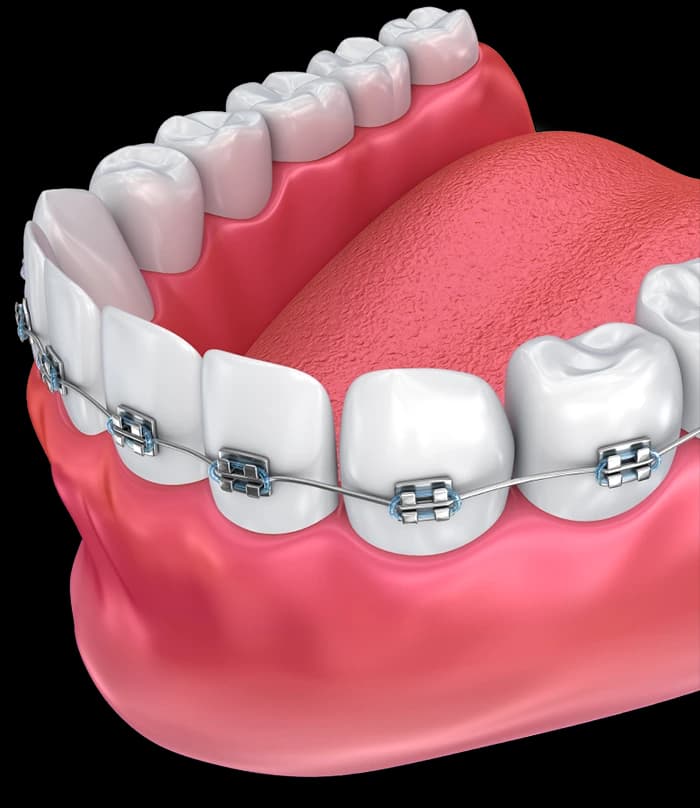
What drives retainers cost
The price is built from the design: whether it is bonded in or removable, what it is made of, how many arches it covers, and how often it will need replacing.
Fixed and removable are different products.
A bonded fixed retainer includes the wire, the bonding appointment, and the precision of fitting it to teeth that must not move during placement. A removable retainer is laboratory or digital fabrication of an appliance. Different work, different appointments, different cost — and different failure modes over the years you will wear them.
Material and fabrication set the tier.
Clear tray retainers are formed over a model or printed from a scan; wire-and-acrylic retainers involve more laboratory steps and can be adjusted and repaired; fixed wires differ in material and flexibility. Durability, comfort, and how a design tolerates grinding all ride on these choices — material is function, not decoration.
One arch or both changes the quote.
Some cases need retention on one arch only; many need both, because teeth move in pairs of opponents — an unretained lower arch can undo the bite relationship the upper arch is holding. A quote that covers one arch when your case needs two is not a saving; it is half a plan. Ask which arches your retention plan actually covers and why.
Replacements are a when, not an if.
Clear trays crack, get lost, and get thrown away in napkins with metronomic regularity; fixed wires occasionally debond. Every retainer you own will eventually be replaced, so the honest cost question includes replacement pricing and how fast a new one can be made from your stored scan or model — before a weekend of drift undoes months of holding.
How retention is planned and priced
Retention is planned at the end of orthodontic treatment — the movement pattern of your teeth and your relapse risk decide which retainer design makes sense.
Retention assessment at treatment's end.
When braces come off or the last aligner is done, we assess how far your teeth traveled, which movements relapse fastest, and how your bite loads them. Rotations and spacing closures are notorious drifters; that pattern — not habit or preference alone — drives the fixed-versus-removable recommendation.
Itemized quote for the real design.
For the design that fits your case, you see the cost in its parts: the retainer itself per arch, the fitting appointment, and what replacements will cost later. If your orthodontic treatment was here, ask what retention was already included in your treatment plan — the answer should be in writing, and we will show you.
Scan, impressions, and fitting.
A precise scan or impression captures your finished tooth positions — this record is also your insurance policy, because a replacement made from it restores the result exactly. Fixed retainers are bonded at this visit; removable ones are fitted, checked for even contact, and adjusted so they seat fully without force.
Wear schedule and check-ins.
You leave with a written wear schedule — typically full-time at first for removable retainers, then nights — and a simple rule: if a retainer ever feels tight, your teeth have started moving and the schedule needs attention, not willpower. Retention checks ride along with your regular hygiene visits, and we inspect fixed wires and tray fit there.
Fixed versus removable: the honest comparison
A fixed retainer is a thin wire bonded behind the front teeth: it works around the clock, cannot be forgotten in a napkin, and in exchange makes flossing slower and needs a repair visit if a bond lets go. A removable retainer — a clear tray or a wire-and-acrylic design — is easier to clean and to eat with, and only works during the hours it is actually worn. Many patients do best with both: fixed insurance plus a removable backup.
Hablamos español
Recibimos con gusto a pacientes que hablan español. La retención protege el resultado completo de su ortodoncia, y cada diseño, material y factor de costo se explica en su idioma — llámenos al (212) 561-5303. Si no tiene seguro, pregunte por la membresía y el financiamiento al llamar.
Retainer cost questions, answered
01What do retainers cost in NYC?
There is no single figure, because retainer describes several different appliances: a clear removable tray, a wire-and-acrylic removable retainer, and a bonded fixed wire are three products with three cost structures. The variables are the design, the material and fabrication method, whether one arch or both need retention, and whether any retention was already included in your orthodontic treatment fee. What we can give you is an itemized quote for the design your case actually needs, with replacement costs stated up front rather than discovered later.
02Were retainers included in my orthodontic treatment cost?
It depends entirely on the treatment agreement — many comprehensive orthodontic plans include the first set of retainers and a defined retention period, and many do not, or include only one design. This is the single most common source of surprise billing in orthodontics, so ask before treatment ends, not after: what retainers are included, for which arches, and what replacements cost. If you treated elsewhere and arrive here for retention, we will simply quote it as its own itemized plan.
03Why do I need a retainer at all? My teeth are straight.
Because straight is a position, not a permanent state. The ligament and bone around moved teeth need months to reorganize, and in the meantime teeth drift toward where they started — rotated teeth rotate back, closed gaps reopen, and crowded lower fronts crowd again. This relapse is fastest in the first year but never fully stops; adult teeth shift slowly across a lifetime. Retention is not an upsell on finished treatment. It is the phase that makes the treatment you already paid for stay finished.
04Fixed or removable retainer — which should I choose?
Fixed retention works continuously and cannot be forgotten, lost, or left in a restaurant napkin, which makes it the safer choice for high-relapse movements and for honest forgetters. Its costs are slower flossing and the occasional debond repair. Removable retention is easier to clean around and lets you eat freely, but its effectiveness is exactly equal to your compliance — a tray in its case retains nothing. Many patients get the combination: a fixed wire plus a removable tray worn over it at night as backup.
05How long do retainers last, and what do replacements cost?
It varies by design and by you. Clear trays wear, crack, and discolor over time, and they are the most frequently lost dental appliance in existence. Wire-and-acrylic retainers last longer and can often be repaired or adjusted. Fixed wires can serve for years but need inspection, because a partial debond lets one tooth drift while the wire still looks present. Replacement cost depends on design and whether your scan or model is stored — ask at fitting, because speed matters when a retainer is lost.
06Does insurance cover retainers?
Sometimes, with fine print that matters: orthodontic benefits often have a lifetime maximum that treatment itself may have consumed, some plans cover retention only within a defined period after treatment, and replacement retainers are frequently excluded or limited. Because coverage hinges on your plan's orthodontic history, the only honest answer comes from checking your actual benefits. We can do that before you commit. If you are uninsured, ask about membership and financing when you call.
07Where are you located?
54 Warren Street, New York, NY 10007, in the heart of Tribeca — serving Tribeca, SoHo, Battery Park City, the Financial District, and Downtown Manhattan. Retention consultations include an assessment of how your teeth were moved and are holding, and an itemized discussion of the designs that fit your case.
Retainers in the heart of Tribeca
Find us at 54 Warren Street, New York, NY 10007 — in the heart of Tribeca, serving Tribeca, SoHo, Battery Park City, the Financial District, and Downtown Manhattan.
Finished braces or aligners? Protect the result.
Call (212) 561-5303 or book online. We will look at how your teeth were moved and how they are behaving now, then recommend the retention design — fixed, removable, or both — that honestly fits your relapse risk and your habits.
Your Visit from Tribeca
Getting here from Tribeca is a short walk, not a trip, and that is how most of our neighbors arrive. If you are coming by subway, the 1, 2, 3, A, C, and E trains stop at Chambers Street, about a five-minute walk up Warren to our door. The 4, 5, and 6 at Brooklyn Bridge–City Hall are ten minutes on foot through the civic center, and the J and Z also stop at Chambers Street for the east-side connection.
Citi Bike stations sit on Warren Street and Greenwich Street, and New Jersey commuters can take PATH to the World Trade Center Oculus.
When you arrive at 54 Warren Street, we keep the day simple and unhurried from the moment you check in. Our team works together under one roof, so your visit stays in one place instead of sending you across town for another appointment or another opinion. We talk through what brought you in, take any imaging we need here in the office, and explain what we are seeing in plain language before we discuss next steps together.
You will always know what we recommend, why we recommend it, and what can wait, so you leave with a clear plan rather than unanswered questions.
Life in Tribeca moves between the cast-iron lofts on Franklin Street, the towers along West Street, and afternoons with families at Washington Market Park, and we schedule with that rhythm in mind. We are open Monday through Friday from 8 AM to 6 PM, Saturday from 9 AM to 4 PM, and Sunday from 9 AM to 2 PM, and you can book online any time or call us at (212) 561-5303.
Street parking here is tight, with cobblestone blocks and film shoots, but attended garages on Warren Street and Greenwich Street sit within a block of our door. Follow-ups stay with our same team, so your care feels continuous.
Ongoing care is where being neighbors really pays off for our Tribeca patients. A six-month recall is just a short walk over, a quick check-in with the team who already knows your history, and a cleaning that fits between school drop-off and the rest of your day. When treatment takes more than one visit, we sequence it sensibly, review healing in person, and adjust the plan together rather than by phone tag.
Because we have cared for families here since 2007, we notice small changes early, keep your records continuous, and remind you when you are due — so staying on track never feels like starting over.
How Care Is Planned at Our Tribeca Studio
Every treatment plan at Tribeca Dental Studio begins with a diagnosis, not a recommendation made in the abstract. We examine the tooth or area in question, review imaging taken here in the office — including 3D CBCT scans when the case calls for them — and talk through what we see in plain language before any treatment is proposed. You will always know what we recommend, why we recommend it, and what could safely wait.
When several options would serve you well, we lay them side by side: what each involves, how many visits it takes, how long it is expected to last, and what it asks of the neighboring teeth and bone.
That conversation becomes a written plan. The sequence, the timing, and the reasoning are set down before treatment begins, so there are no surprises mid-course and no step is improvised. Staged treatment is grouped into planned steps when we can, and each stage is checked before the next one starts.
If a simpler option would serve you just as well, that is the option we will put in front of you — and if the honest answer is that a tooth or a treatment can be watched rather than treated today, we will say that instead.
Because every specialty sits under one roof at 54 Warren St, a plan that touches several disciplines is designed as a whole. Implant surgery, periodontics, endodontics, orthodontics, cosmetic work, airway care, and pediatric dentistry are handled by one team in one place, which means the implant plan accounts for the gum plan, the orthodontic plan accounts for the airway, and nothing is lost between offices across town.
Your records, your imaging, and your history stay with the same team from the first visit through every follow-up.
Technology We Use — and Why It Matters
Good planning depends on seeing clearly. Our studio works with 3D CBCT imaging, which shows bone volume, nerve positions, sinus anatomy, and root form in three dimensions rather than the flat shadow of a standard X-ray. Implant positions, grafting decisions, root canal anatomy, and expansion planning are all worked out on that imaging before treatment begins, so the day of the procedure holds as few unknowns as possible.
Digital planning carries the same approach into orthodontics and cosmetic work: tooth movement and smile design are mapped in advance, and you can see the intended direction before committing to it.
Laser technology is part of everyday care here, from gum therapy to the NightLase protocol we use for snoring. Lasers let us treat soft tissue with precision and, in many cases, with a quieter recovery than traditional surgery. For sleep concerns, we use at-home sleep testing rather than assumptions: your breathing is measured in your own bed, and the results — not a guess — decide whether an oral appliance, NightLase, or a referral is the right path.
Technology earns its place in the plan only when it changes a decision or improves an outcome; that is the standard each tool here is held to.
Costs, Insurance, and Written Estimates
Before treatment begins, you receive the plan in writing — including what each stage involves and what it costs — so you can decide with the full picture in front of you. There is no obligation attached to a consultation, and a second opinion is a reasonable thing to want; we would rather you choose with clear information than feel rushed into a chair.
If you have dental insurance, our team verifies your coverage and explains what it does and does not apply to before we start, and if you do not, the written plan still lets you stage treatment sensibly over time.
Dental treatment is often easier to approach in planned stages than all at once. A written plan lets you sequence what is urgent, what protects the teeth around it, and what is elective, so each visit moves the whole plan forward. If something changes along the way — a tooth responds better or worse than expected — the plan is revisited with you, in writing, before the next step. That discipline is what keeps a long course of treatment from becoming a series of surprises.
Comfort, Recovery, and Follow-Up
Most dental anxiety comes from the unknown, so we work to remove it: what will happen, how long it takes, what it will feel like, and what recovery looks like are all covered before we begin. During treatment we check in rather than push through, and after it we tell you plainly what is normal, what is not, and when to call.
Written aftercare instructions go home with you, and the precautions in them — protecting a healing site, eating soft foods for a few days, keeping the area clean — are the difference between an uneventful recovery and a complicated one.
Follow-up is part of the treatment, not an extra. We schedule reviews around your life, use return visits to check healing and the details we flagged together, and keep recall reminders running so maintenance does not drift. If something feels off between visits, we would rather see you quickly than have you wait and wonder.
Call us at (212) 561-5303 or book online at any time — the studio is open Monday to Friday from 8:00 AM to 6:00 PM, Saturday from 9:00 AM to 4:00 PM, and Sunday from 9:00 AM to 2:00 PM.
Before You Book
A final word on how to use pages like this one. Treatment pages describe what is possible; a consultation decides what is appropriate — for your anatomy, your history, your goals, and your budget, in that order of conversation. If anything here has raised a question we have not answered, bring it with you: patients who arrive with marked-up pages and specific questions get the most from their first visit, and the plan we write together is better for it.
Tribeca Dental Studio is at 54 Warren St in Tribeca, and new patients are welcome at any of the services described on this site. Book online at any time or call (212) 561-5303. The first step is an examination and an honest conversation; everything else in dentistry follows from those two things done properly.
The Next Step Is a Conversation
Wherever this page found you — a search at midnight, a partner's forwarded link, a dentist's suggestion — the next step is smaller than the worry usually makes it feel. A consultation at the studio is an examination and a conversation, not a commitment: findings first, options with their honest trade-offs, a written plan with costs, and time to decide at home.
Patients tell us the plan is what they actually came for, whether they proceed here, proceed elsewhere, or proceed nowhere for now. That is the offer, and it stands on every page of this site: 54 Warren St, bookable online at any hour, or at (212) 561-5303 — Monday to Friday 8:00 AM to 6:00 PM, Saturday 9:00 AM to 4:00 PM, Sunday 9:00 AM to 2:00 PM.
The Consultation Is Not a Funnel
A last word that applies to every page in this series, whichever treatment brought you here: the consultation is not a funnel. Patients arrive at these pages mid-worry — about a tooth, a jaw, a night's sleep, a smile in photographs — and the studio's answer has been the same since 2007. An examination. Imaging where imaging decides. A written plan with the options and their costs, including the option of doing less, or nothing yet.
Then time to think, at home, without a follow-up call designed to hurry you. If that is the experience you were hoping dentistry could be, the door is at 54 Warren St, and it opens online at any hour or at (212) 561-5303.
How We Plan Your Care at Tribeca Dental Studio
Every treatment at Tribeca Dental Studio starts with a diagnosis, not a sales pitch. Before we recommend anything, we examine the tooth or area in question, review imaging taken here in the office, and talk through what we see in plain language. You will always know what we recommend, why we recommend it, and what could safely wait.
That recommendation becomes a written plan, so the sequence, the timing, and the reasoning are clear before any treatment begins — and if a simpler option would serve you just as well, that is the option we will put in front of you.
Our studio brings every dental specialty under one roof at 54 Warren St in Tribeca, and it has since 2007. General dentistry, cosmetic care, implant surgery, periodontics, endodontics, orthodontics, airway care, and pediatric dentistry are handled by one team in one place, which means a treatment that touches several specialties is planned as a whole rather than handed off between offices across town.
Your records, your imaging, and your history stay with the same team from the first visit through every follow-up, so nothing is lost between providers and no step is planned in isolation.
We are open Monday to Friday from 8:00 AM to 6:00 PM, Saturday from 9:00 AM to 4:00 PM, and Sunday from 9:00 AM to 2:00 PM. You can book online at any time or call us at (212) 561-5303.
The studio sits between Greenwich Street and West Broadway, steps from the Chambers Street subway hub (1, 2, 3, A, C, E), with attended garages on Warren Street and Greenwich Street within a block of our door for patients who drive in.
Care does not end when the procedure does. We schedule reviews and follow-ups around your life, group staged treatment into planned steps when we can, and use each return visit to check healing and watch the details we flagged together. Between appointments we stay in touch with recall reminders and clear next steps, and if something feels off, we would rather see you quickly than have you wait and wonder.
The goal is a plan you understand, a team you recognize, and results that are checked over time rather than assumed.