When To Stop Using Gauze After Tooth Extraction? Aftercare Guide
September 16, 2025
When Should You Stop Using Gauze After Tooth Extraction?
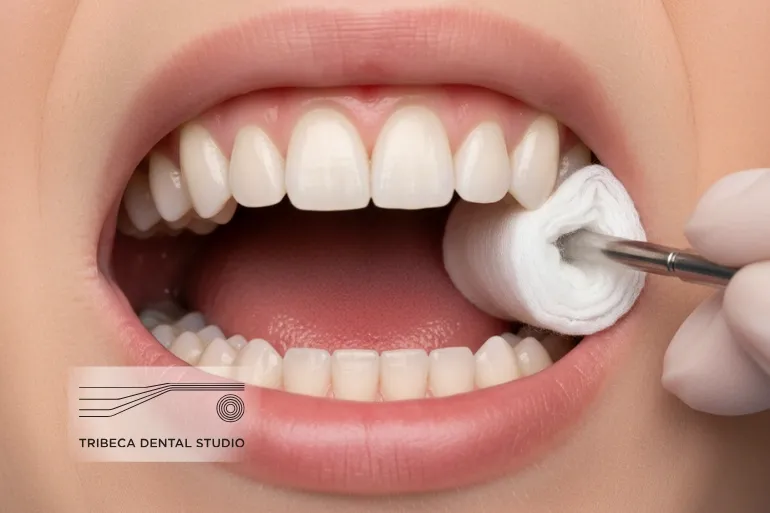
You can usually stop using gauze after a tooth extraction once active bleeding has slowed to light oozing or stopped. The first gauze pad is commonly kept over the extraction site with steady biting pressure for about 30 minutes. If fresh red bleeding continues after you remove it, place clean gauze directly over the socket and apply another period of firm, continuous pressure.
You do not need to keep replacing gauze simply because your saliva looks pink or slightly blood-tinged. A small amount of blood can mix with saliva and make the bleeding appear heavier than it actually is.
The most important question is not, “How many hours has it been?” Instead, look at whether fresh active bleeding has substantially slowed and a stable blood clot is beginning to form.
Quick Guide: Do You Still Need Gauze?
| What You Notice | Do You Still Need Gauze? |
|---|---|
| Light oozing or slightly pink saliva | Gauze may no longer be necessary if there is no significant active bleeding. |
| Fresh red blood continues coming from the socket | Place clean gauze over the extraction site and apply steady pressure. |
| Gauze becomes soaked quickly with fresh blood | Continue firm pressure and monitor closely. |
| Blood repeatedly pools in your mouth | Contact your dentist or oral surgeon. |
| Bleeding does not improve despite repeated pressure | Contact your dental provider for instructions. |
| Bleeding stopped and only mild blood-tinged saliva remains | You generally do not need to keep the extraction socket covered with gauze. |
How Long Should You Keep Gauze In After Tooth Extraction?
A common initial recommendation is to keep the first gauze pad firmly over the extraction site for approximately 30 minutes. During that time, bite down with steady pressure rather than chewing the gauze or repeatedly lifting it to inspect the socket.
After that period, carefully remove the gauze and check what type of bleeding remains.
- If active bleeding has mostly stopped: additional gauze may not be necessary.
- If you only see mild oozing or pink saliva: this can occur during early healing and does not automatically require another pad.
- If fresh red bleeding is still present: place fresh gauze over the socket and apply another period of continuous pressure.
- If bleeding remains heavy despite repeated pressure: contact the dentist or oral surgeon who performed the extraction.
Some patients need only the first piece of gauze, while others may require additional periods of pressure. The exact time varies according to the extraction, the amount of bleeding, medications, individual clotting, and your dentist's post-operative instructions.
If you are preparing for an extraction, learn more about our tooth extraction and oral surgery services in Tribeca.
How Long Is Too Long to Keep Gauze After Tooth Extraction?
Gauze is intended as a temporary pressure aid, not as a covering that needs to remain in the mouth throughout the entire healing process.
Once significant active bleeding has stopped, continually keeping gauze against the extraction site usually provides little additional benefit. Gauze can also become dry or stick to the surrounding area if it is left in place unnecessarily.
The goal is therefore to use gauze while pressure is needed and then allow the extraction site to remain relatively undisturbed once bleeding has settled.
What Happens Immediately After a Tooth Extraction?
Immediately after removing a tooth, your dentist or oral surgeon will usually place sterile gauze directly over the extraction socket and ask you to bite down.
This pressure helps control bleeding while the body begins forming a blood clot inside the socket. That clot is an important part of early healing because it covers and protects the tissues underneath the removed tooth.
Some mild bleeding, oozing, tenderness, swelling, and numbness can occur during the early recovery period. The exact instructions may differ depending on whether you had a simple extraction, surgical extraction, or wisdom tooth removal.
How Do You Know When to Stop Using Gauze?
The appearance of the bleeding is more useful than watching the clock alone.
You may be ready to stop using gauze when:
- Active bleeding has slowed to only mild oozing or has stopped.
- The gauze comes out lightly stained rather than rapidly saturated with fresh red blood.
- Your saliva may be slightly pink, but fresh blood is not continuously filling your mouth.
- Removing the gauze does not cause continuous fresh bleeding from the extraction site.
- You can leave the area undisturbed without blood rapidly collecting again.
Remember that even a relatively small amount of blood can make a large amount of saliva look red. Pink saliva alone does not necessarily mean significant bleeding is continuing.
If your dentist or oral surgeon provided instructions that differ from general online guidance, follow the instructions given for your specific procedure.
Why Do You Need Gauze After Tooth Extraction?
The main purpose of gauze is to create steady pressure over the extraction socket.
This pressure helps control bleeding during the period when the body's clotting mechanisms are beginning to stabilize the extraction site.
Gauze does not “heal” the extraction site itself and does not need to remain over the socket throughout the recovery period. Once active bleeding has settled, protecting the blood clot becomes more important than repeatedly replacing gauze.
How to Use Gauze After Tooth Extraction Correctly
If another piece of gauze is needed because fresh bleeding continues, use clean hands and fresh gauze.
- Wash your hands before touching the gauze.
- Fold the gauze into a pad thick enough to apply pressure over the socket.
- Position it directly over the extraction site rather than simply placing it somewhere inside the cheek.
- Bite down with steady pressure. The gauze works by compressing the bleeding area.
- Do not chew the gauze. Keep the jaw relatively still.
- Do not remove it every few minutes. Continuous pressure is more useful than repeated checking.
- Remove it slowly when the pressure period is finished.
If gauze appears stuck to the area, do not pull aggressively against the extraction socket.
How Often Should You Change Gauze After Tooth Extraction?
There is usually no need to change gauze every few minutes. Frequent removal can interrupt the continuous pressure being used to control bleeding.
After the initial period of pressure, remove the pad carefully. If fresh bleeding continues, place clean replacement gauze over the socket and apply another period of firm pressure.
You do not need a fresh pad simply because the previous gauze contains some blood. The decision should be based primarily on whether significant active bleeding is still occurring.
Should Gauze Be Wet or Dry After Tooth Extraction?
Follow the instructions provided by the dentist or oral surgeon who performed your extraction. Practices may give slightly different instructions regarding how they want replacement gauze prepared.
The most important factors are that the gauze is clean, positioned directly over the extraction site, and able to provide steady pressure.
If material appears to be sticking to the surgical site when you try to remove it, do not forcefully tear it away from the socket.
What Happens If You Leave Gauze In Too Long?
Once active bleeding has settled, leaving gauze in place unnecessarily may cause the pad to dry out or stick to tissue around the socket.
Repeatedly removing dry material can irritate the area and potentially disturb the developing clot.
For this reason, gauze should generally be used while active bleeding requires pressure rather than simply kept in the mouth for several hours regardless of what the extraction site is doing.
Can You Sleep With Gauze After Tooth Extraction?
You generally should not fall asleep with loose gauze in your mouth unless the dentist or oral surgeon who treated you has specifically instructed otherwise.
Gauze is intended to provide temporary pressure while you are awake and able to monitor the extraction site. Loose material can move inside the mouth while you sleep.
Before going to sleep, significant active bleeding should usually be under control and gauze should be removed. Slight oozing or blood-tinged saliva may still occur during early healing.
If you still have substantial fresh bleeding when you are preparing to sleep, stay awake while applying another period of steady pressure and contact your dental provider if the bleeding is not improving.
Can You Eat With Gauze After Tooth Extraction?
Gauze should generally be removed before eating or drinking.
Trying to chew while gauze is in place can move the pad, interfere with eating, and prevent it from applying pressure correctly.
After eating or drinking, replacement gauze is usually needed only if significant active bleeding has restarted and additional pressure is required.
What If Bleeding Starts Again After You Remove the Gauze?
Minor bleeding may sometimes restart if the extraction site has been disturbed.
If you notice fresh bleeding:
- Place clean folded gauze directly over the socket.
- Bite down and apply continuous pressure.
- Avoid lifting the gauze repeatedly to check whether the bleeding has stopped.
- Keep your head elevated.
- Avoid strenuous physical activity.
- Avoid forceful spitting.
- Avoid vigorous rinsing during the early healing period.
If bleeding remains heavy despite pressure, replacement gauze repeatedly becomes saturated very quickly, or your mouth repeatedly fills with fresh blood, contact your dentist or oral surgeon.
How Much Bleeding Is Normal After Tooth Extraction?
Some bleeding and oozing are expected after a tooth is removed. The extraction socket is a fresh surgical site, and it takes time for the blood clot to stabilize.
Normal early findings can include:
- mild oozing;
- small amounts of blood on gauze;
- pink or blood-tinged saliva;
- occasional mild bleeding during the early recovery period.
More concerning signs include:
- continuous bright-red bleeding;
- gauze rapidly becoming saturated again and again;
- fresh blood repeatedly pooling inside the mouth;
- or bleeding that does not improve despite appropriate pressure.
AAOMS advises patients to contact their oral surgeon when bleeding is excessive or persistent.
Is Pink Saliva Normal After Tooth Extraction?
Yes, slightly pink or blood-tinged saliva can be normal after an extraction.
A small quantity of blood mixing with saliva may look dramatic even when there is relatively little actual bleeding. Michigan Medicine specifically notes that a little blood mixed with a large amount of saliva can appear like much more blood than is actually present.
What matters more is whether fresh red blood is actively flowing, rapidly saturating gauze, or repeatedly collecting inside the mouth.
When Does Bleeding Stop After Tooth Extraction?
There is no single exact time that applies to every extraction.
Significant active bleeding commonly decreases during the early post-operative period, while mild oozing or blood-tinged saliva can last longer. Michigan Medicine notes that minor bleeding and oozing can occur during the first one to two days after extraction.
This does not mean you need to keep gauze in continuously for one or two days. Gauze is primarily used while enough active bleeding is present to benefit from direct pressure.
How to Protect the Blood Clot After Removing Gauze
Once gauze is no longer necessary, the goal changes from controlling bleeding to protecting the developing blood clot.
Avoid Vigorous Rinsing
Strong swishing can disturb the extraction site. Follow your provider's instructions about when gentle rinsing should begin.
Avoid Forceful Spitting
Allow saliva to leave the mouth gently rather than repeatedly creating forceful pressure around the surgical area.
Avoid Drinking Through a Straw
Drink directly from a cup during the initial healing period unless your dental provider instructs you differently.
AAOMS notes that suction from a straw can disturb the blood clot during early recovery.
Avoid Smoking and Vaping
Tobacco use can interfere with healing and is associated with a higher risk of complications after extraction. Follow the specific restrictions provided by your dentist or oral surgeon.
Choose Soft Foods
During early recovery, select foods that require minimal chewing, especially near the surgical site.
Examples may include:
- yogurt;
- eggs;
- applesauce;
- mashed potatoes;
- soft pasta;
- and other foods recommended in your post-operative instructions.
Avoid hard, sharp, crunchy, or sticky foods around the healing socket during the early recovery period.
Avoid Strenuous Activity
Exercise and heavy activity can increase blood flow and may contribute to renewed bleeding soon after oral surgery. Follow your surgeon's instructions about when normal physical activity can resume.
When Can You Rinse With Salt Water After Tooth Extraction?
Avoid vigorous rinsing during the period when the initial blood clot is forming.
Many post-operative protocols begin gentle warm salt-water rinsing after the first 24 hours. Michigan Medicine, for example, advises no rinsing during the first 24 hours and gentle salt-water rinsing afterward.
However, your own dentist or oral surgeon's instructions should take priority because the appropriate schedule may vary according to the procedure.
Does Gauze Help Prevent Dry Socket?
Gauze helps control initial bleeding and supports early clot formation by providing pressure, but simply keeping gauze in your mouth for a long period does not guarantee protection from dry socket.
Dry socket occurs when the blood clot in the extraction socket does not remain intact during the early healing period, exposing deeper tissues. AAOMS lists factors such as smoking, excessive rinsing, and straw use among behaviors associated with disruption of the clot.
Once bleeding is controlled, protecting the extraction area and following your post-operative instructions become more important than continuing unnecessary gauze use.
What Does Dry Socket Feel Like?
Dry socket usually involves significant pain that develops or becomes worse during the days following an extraction rather than pain that steadily improves.
AAOMS describes symptoms that may include severe pain radiating toward the ear, eye, temple, or neck, visible bone in the socket, and an unpleasant smell or taste.
If pain becomes substantially worse several days after extraction, contact your dental provider rather than trying to diagnose the socket yourself.
Common Problems to Watch for After Tooth Extraction
Mild swelling, tenderness, and limited oozing can occur during early healing. Other symptoms deserve professional attention.
- Persistent bleeding: heavy bleeding that does not improve despite direct pressure.
- Worsening pain: pain that becomes substantially more severe rather than gradually improving.
- Possible dry socket: severe pain that develops or increases during the days after extraction.
- Possible infection: fever, drainage, worsening swelling, or other concerning symptoms.
- Persistent numbness: numbness lasting longer than expected should be discussed with the dental provider.
When Should You Call Your Dentist About Bleeding?
Contact your dentist or oral surgeon if the amount of bleeding concerns you or it is not responding to steady pressure.
Seek professional guidance if:
- Bleeding remains heavy despite repeated periods of continuous pressure.
- Your mouth repeatedly fills with fresh blood.
- Fresh gauze becomes saturated very quickly each time it is replaced.
- Bleeding initially stopped but later returns heavily and does not settle.
- Pain becomes significantly worse rather than gradually improving.
- You develop fever, drainage, substantial swelling, or other concerning symptoms.
Difficulty breathing or swallowing requires urgent medical evaluation.
Frequently Asked Questions About Gauze After Tooth Extraction
When can I stop using gauze after tooth extraction?
You can generally stop using gauze once fresh active bleeding has slowed to mild oozing or stopped. Slightly pink saliva alone does not necessarily mean another gauze pad is needed.
How long should I bite on gauze after tooth extraction?
About 30 minutes of continuous pressure is a common initial period. If fresh bleeding remains afterward, clean replacement gauze can be used for another period of steady pressure.
Is 30 minutes long enough to keep gauze in?
For many patients, 30 minutes is an appropriate first period of pressure. Whether more gauze is needed depends on how much fresh bleeding remains when the first pad is removed.
Can I remove gauze after 30 minutes?
Yes, you can generally remove the initial gauze after about 30 minutes to assess the site. If significant fresh bleeding continues, replace it with clean gauze and apply more pressure.
Do I need gauze if the socket is only oozing slightly?
Usually not. Mild oozing or blood-tinged saliva can occur during early recovery. Gauze is most useful when enough active bleeding remains to benefit from direct pressure.
Is pink saliva normal after tooth extraction?
Yes. A small amount of blood mixed with saliva can make the saliva look pink or red. This does not necessarily mean significant active bleeding is continuing.
Should I change gauze every 30 minutes?
Not automatically. After each period of pressure, decide whether another pad is necessary based on whether active fresh bleeding is continuing.
Can you sleep with gauze after tooth extraction?
Gauze should generally be removed before sleeping unless your dental provider specifically tells you otherwise. If significant bleeding continues close to bedtime, apply pressure while awake and contact your provider if it is not improving.
Can you eat or drink with gauze in your mouth?
Gauze should generally be removed before eating or drinking. Replace it afterward only if fresh active bleeding continues and additional pressure is needed.
What if my gauze is soaked with blood?
Replace saturated gauze with a clean pad positioned directly over the socket and apply continuous pressure. If pads repeatedly become saturated very quickly despite appropriate pressure, contact your dentist or oral surgeon.
How do I know if my extraction is still actively bleeding?
Active bleeding usually involves fresh red blood that continues coming from the socket, rapidly saturates gauze, or pools in the mouth. Mild blood-tinged saliva is different from substantial active bleeding.
Does keeping gauze in prevent dry socket?
Gauze helps control early bleeding and supports clot formation through pressure, but leaving gauze in unnecessarily does not guarantee prevention of dry socket. Protecting the clot and following your post-operative instructions are more important once bleeding is controlled.
How long can bleeding last after tooth extraction?
Mild oozing can continue during early recovery, and a small amount of blood mixed with saliva can persist longer than significant active bleeding. Heavy or persistent bleeding that does not respond to pressure should be discussed with your dental provider.
Tooth Extraction Aftercare in Tribeca, NYC
Knowing when to stop using gauze after tooth extraction is one of the first steps in caring for an extraction site. In most cases, gauze can be discontinued once significant fresh bleeding has slowed and only mild oozing or blood-tinged saliva remains.
After that point, the priority shifts toward protecting the developing blood clot, avoiding unnecessary disturbance of the socket, following dietary and oral-hygiene instructions, and watching for signs that require professional attention.
Tribeca Dental Studio provides tooth extraction and oral surgery services in Tribeca, NYC, including evaluation, treatment planning, and post-operative guidance.
Patients preparing for third-molar treatment can also learn more about our wisdom tooth removal services.
If you recently had an extraction at Tribeca Dental Studio and have questions about bleeding, gauze, pain, or your recovery instructions, contact the office for advice specific to your procedure.
Request an appointment at Tribeca Dental Studio .
This article provides general educational information and does not replace individualized diagnosis, treatment, or post-operative instructions from your dentist or oral surgeon.