Root Canal Cost in NYC
October 28, 2026
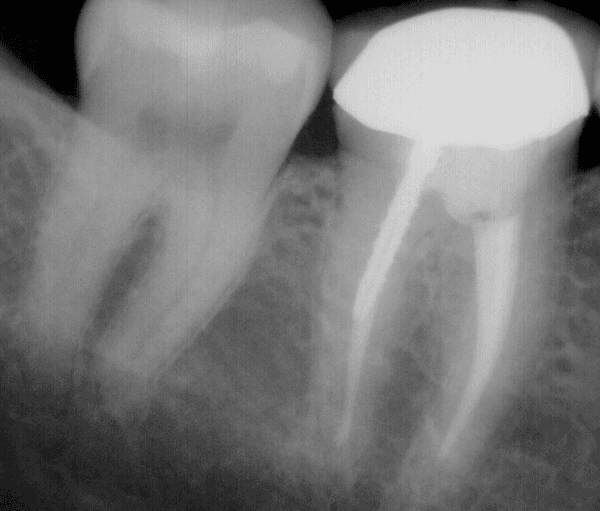
If you have been told you need a root canal in New York City, expect to pay more than the national average. Without insurance, published NYC pricing typically runs about $700 to $1,200 for a front tooth, $800 to $1,500 for a premolar, and $1,000 to $2,000 for a molar — and the crown that most back teeth need afterward is usually billed on top of that. Front teeth cost the least and molars the most because price follows complexity: the number of canals inside the tooth, the specialist time required to clean them, and the overhead of practicing in Manhattan.
How Much Does a Root Canal Cost in NYC?
For context, CareCredit's national cost data puts the average root canal in the United States at $978, with a typical range of $679 to $1,733 depending on the tooth. The New York state average in the same data is $1,117 — and published fee ranges from New York City practices sit at or above that figure, reflecting higher rents, staffing costs, and specialist fees in the five boroughs.
The table below reflects typical published NYC fees for patients paying without insurance, alongside national estimates of what insured patients pay out of pocket. Treat both columns as planning ranges, not quotes — your actual fee is set by the tooth, the complexity of the case, and your specific plan.
| Tooth treated | Without insurance (typical NYC range) | With insurance (estimated patient share) |
|---|---|---|
| Front tooth (incisor or canine) | $700–$1,200 | $450–$1,140 |
| Premolar (bicuspid) | $800–$1,500 | $450–$1,080 |
| Molar | $1,000–$2,000 | $600–$1,500 |
| Crown after treatment (usually priced separately) | $1,000–$2,500 | Varies by plan |
A note on the insurance column: those patient-share figures are national estimates modeled on a plan covering roughly 40% of the fee. Because NYC fees run higher than national fees, an insured New York patient's share can land above those numbers. What matters most is the percentage your plan pays, what remains of your deductible, and how much of your annual maximum is left — all of which we cover below. Also note the combined math: a $1,200 root canal plus a crown can bring the full treatment total to $3,500 or more, which is why the crown should always be part of the cost conversation from the start.
What Drives the Cost of a Root Canal?
Two patients can both "need a root canal" and receive estimates hundreds of dollars apart. These are the factors that move the number:
Tooth Position and Number of Canals
Front teeth usually have a single canal and are easy to reach, which keeps treatment time — and cost — down. Premolars typically have one or two canals. Molars have three or four, curve in harder-to-see directions, and sit at the back of the mouth where access is limited. More canals means more time cleaning, shaping, and sealing each one.
Endodontist vs. General Dentist
An endodontist is a specialist with additional years of training focused entirely on the inside of the tooth. Specialist fees are generally higher than a general dentist's, and complex molar cases and retreatments are the ones most often handled by — or referred to — a specialist. CareCredit's cost data likewise notes that who performs the treatment is one of the main reasons the national range is so wide.
Severity of Infection
A tooth treated early, when inflammation is confined to the pulp, is a simpler case than one with a long-standing infection or an abscess at the root tip. Advanced infections can require additional visits, medication placed inside the tooth between appointments, and more extensive disinfection — all of which add to the fee.
Imaging, Including CBCT
Standard X-rays are part of diagnosing any root canal case. Some teeth — molars with unusual root anatomy, previously treated teeth, or cases where infection may have spread — benefit from a 3D CBCT scan before treatment begins. That imaging adds cost, but it also reduces surprises mid-procedure.
Sedation
Root canal treatment is performed with local anesthesia, which is included in the procedure. Patients who are anxious and choose sedation beyond local anesthesia should expect it to be priced as an additional service.
Retreatment vs. First-Time Treatment
Redoing a root canal that was performed elsewhere years ago is more involved than treating a tooth for the first time. The clinician has to remove the old filling material, find any canals that were missed, and disinfect a tooth that has already been worked on. Retreatment fees reflect that added complexity.
The Restoration Afterward
Some teeth need only a filling after treatment. Most back teeth need a full crown, while some premolars are candidates for an onlay that covers the chewing surface. A full custom crown costs more than a partial restoration — and, as the table shows, it is frequently the largest single line item after the root canal itself.
Neighborhood and Overhead
Dental fees track the cost of running a practice. Manhattan offices carry Manhattan rents and staffing costs, which is one reason NYC ranges sit above the state and national averages. Fees also vary between neighborhoods and between individual practices in the same neighborhood.
Root Canals and Insurance: The Out-of-Network Reality
Here is the part that surprises many New York patients: a practice does not have to be in your plan's network for your insurance to help pay for your root canal. Like many Manhattan practices, Tribeca Dental Studio is out of network for most dental plans. Out of network does not mean no coverage.
Most dental PPO plans include out-of-network benefits. For major restorative work like a root canal, the plan typically reimburses a percentage of the fee after your deductible is met. Published estimates of that percentage vary widely — from roughly 30% to 80% depending on the source and the plan — with many plans paying around half. Two limits matter as much as the percentage. First, your deductible: until it is met, you pay the fee yourself. Second, your annual maximum: dental plans cap what they pay per year, and published guides put typical maximums between $1,000 and $2,500. A root canal plus a crown in the same plan year can reach or exceed that cap, which is one reason treatment is sometimes staged across plan years when the clinical situation allows.
Root canal treatment is also an eligible expense for health savings accounts (HSA) and flexible spending accounts (FSA), which lets you pay your share with pre-tax dollars. And a good front desk is part of the value: before treatment begins, the office can verify your out-of-network benefits, request a pre-treatment estimate from your insurer, and help you file the claim — so the reimbursement picture is clear before anyone picks up a handpiece.
The practical takeaway: patients often assume in-network care is the only affordable path, and that assumption can steer them away from the clinician they actually want. The smarter route is a written pre-treatment estimate paired with an out-of-network reimbursement check. That combination tells you your real out-of-pocket cost at any practice, in network or not.
Do You Really Need a Crown After a Root Canal?
Usually, yes — at least for back teeth. A tooth that needs a root canal has already lost structure to decay, a crack, or a large old filling, and the treatment itself removes the pulp that once kept the tooth supplied from within. What remains is more brittle than a healthy tooth, and molars and premolars absorb the full force of chewing. Without reinforcement, the tooth can fracture — sometimes below the gumline, where it cannot be repaired at all, turning a saved tooth into an extraction.
A crown covers and splints the tooth, distributing bite forces across it instead of through it. Front teeth, which take far less chewing load and often lose less structure, can sometimes be restored with a filling alone. Timing matters: the crown should follow promptly once the root canal is complete, and you should avoid chewing hard foods on the tooth while it is protected only by a temporary filling.
Root Canal vs. Extraction and an Implant: The Honest Comparison
Extraction almost always looks cheaper on the day it is quoted — and almost always isn't once the full picture is priced. Pulling the tooth solves the infection, but it leaves a gap that affects chewing, lets neighboring teeth drift, and leads to bone loss in the jaw where the root used to be. Replacing the tooth is where the real cost sits: according to NewMouth's pricing guide, which compiles Delta Dental data, a single dental implant — post, abutment, and crown — typically runs $3,000 to $5,600, and that is before any separately billed extraction or bone grafting, and after months of healing between stages.
Compare that with keeping your own tooth: combining the NYC ranges in the table above, a molar root canal plus a crown typically totals roughly $2,000 to $4,500, is completed in a few weeks rather than months, and preserves the natural tooth your bite was built around. There are cases where a tooth is too damaged to save and an implant is the right answer — but when a tooth can be saved predictably, saving it is usually the more economical path as well as the more conservative one.
What Root Canal Treatment Involves
Treatment starts with diagnosis, not drilling. Your clinician examines the tooth, tests its response, and takes X-rays — and, where the anatomy is complex, a CBCT scan — to confirm that the pulp is the source of the problem and to map the canals before starting. This step matters for cost as well as outcome: it is what turns a ballpark range into an accurate, tooth-specific estimate.
The procedure itself is methodical. The area is numbed with local anesthesia, and a rubber dam is placed around the tooth to keep it isolated and dry. Through a small opening, the infected or inflamed pulp is removed, and each canal is cleaned, shaped, and disinfected. The canals are then sealed with a rubber-like filling material called gutta-percha, and the tooth is closed with a temporary or permanent filling. According to CareCredit's procedure guide, most root canals take about 60 to 90 minutes and are completed in one to two visits.
At Tribeca Dental Studio, that sequence begins with an endodontic diagnosis so the treatment plan — and its price — is based on your tooth, not a template. CBCT imaging is used where the case calls for it, and because the studio has specialists in-house, complex cases that might otherwise mean a referral across town can be evaluated and treated under one roof by our endodontic team working alongside your treating dentist. Learn more about root canal treatment at the studio.
How to Get an Exact Number
No office can honestly quote an exact root canal fee over the phone, because the price depends on findings — canal anatomy, infection, existing restorations — that only an exam and imaging can reveal. What a good office can do is give you a written, itemized estimate after that exam and before treatment begins, with the crown and any additional procedures listed as separate line items rather than surprises.
Whatever office you call, ask these questions:
- Is the crown included in this price, or is it billed separately?
- How many visits will treatment take?
- What imaging is included, and will I need a CBCT scan?
- What is your policy if the tooth needs retreatment later?
- How will my out-of-network benefits be applied, and can you request a pre-treatment estimate from my insurer?
- What will I owe on the day of treatment?
Red Flags: When a Root Canal Quote Sounds Too Cheap
A low price is not automatically a bad one — but certain shortcuts reliably show up in bargain offers, and they tend to cost more later:
- An exact price quoted before anyone has examined the tooth or taken an X-ray.
- A molar root canal promised as rushed, single-visit work with no imaging beyond a basic X-ray and no discussion of canal anatomy.
- No rubber dam. Isolation is a basic standard of endodontic care, not an upgrade.
- No plan — or no mention — of the crown or final restoration the tooth will need afterward.
- No answer when you ask what happens if the treatment fails and the tooth needs retreatment.
A failed root canal usually means retreatment, surgery, or extraction and an implant. Paying a fair price once is cheaper than paying a cut-rate price and then paying again to fix it.
Frequently Asked Questions
How much is a root canal in NYC without insurance?
Based on published NYC practice pricing, expect roughly $700 to $1,200 for a front tooth, $800 to $1,500 for a premolar, and $1,000 to $2,000 for a molar, before the crown. The crown most back teeth need afterward typically adds $1,000 to $2,500, so budget for the complete treatment, not just the procedure.
Why do molars cost more?
Molars have three or four canals instead of one, their roots are often curved, and they sit at the back of the mouth where visibility and access are limited. Cleaning, shaping, and sealing every canal simply takes more time and more skill — and they are the cases most often handled by an endodontist.
Is the crown included in the price?
Usually not. Most offices quote the root canal itself and bill the crown as a separate restoration — typically another $1,000 to $2,500 in published NYC pricing. Always ask whether a quote includes the final restoration before comparing offices.
Does insurance cover root canals?
Most dental plans cover root canal treatment as a major restorative procedure, paying a percentage of the fee after your deductible — published estimates range from about 30% to 80%, with many plans paying around half. Benefits are subject to your plan's annual maximum, commonly $1,000 to $2,500. PPO plans often include out-of-network benefits, so coverage can apply even when the practice is not in your network.
Is a root canal cheaper than an implant?
In most cases, yes, once the full treatment is compared. A molar root canal plus crown typically totals roughly $2,000 to $4,500 using published NYC ranges, while a single implant with its abutment and crown typically runs $3,000 to $5,600 according to Delta Dental data compiled by NewMouth — with extraction and any bone grafting billed separately and a longer treatment timeline.
How many visits does a root canal take?
Most root canals are completed in one to two visits of about 60 to 90 minutes each. Cases with active infection sometimes need an additional visit so medication can work inside the tooth before it is sealed, and the crown is typically placed at a follow-up appointment.
Does a root canal hurt?
With modern local anesthesia, the procedure itself is generally comparable to having a filling placed — the tooth and surrounding area are fully numbed, and the treatment relieves the pain the infection was causing. Some soreness for a few days afterward is normal and is usually managed with over-the-counter pain relievers.
Get a Straight Answer on Your Root Canal Cost
If you have a tooth that is aching, sensitive to hot or cold, or has been flagged for root canal treatment, the most useful next step is a diagnosis followed by a number in writing. At Tribeca Dental Studio, 54 Warren St, New York, NY 10007, you will receive a written pre-treatment estimate before work begins, and our team will check your out-of-network benefits and help with the claim so you know what your plan is likely to reimburse. Call us at (212) 561-5303 or book an appointment online to get started.