Plaque vs Tartar vs Calculus
October 28, 2026
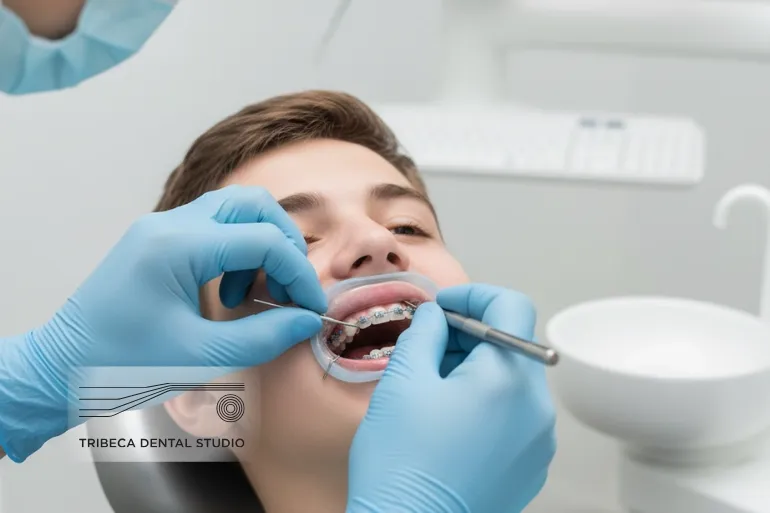
Plaque, tartar, and calculus are not three different problems — they are two stages of the same one. Plaque is the soft, sticky film of living bacteria that forms on your teeth every day, and you can remove it yourself with brushing and flossing. Tartar and calculus are two names for exactly the same substance: plaque that has absorbed minerals from your saliva and hardened into a crust. Once plaque turns into tartar, only a dental professional can remove it.
Plaque vs Tartar vs Calculus at a Glance
Most confusion comes from the names, so here is the direct comparison:
| Feature | Plaque | Tartar (Calculus) |
|---|---|---|
| What it is | A soft biofilm of living bacteria growing on the tooth surface | Plaque that has mineralized — hardened into a solid deposit |
| Consistency | Soft, sticky, slippery film | Hard, crusty, and rough, like a shell or ledge on the tooth |
| Color | Colorless to pale yellow; usually hard to see | Yellow to brown above the gumline; often dark brown or black below it |
| What it is made of | Living bacteria in a self-produced matrix, plus food debris and saliva proteins | Mostly calcium phosphate and other mineral crystals from saliva, trapping dead bacteria inside |
| How fast it forms | Begins forming within hours of brushing and matures over a day or two | Hardening can begin within 1 to 3 days; full mineralization takes days to weeks |
| Who can remove it | You, at home | A dentist or dental hygienist only |
| What removes it | Brushing, flossing, interdental brushes, and water flossers | Professional scaling with hand or ultrasonic instruments, followed by polishing |
| What it leads to if ignored | Cavities and gingivitis (early, reversible gum inflammation) | Periodontitis, gum recession, bone loss, and eventually tooth loss |
What Is Plaque and How Does It Form?
Plaque is a biofilm — an organized community of bacteria that sticks to your teeth. It starts forming almost immediately after your teeth are cleaned. Within minutes, proteins from your saliva coat the enamel in a thin film called the pellicle. Bacteria in your mouth attach to that film within hours, multiply, and build a structured colony that feeds on sugars and starches from your food and drinks.
As plaque matures over the next day or two, its bacteria produce acids every time you eat. Those acids attack enamel and can start a cavity. Plaque that sits along the gumline also irritates the gums, which is why gums bleed when plaque has been left undisturbed. The good news: at this stage the film is still soft. Thorough brushing and cleaning between your teeth physically disrupt and remove it, and any gum inflammation it caused can settle back down.
Plaque is easy to miss because it is nearly the same color as your teeth. You may feel it — that fuzzy feeling on your teeth at the end of the day is mature plaque — more easily than you can see it.
What Is Tartar (Calculus)?
If plaque is not removed, minerals dissolved in your saliva — mainly calcium and phosphate — begin to crystallize inside it. The soft film gradually turns to stone. This hardened deposit is calculus, and "tartar" is simply its everyday name. Unlike plaque, calculus cannot be brushed or flossed away, because it bonds to the tooth surface like cement.
Calculus forms in two places, and the distinction matters:
Supragingival Calculus: Above the Gumline
This is the visible kind — white, yellow, or tan crust, usually heaviest on the inner side of the lower front teeth and the outer side of the upper back teeth. Those spots sit right next to the openings of your salivary glands, so they are bathed in mineral-rich saliva. It looks unpleasant and can stain, but it is the less dangerous of the two.
Subgingival Calculus: Below the Gumline
This kind forms inside the pocket between the tooth and gum, mineralized by fluid that seeps from inflamed gum tissue. It is usually dark brown, green, or black from blood pigments, and you cannot see it in the mirror. Its rough surface presses against the root and shelters bacteria where no toothbrush can reach, which is why subgingival calculus is the kind that drives periodontal (gum) disease. A dentist or hygienist detects it with an instrument called a probe and on X-rays.
Why Two Names? Tartar vs Calculus
Patients say "tartar"; clinicians chart "calculus." Tartar takes its name from the crusty deposit that forms inside wine barrels (and is unrelated to cream of tartar in your kitchen, a different compound). Calculus is the clinical term, from the Latin word for a small stone — the same word used for kidney stones. Different vocabularies, identical substance: mineralized plaque. When your dentist and hygienist use the two words interchangeably during a cleaning, they are talking about one thing.
What Removes What
Because plaque and calculus are physically different — soft film versus stone — they need completely different removal methods.
Removing Plaque: Your Job at Home
- Brushing twice a day with fluoride toothpaste disrupts plaque on the visible surfaces of your teeth, especially along the gumline where it matters most.
- Cleaning between your teeth once a day — with floss, interdental brushes, or a water flosser — removes plaque from the contact areas a brush cannot reach.
- Timing is the whole game: plaque removed within a day or so never gets the chance to mineralize.
Removing Calculus: A Professional's Job
Calculus is removed by scaling — a hygienist or dentist works the deposit off the tooth with slim hand instruments (scalers and curettes) and ultrasonic scalers, which vibrate the crust loose with a fine tip and a cooling water spray. When calculus extends below the gumline, the roots are also smoothed in a procedure called root planing, so the gum can reattach to a clean surface. Polishing comes last: it smooths the enamel and removes surface stain, but it does not remove calculus itself — scaling always has to happen first.
Why DIY Tartar Removal Is Risky
Metal "tartar scraper" kits sold online are a common cause of chipped enamel and cut, infected gums — and even when used carefully, they can only reach the visible deposits, leaving the harmful subgingival calculus untouched. Scrubbing with baking soda cannot work either: it is mildly abrasive to enamel, but a mineralized deposit cannot be dissolved or scoured off by a home abrasive. Acidic home remedies such as lemon juice or vinegar are worse — they erode the enamel itself. If you can see tartar, it is already past the point where home care can help that spot.
The Damage Chain: From Plaque to Tooth Loss
Plaque and calculus cause harm in a predictable sequence, and each step has a different outlook:
- Step 1 — Plaque builds up. Bacterial acids demineralize enamel (cavities), and plaque at the gumline triggers gingivitis: red, swollen gums that bleed easily. At this step, everything is reversible — thorough plaque removal restores gum health completely.
- Step 2 — Plaque becomes calculus. The deposit hardens, and its rough, porous surface becomes a magnet for new plaque, which now accumulates faster than brushing can clear it.
- Step 3 — Calculus spreads below the gumline. The gum pulls away from the tooth, forming a pocket. Bacteria thrive in the pocket, and the body's own inflammatory response begins destroying the ligament and bone that hold the tooth. This is periodontitis. It cannot be fully reversed — but it can be stopped and managed with professional deep cleaning and ongoing maintenance. According to the CDC, about half of U.S. adults over 30 have some form of gum disease, most of it driven by exactly this process.
- Step 4 — Support is lost. Untreated, the tooth loosens, abscesses can form, and the tooth may be lost or need extraction.
The practical takeaway: plaque control at home decides whether you ever reach step 2, and regular professional scaling decides whether steps 3 and 4 happen.
Who Builds Tartar Fastest?
Two people with the same brushing routine can accumulate calculus at very different rates. The usual accelerators are:
- Mineral-rich saliva. Individual saliva chemistry varies; the more calcium and phosphate it carries, the faster plaque hardens.
- Crowded, crooked, or restored teeth. Tight overlaps, braces, retainers, bridges, and implant crowns all create sheltered spots where plaque sits undisturbed.
- Dry mouth. With less saliva flow — a common medication side effect, and a feature of mouth breathing — plaque is rinsed away less often and thickens faster.
- Smoking and tobacco use. Smokers tend to build calculus faster, and nicotine constricts the gum blood vessels, hiding the bleeding that would otherwise warn of gum disease.
- An inconsistent routine. Missing the gumline or skipping interdental cleaning leaves the same plaque in place day after day — exactly what mineralization needs.
If any of these sound familiar, your dentist may recommend cleanings more often than the standard six-month interval.
The Prevention Playbook
Preventing tartar is really about one thing: never letting plaque sit long enough to harden.
- Brush twice a day for two minutes with fluoride toothpaste, angling the bristles toward the gumline — this is the core routine recommended by the CDC and the American Dental Association.
- Clean between your teeth every day. If flossing makes your gums bleed at first, that is usually a sign of existing inflammation rather than injury — our guide to why gums hurt after flossing explains what is normal and what is not.
- Be thorough rather than forceful. Hard scrubbing wears enamel and gums without removing more plaque.
- Limit how often you sip sugary or acidic drinks; frequency feeds plaque bacteria more than quantity does.
- Do not smoke, and ask your dentist about extra fluoride or a prescription toothpaste if you are cavity-prone or have dry mouth.
- Keep professional cleanings on schedule — typically every six months, and every three to four months if you have a history of gum disease.
What a Professional Cleaning at Tribeca Dental Studio Actually Does
A cleaning appointment is more than a polish. At Tribeca Dental Studio, a hygiene visit typically includes:
- Examination first. Your gums are checked and pocket depths measured, and X-rays are reviewed if due, so existing calculus — including the hidden subgingival kind — is mapped before anyone picks up an instrument.
- Scaling. Ultrasonic and hand instruments remove calculus above and below the gumline, along with the plaque biofilm on top of it.
- Laser-assisted cleaning. Our hygiene team also offers laser-assisted cleaning, which uses a dental laser to help reduce bacteria in the gum pockets as part of the cleaning.
- Prophy-Jet polish. An air-polishing spray of sodium-bicarbonate powder and water lifts away surface stain and remaining biofilm and leaves the teeth smooth, so new plaque has less to cling to.
- Fluoride, if indicated. A fluoride treatment may be applied to strengthen enamel, particularly if you are prone to cavities or sensitivity.
If the exam shows established gum disease rather than simple buildup, care continues in-house with our periodontist, Dr. Sam Morhaim, for deeper periodontal treatment and a maintenance plan.
Signs You Already Have Calculus
Book a cleaning if you notice any of the following — none of them can be fixed at home once calculus has formed:
- Visible yellow, tan, or brown bands along the gumline, especially behind your lower front teeth.
- A rough edge or ledge you can feel with your tongue that does not brush away.
- Gums that bleed when you brush or floss, or look puffy along the edges.
- Persistent bad breath that returns quickly after brushing.
- Gums receding, or teeth starting to look longer than they used to.
Frequently Asked Questions
Are tartar and calculus the same thing?
Yes — completely. Tartar is the everyday word and calculus is the clinical term for the same substance: plaque that has hardened with minerals from saliva. Dental professionals use them interchangeably.
How long does plaque take to turn into tartar?
Hardening can begin within 1 to 3 days in undisturbed plaque, and the deposit becomes fully mineralized over the following days to weeks. The speed varies with your saliva chemistry and how thoroughly that spot gets cleaned, which is why daily disruption of plaque is so effective at preventing it.
Can I remove tartar at home?
No. Once plaque has mineralized, it is bonded to the tooth like cement and can only be removed with professional scaling instruments. Home scraper kits risk chipping enamel and injuring your gums, and they cannot reach the below-the-gumline deposits that matter most.
Does tartar cause bad breath?
It contributes to it. Calculus is porous and shelters large numbers of bacteria, including the kinds that produce sulfur compounds — a major source of bad breath. Removing the calculus and the plaque it harbors usually improves breath noticeably.
Is tartar removal painful?
For most people, scaling above the gumline is uncomfortable at most, and often not even that. If your gums are inflamed or the cleaning goes deeper below the gumline, the area can be numbed. Teeth may feel briefly sensitive afterward, which typically settles within days.
How often should tartar be removed?
Calculus is removed at your regular professional cleanings — typically every six months. People who form tartar quickly or who have a history of gum disease are often placed on a three- to four-month maintenance interval, because subgingival deposits rebuild on a predictable cycle.
What's the white or yellow buildup behind my lower front teeth?
That is supragingival calculus, and its location is no accident: the ducts of the salivary glands under your tongue open right behind the lower front teeth, so that area is constantly bathed in mineral-rich saliva. It is the most common place in the mouth for tartar to form, and one of the first places your hygienist will check.
Book a Cleaning at Tribeca Dental Studio
Plaque you can handle; tartar needs us. If it has been more than six months since your last cleaning — or you can see or feel buildup already — schedule a hygiene visit at Tribeca Dental Studio, 54 Warren St, New York, NY 10007. Call us at (212) 561-5303 or book your appointment online. We will remove what brushing cannot, check the health of your gums, and set the cleaning interval that matches how fast your mouth actually builds tartar.