Front Tooth Filling: Procedure, Materials & What to Expect
July 17, 2026

What Is a Front Tooth Filling?
A front tooth filling is a tooth-colored dental restoration used to repair decay, small chips, cracks, worn areas, or other minor damage affecting a visible front tooth. Because these teeth are seen whenever you smile or speak, the restoration must address both function and appearance.
Quick answers at a glance:
- What it is: A tooth-colored restoration used to repair decay, chips, cracks, or worn areas on a front tooth.
- Most common material: Composite resin selected to closely match the surrounding enamel.
- Will it be noticeable? A well-matched composite filling can blend closely with the natural tooth, although appearance depends on the size and location of the restoration.
- Does it hurt? Local anesthesia can be used when needed to keep the procedure comfortable. Some temporary sensitivity may occur afterward.
- How long does it take? Many front tooth fillings can be completed in one appointment, although treatment time depends on the size, location, and complexity of the restoration.
- How long does it last? Composite fillings can last for years, but longevity varies with the size of the restoration, bite forces, oral habits, diet, and maintenance.
Front teeth differ from molars. They are thinner, much more visible, and primarily involved in biting and cutting food rather than grinding. Restoring them therefore requires careful attention to tooth structure, shape, shade, translucency, and bite.
A carefully selected, shaped, and polished composite filling can blend closely with the surrounding enamel. Smaller restorations may be difficult to notice during normal smiling and conversation, while larger restorations may require more extensive shade matching and sculpting.
At Tribeca Dental Studio, tooth-colored restorations are planned with the goal of preserving healthy tooth structure while restoring the damaged area and maintaining a natural-looking smile.
Front tooth filling topics to explore:
Why Might You Need a Front Tooth Filling?
Although cavities are often associated with the deep grooves of back teeth, incisors and canines can also develop decay or sustain physical damage. A filling on a front tooth can restore missing or damaged tooth structure while preserving as much healthy enamel and dentin as possible.
Unlike back teeth, which handle heavy chewing forces, front teeth are primarily used for biting and cutting. Their highly visible location also means appearance is an important consideration when choosing and shaping the restorative material.
At Tribeca Dental Studio in Lower Manhattan, tooth-colored fillings may be used to restore appropriate areas of decay or damage while closely matching the surrounding tooth.
Composite resin can also be used in some situations to repair small chips, worn edges, or other limited defects. Whether a filling, bonding procedure, veneer, or another restoration is most appropriate depends on how much tooth structure has been affected.
Common Causes of Front Tooth Damage
A front tooth may need restorative treatment for several reasons:
- Tooth decay: Plaque can accumulate between the front teeth and along the gumline, eventually creating cavities.
- Physical trauma: Sports injuries, falls, accidents, or biting hard objects can chip or fracture a front tooth.
- Enamel wear or erosion: Repeated exposure to acidic foods and drinks or other sources of enamel wear can weaken tooth surfaces over time.
- Existing restoration damage: An older filling may chip, stain, wear, or lose its seal and require evaluation.
- Minor structural defects: Small damaged or worn areas may sometimes be restored conservatively with composite resin.
Common Materials for Front Teeth
Material selection is especially important for visible teeth. The restoration should provide appropriate strength while also allowing the dentist to reproduce the color, shape, and surface characteristics of natural enamel.
You can explore additional options in our guide to common cavity filling materials.
Materials that may be considered for front teeth include:
- Composite Resin: The most commonly used direct tooth-colored material for small and moderate front tooth restorations. Composite can be selected in different shades and translucencies and bonded directly to the tooth.
- Porcelain or Ceramic: These materials may be used for larger indirect restorations such as veneers, inlays, onlays, or crowns. Ceramic materials are highly stain resistant and can closely reproduce natural tooth appearance.
- Glass Ionomer: This tooth-colored material releases fluoride and may be useful in selected areas, particularly near the gumline, although it generally does not provide the same aesthetic control or wear resistance as modern composite resin.
What Does a Front Tooth Filling Look Like?
A front tooth filling is usually made from tooth-colored composite resin selected to closely match the surrounding enamel. Because front teeth are highly visible, the restoration can be shaped and polished with attention to color, contour, translucency, surface texture, and the way light reflects from the tooth.
Small restorations may be difficult to notice during normal smiling or conversation. Larger fillings, repairs along the biting edge, or restorations involving more tooth structure may require additional layering and sculpting to create a natural appearance.
The final result depends on several factors, including the location and size of the filling, the condition of the remaining tooth, the shade of surrounding enamel, and the restorative technique used.
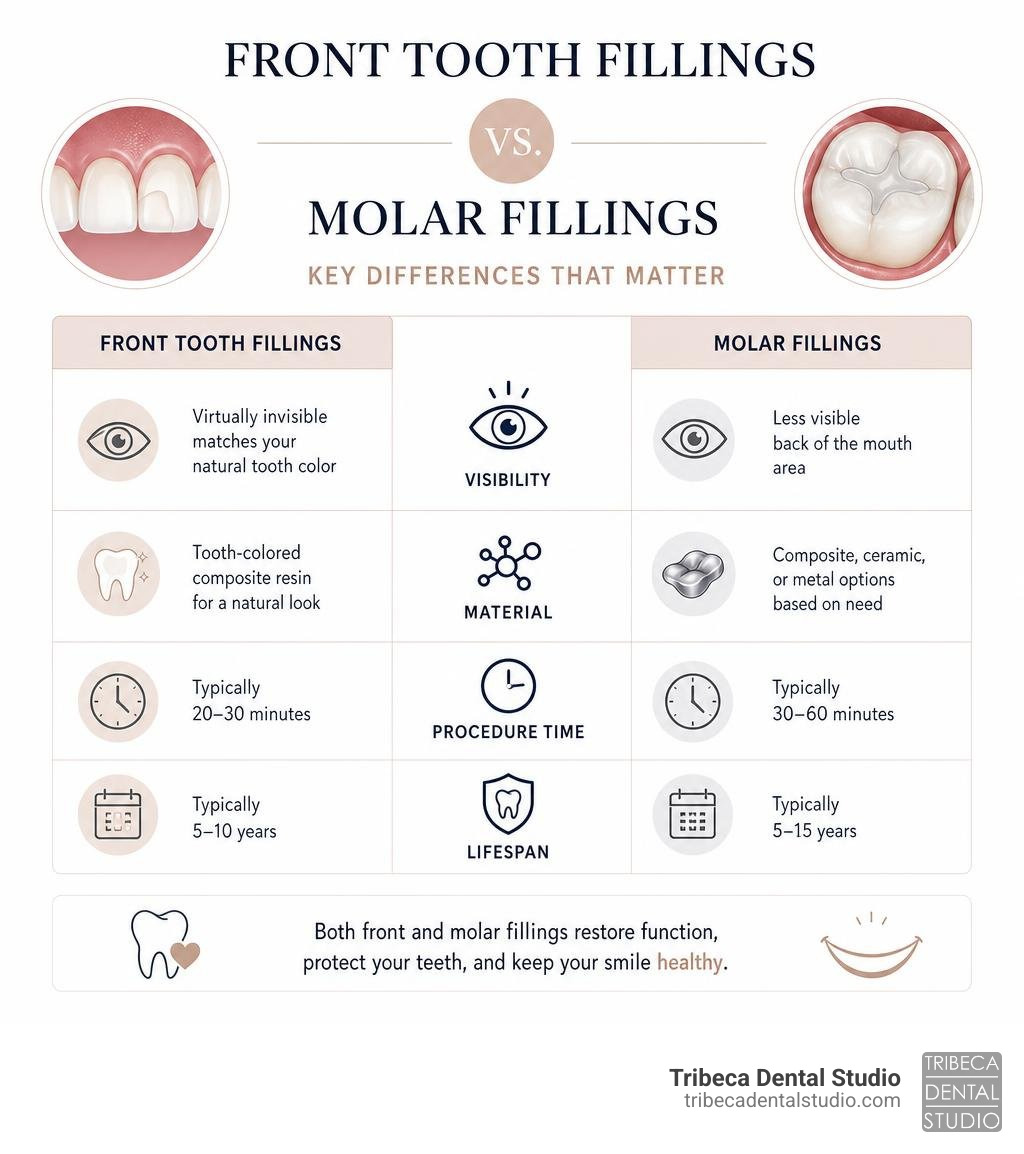
Front Tooth vs. Back Tooth Restorations

Restoring a front tooth presents different challenges from restoring a back molar. Posterior teeth must tolerate substantial chewing and grinding forces, while anterior teeth must combine functional strength with much greater aesthetic demands.
Because a front tooth is highly visible, differences in shade, opacity, contour, or surface texture may be easier to notice. This makes careful material selection and finishing especially important.
Front teeth also have a different shape and distribution of enamel and dentin than molars. A conservative restoration aims to remove only the damaged tooth structure necessary for treatment while maintaining adequate bonding and support.
Aesthetic Demands and Shade Matching
Natural teeth are not a single uniform shade of white. They contain different levels of translucency, opacity, brightness, and color from the gumline to the biting edge.
Creating a natural-looking front dental filling may involve several steps:
- Shade Selection: The dentist evaluates the surrounding tooth color before the tooth becomes dehydrated during treatment, since dehydration can temporarily make enamel appear lighter.
- Layering: Different composite shades or opacities may be placed in layers to reproduce the visual characteristics of natural dentin and enamel.
- Contouring: The restoration is shaped to reproduce the natural outline and transitions of the tooth.
- Finishing and Polishing: The surface is refined and polished so the restoration has an appropriate texture and luster.
Structural and Functional Differences
Front and back teeth perform different jobs, so their restorations experience different types of force. Front teeth are involved mainly in biting and cutting, while molars experience greater chewing and grinding pressure.
Here is a simple comparison:
| Feature | Front Tooth Restorations | Back Tooth Restorations |
|---|---|---|
| Primary Function | Biting and cutting | Chewing and grinding |
| Aesthetic Priority | Very high | Important but generally less visible |
| Material Considerations | Shade match, polishability, translucency and strength | Strength, wear resistance and durability |
| Common Material | Tooth-colored composite resin | Composite resin or other restorative materials depending on the case |
| Potential Problems | Chipping, wear or discoloration | Wear, fracture or recurrent decay |
Front Tooth Filling vs. Dental Bonding: What Is the Difference?
A front tooth filling and dental bonding can use the same basic restorative material: tooth-colored composite resin. The difference often relates to why the composite is being placed.
- Front tooth filling: Usually refers to restoring tooth structure affected by decay, a small fracture, an existing defective restoration, or another structural problem.
- Dental bonding: Often refers to using composite resin to repair a small chip, modify tooth shape, reduce the appearance of a minor gap, or make another limited cosmetic correction.
The techniques overlap, and the terminology may vary between practices. A dental examination helps determine whether a filling, composite bonding, veneer, crown, or another treatment is appropriate for the amount and location of tooth damage.
The Step-by-Step Front Tooth Filling Procedure

Many front tooth fillings can be completed during a single appointment. The amount of time required varies depending on the size and location of the restoration, whether decay must be removed, how many surfaces are involved, and how much aesthetic contouring is needed.
The basic procedure typically includes evaluation, shade selection when appearance is important, preparation of the damaged area, bonding, composite placement, curing, shaping, bite evaluation, and polishing.
Preparing for a Front Tooth Filling
The exact sequence varies with the type of restoration, but treatment may include:
- Evaluation: The dentist examines the tooth and determines the location and extent of decay, fracture, or existing restoration damage.
- Shade Selection: For visible restorations, an appropriate composite shade is selected to closely match the surrounding enamel.
- Local Anesthesia: Anesthetic may be used when appropriate to keep treatment comfortable. Whether it is required depends on the location and depth of the preparation.
- Isolation: The tooth is kept dry using appropriate dental isolation techniques because moisture can interfere with composite bonding.
- Preparation: Decayed or damaged tooth structure is conservatively removed when necessary. You can read more in our cavity filling guide.
- Etching and Bonding: The prepared surface is conditioned and a dental bonding system is applied according to the restorative material being used.
Placing and Polishing the Composite Resin
Once the tooth has been prepared, the restoration is built and finished:
- Applying the Bonding Agent: A bonding material is placed on the prepared tooth and hardened using a dental curing light.
- Layering the Composite: Composite filling material is placed in controlled increments when appropriate. Each increment is shaped and cured before the next layer is added.
- Sculpting the Tooth: The composite is shaped to reproduce the natural contour and biting edge of the front tooth.
- Checking the Bite: The dentist evaluates how the restored tooth contacts the opposing teeth and makes adjustments if needed.
- Finishing and Polishing: The restoration is refined and polished to create a smooth surface and natural appearance.
How Long Does a Front Tooth Filling Last?
There is no guaranteed lifespan for a front tooth filling. Composite restorations can remain functional for years, but longevity depends on the size and location of the filling, the amount of natural tooth structure remaining, bite forces, oral hygiene, diet, habits such as nail biting, and whether the patient clenches or grinds their teeth.
Composite resin can also change in surface texture or color over time. Regular dental examinations allow the margins and condition of an existing restoration to be monitored.
For more information about when older restorations may need attention, see our guide to dental filling replacement.
How to Care for Your Front Tooth Filling
A front tooth filling does not require a special daily cleaning routine, but several habits can help protect the restoration and surrounding tooth:
- Avoid using your teeth as tools: Do not use front teeth to open packages, tear tape, or bite non-food objects.
- Be careful with very hard foods: Biting directly into ice, hard candy, or similarly hard objects can place unnecessary stress on a restoration.
- Maintain good oral hygiene: Brush twice daily and clean between the teeth regularly to reduce the risk of new decay around the restoration.
- Be aware of staining: Composite materials may discolor over time, especially with frequent exposure to coffee, tea, red wine, tobacco, and other pigments.
- Address grinding or clenching: If you grind or clench your teeth, discuss whether a protective appliance may be appropriate.
- Attend routine examinations: Your dentist can evaluate the filling margins, bite, polish, and surrounding tooth structure.
Signs a Front Tooth Filling May Need Evaluation
Contact your dentist if you notice changes in an existing restoration, including:
- Visible discoloration around the margin: A change in color does not always indicate decay, but the area should be evaluated if it is new or increasing.
- Chipping or roughness: A chipped or rough restoration may need polishing, repair, or replacement depending on the extent of damage.
- New sensitivity: New sensitivity to temperature, sweets, or biting pressure should be assessed to determine the cause.
- Movement or looseness: A restoration that feels loose or unstable should be examined promptly.
- New decay: Cavities can develop at the edge of an older restoration and may require additional treatment.
When Is a Veneer or Crown Better Than a Filling?
A filling in a front tooth can be an appropriate conservative solution for many small or moderate areas of damage, but a direct composite restoration is not suitable for every situation.
When a substantial portion of the tooth has been lost, the remaining structure is weak, or the cosmetic change required is extensive, another type of restoration may provide more appropriate coverage or support.
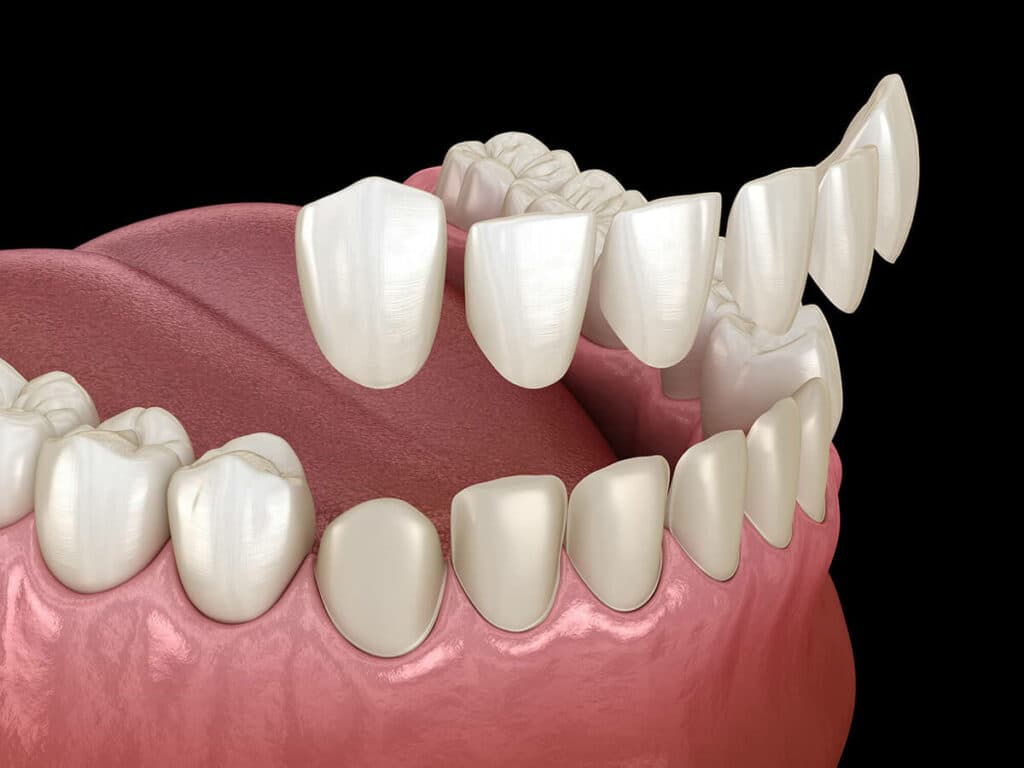
- Porcelain Veneers: May be considered when the goal involves broader changes to tooth shape, color, surface appearance, or selected cosmetic defects.
- Dental Crowns: May be considered when a tooth has extensive structural damage and requires greater coverage and protection.
The appropriate option depends on the condition of the tooth, the amount of remaining structure, the patient's bite, and the treatment goal.
Frequently Asked Questions About Front Tooth Fillings
Will My Front Tooth Filling Be Visible?
A carefully shade-matched and polished composite filling can blend closely with the surrounding natural enamel. How noticeable it is depends on factors such as the size and location of the restoration, the amount of tooth being replaced, the surrounding tooth color, and the restorative technique used.
Does Getting a Filling on a Front Tooth Hurt?
Local anesthesia can be used when needed to keep the procedure comfortable. The need for anesthesia depends on how deep the restoration is and what part of the tooth is being treated. Some patients may experience temporary sensitivity afterward.
How Long Does a Front Tooth Filling Take?
Many front tooth fillings can be completed during one appointment. Treatment time varies according to the size and location of the restoration, whether decay must be removed, and how much shaping and shade matching are required.
How Long Do Front Tooth Fillings Last?
Composite restorations can last for years, but there is no guaranteed lifespan. Their longevity depends on restoration size, bite forces, oral hygiene, diet, tooth grinding or clenching, and other individual factors.
Is a Front Tooth Filling the Same as Dental Bonding?
They can use the same tooth-colored composite resin, but the terms usually describe different treatment goals. A filling commonly restores tooth structure affected by decay or damage, while dental bonding often refers to composite used to repair a small chip or make a limited cosmetic change. The techniques can overlap.
What Should I Do If My Front Tooth Filling Falls Out?
If a front tooth filling chips, loosens, or falls out, contact your dentist for evaluation. Avoid biting hard foods with the affected tooth and keep the area clean until it can be examined. The appropriate repair depends on how much of the filling and natural tooth structure has been lost.
For information about restoration expenses, see our composite filling cost guide.
Front Tooth Fillings in Tribeca, NYC
Front tooth restorations require attention to both tooth health and appearance. When appropriate, tooth-colored composite allows damaged or decayed areas to be restored while maintaining a shade and contour that closely coordinates with the surrounding enamel.
Tribeca Dental Studio provides tooth-colored fillings in Tribeca, NYC for patients who need evaluation and treatment of cavities, damaged restorations, and selected areas of tooth damage.
If you have noticed a cavity, chip, damaged filling, or another change affecting a front tooth, schedule an evaluation to determine which restorative option is appropriate for the tooth.